Lithium-ion battery supply-chain emissions could be cut by roughly 34 percent by 2050, a new study by researchers at the University of Melbourne found.
According to the study, this could be achieved by combining cleaner manufacturing with strategies that reduce the number of batteries the world needs.
The researchers found that while decarbonizing battery production is still essential, demand-side measures, including prolonging battery life, limiting the growth of EV battery sizes, promoting ride-sharing, and repurposing used batteries for energy storage, could deliver even greater emissions reductions than manufacturing improvements alone.
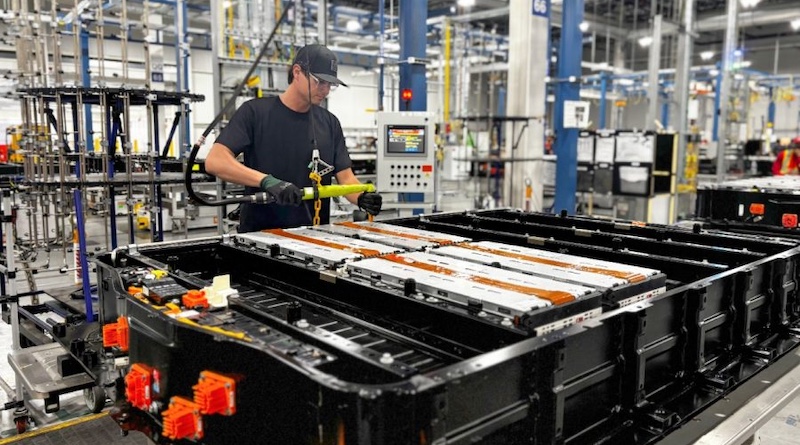
Reseachers noted that demand for lithium-ion batteries is expected to soar over the coming decades as electric vehicles (EVs) replace gasoline-powered cars and green energy systems require large-scale electricity storage.
While agreeing that batteries play a key role in cutting emissions from transport and power generation, the study warns that emissions from producing them could rise sharply if manufacturing expands without cleaner processes.
To assess future impacts, the researchers modeled greenhouse gas emissions across the battery life cycle, from raw resource extraction and manufacturing to recycling, for batteries used in EVs and stationary energy storage through 2050. The analysis included regional differences in electricity generation and battery demand using International Energy Agency scenarios.
The study found that on the supply side, the carbon footprint of an individual battery could be reduced by about 34 percent by 2050. The change can be brought about by shifting to cleaner manufacturing, improved production efficiency, lower-carbon battery chemistries, and expanded recycling.
The researchers, however, found an even greater potential to reduce battery demand without slowing electrification.
Source link