This article has been reviewed according to Science X's editorial process and policies. Editors have highlighted the following attributes while ensuring the content's credibility:
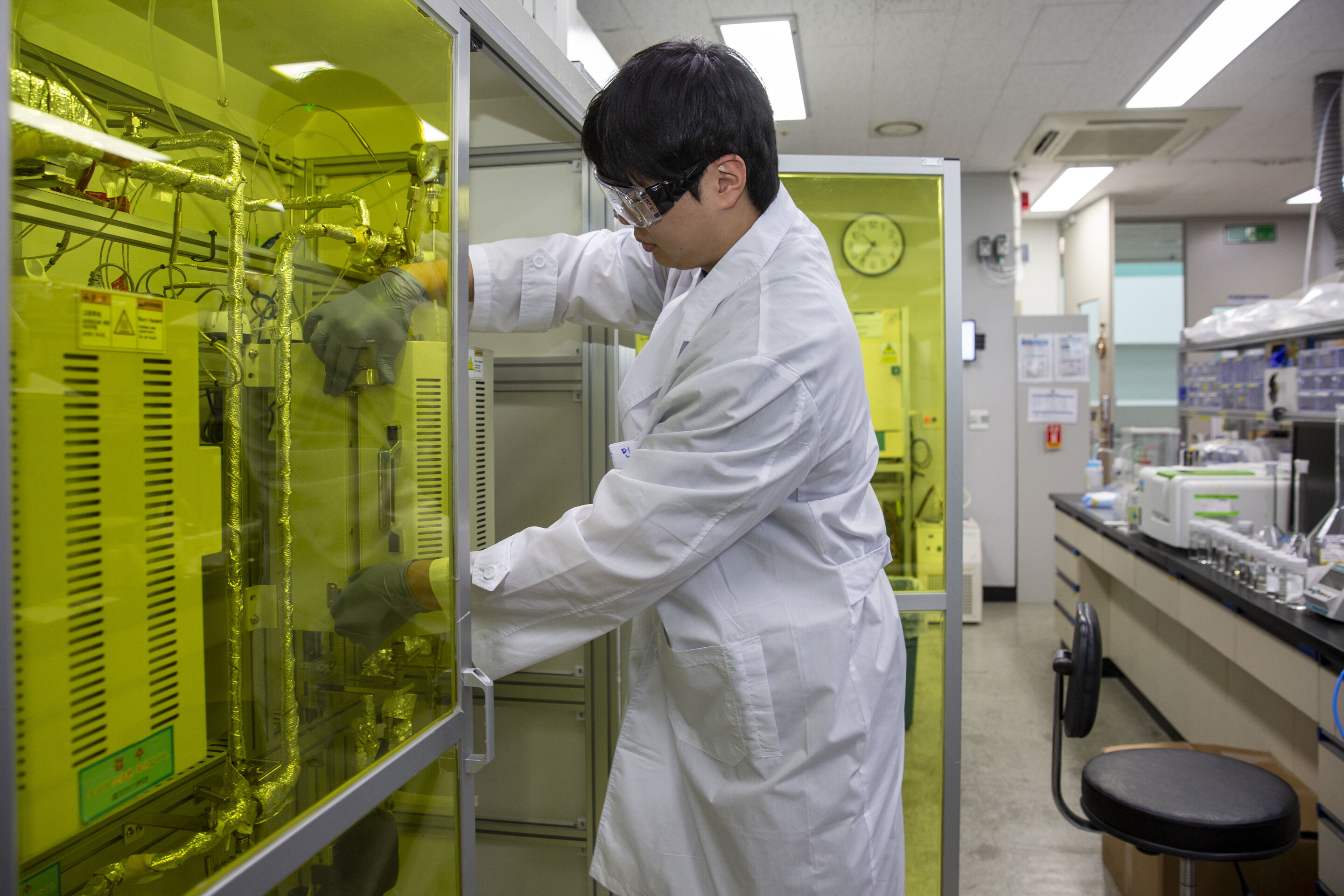
A research team led by Dr. Sun-Mi Hwang from the Clean Air Research Laboratory at the Korea Institute of Energy Research (KIER) has developed catalysts as an all-in-one solution to address exhaust emissions from ammonia-fueled ships. This technology can simultaneously and cost-effectively remove various greenhouse gases from ammonia combustion and is expected to contribute to achieving carbon neutrality in the maritime industry.
The key findings were published in Applied Catalysis B: Environment and Energy.
Ammonia has emerged as a promising next-generation fuel to achieve carbon neutrality in the maritime industry, owing to its minimal greenhouse gas emissions and advantages in transport and storage compared to fossil fuels.
During combustion, however, ammonia produces harmful byproducts including nitrogen oxides (NOₓ), unburned ammonia and notably nitrous oxide (N₂O)—a potent greenhouse gas with a global warming potential (GWP) roughly 300 times higher than that of carbon dioxide (CO₂). If emitted untreated, these substances could worsen environmental impacts rather than mitigate them.
While conventional diesel ships use existing catalysts to treat only nitrogen oxide emissions, ammonia-fueled ships require separate catalysts and additional equipment to eliminate nitrous oxide and unburned ammonia as well. These requirements demand more onboard space and increase installation costs, posing a primary barrier to commercialization.
To address these limitations, the KIER research team developed a hybrid catalyst that provides an all-in-one solution, simultaneously eliminating nitrogen oxides and unburned ammonia.
Source link