
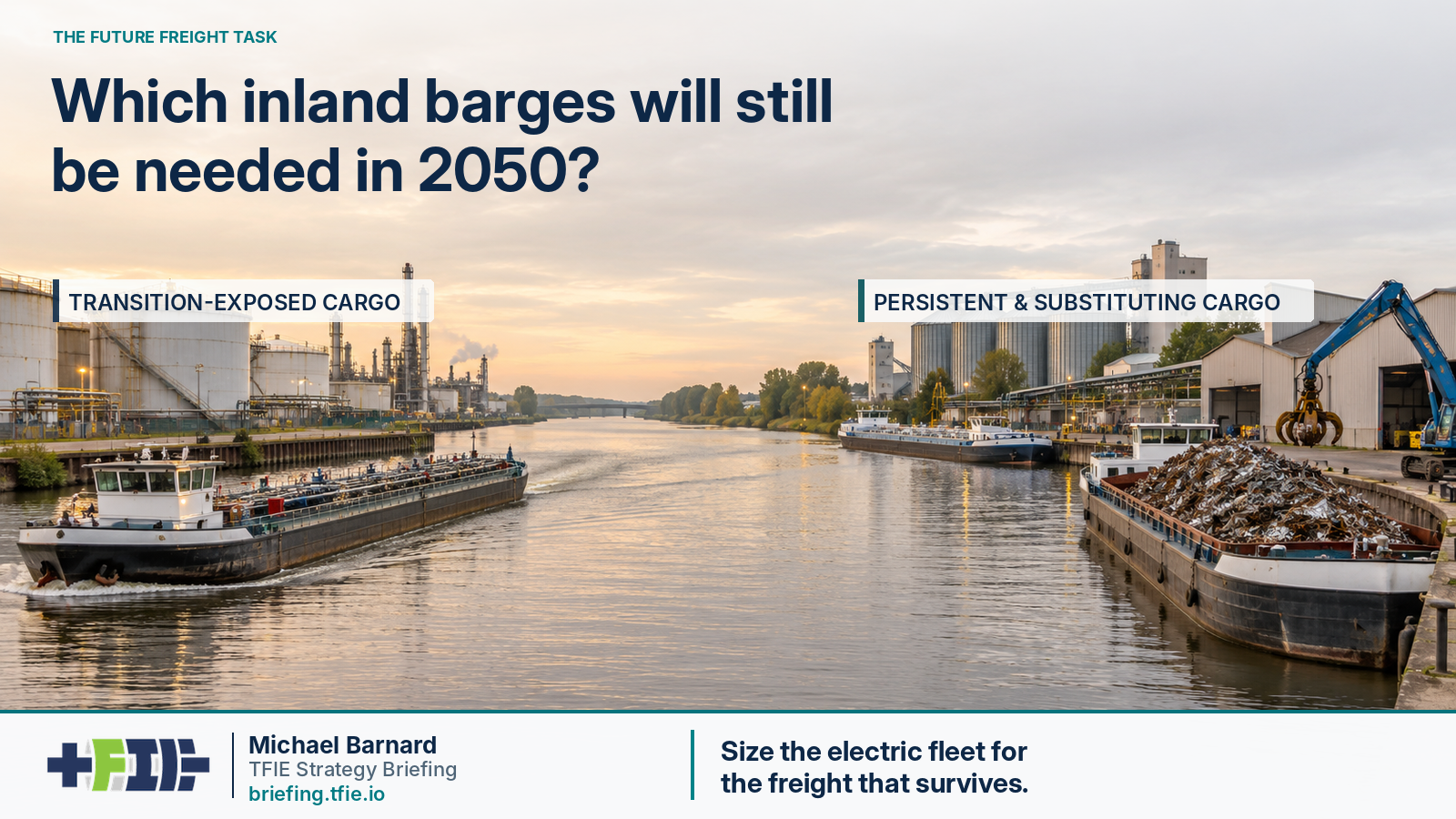
Coal throughput at Rotterdam rose 15.3% in the first nine months of 2026. Crude oil and petroleum-product volumes also increased. An inland vessel operator looking only at this year’s cargo market could see decades of work ahead. But an engine, battery conversion or replacement vessel bought now may still be operating in 2050, when the mix of cargo travelling through European ports and rivers will be different.
Rotterdam’s latest throughput release explains the coal rebound through recovering coking-coal movements, expensive natural gas and power-market conditions. Meanwhile, Eurostat reports that EU inland-waterway freight fell 3% in 2025 to 118 billion tonne-kilometres. Coal and crude-petroleum freight rose that year, while agricultural freight contracted. These changes are reshaping the services that ports, vessel owners and customers need to buy.
The Central Commission for the Navigation of the Rhine counted 6,224 dry-cargo vessels in Rhine countries in 2025, down from 6,410 in 2023. Smaller vessels account for much of the decline. Tankers moved the other way, rising from 1,400 in 2022 to 1,477 in 2025. The numbers describe a fleet already adapting to changing cargo and operating economics.
My TFIE Strategy Briefing on the inland barges Europe will need in 2050 uses a cargo-first model to work from the freight task to the future electric fleet. The underlying 98-page Inland Freight Electrification report is available to read.
A vessel owner has two connected capital decisions. The first is whether the freight service will still have customers through the useful life of the asset. The second is which propulsion and charging system can perform that service economically.
Source link