
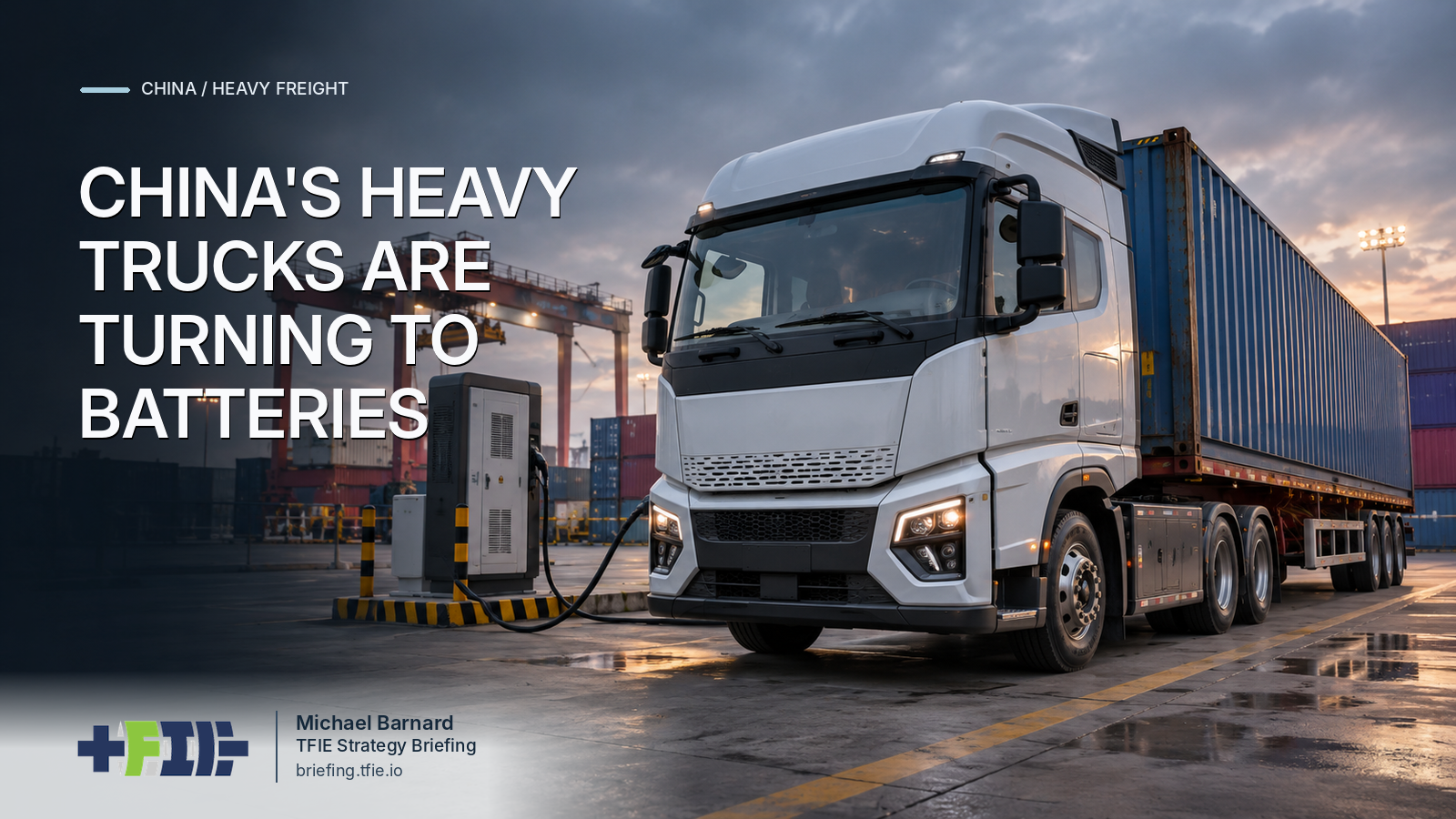
In September 2026, battery-electric trucks captured 49.8% of China’s new domestic heavy-truck registrations. Of 65,800 trucks registered, 32,800 ran on batteries. Another 36 used hydrogen fuel cells. Battery electric accounted for more than 99% of the broader new-energy category. China’s freight operators are buying batteries at a scale that puts diesel and LNG suppliers under pressure.
The shift has gathered speed. Battery electric accounted for about 13% of domestic heavy-truck registrations in 2024, 28% in 2025 and nearly 38% in the first nine months of 2026. The figures come from compulsory-insurance registrations for trucks sold into the domestic market, excluding exports. China’s total domestic truck market remains below its pre-pandemic levels. Battery trucks are gaining share while the market for new heavy trucks remains constrained.
From May through September, new-energy heavy trucks exceeded 40% of new registrations for five straight months. The category reached approximately 226,400 vehicles in the first nine months, up 64% from the same period in 2025, and nearly 99% were battery electric. Tractor units that pull semi-trailers are leading the change. In September, 64.48% of new domestic tractor registrations belonged to the new-energy category. Electric trucks are moving freight on ordinary commercial routes, including work beyond ports and industrial yards.
My full TFIE Strategy Briefing traces China’s heavy-truck sales from 2015 through 2026, examines real freight costs and charging choices, and assesses the consequences for manufacturers, logistics companies and fuel demand.
The operating economics explain much of the appeal. Trucks earn money by carrying cargo, so annual kilometres, payload, electricity prices, charging stops and vehicle availability matter as much as the price on the invoice.
Source link