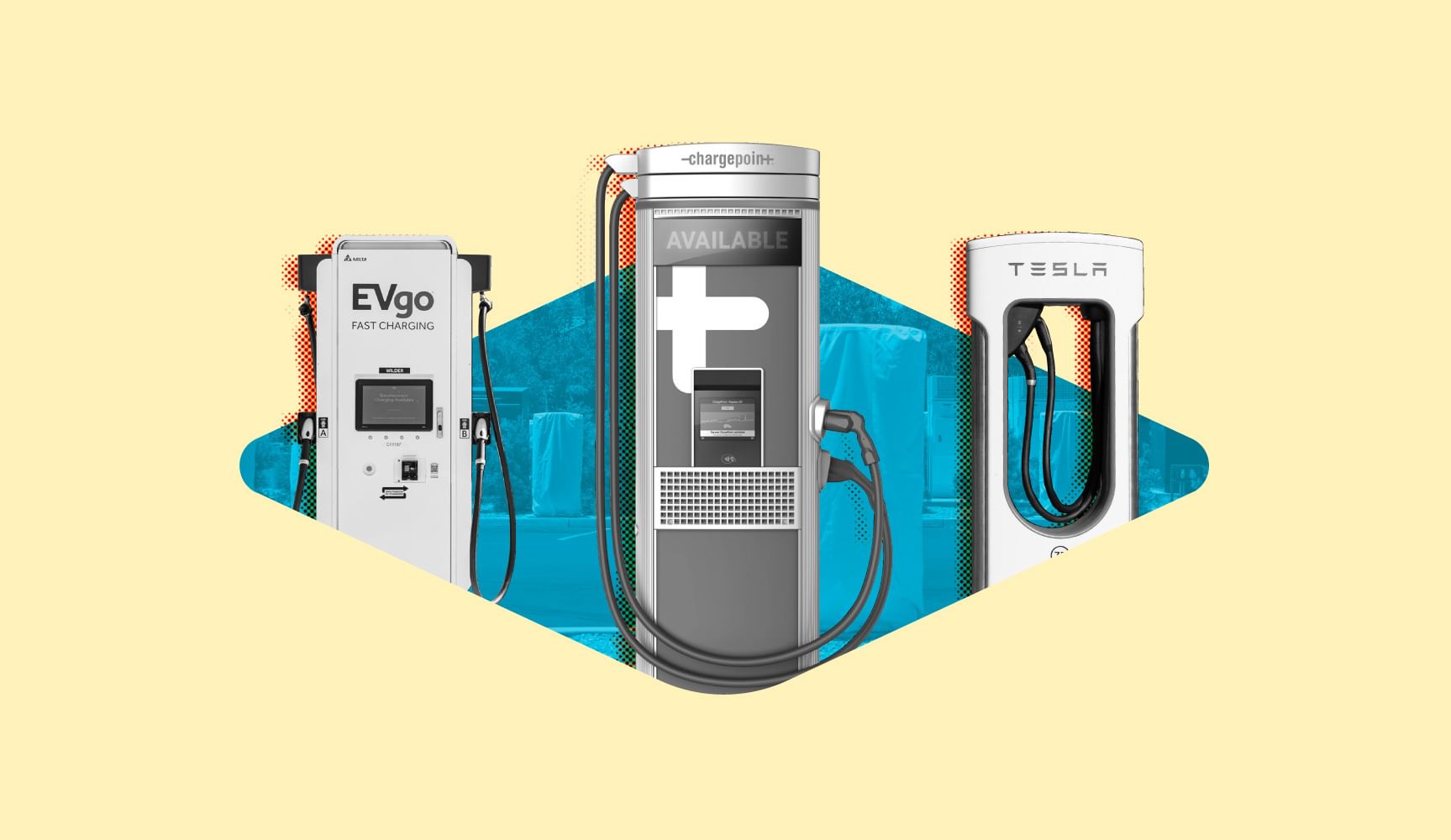
Can the state regulate — and innovate — its way to more reliable public EV charging? Here’s what industry experts make of its latest efforts.
(Binh Nguyen/Canary Media; EVGo; Chargepoint; Unsplash; Anjali Sharif-Paul/MediaNewsGroup/The Press-Enterprise via Getty Images)
This is California Wire, a weekly newsletter from Jeff St. John on the state’s clean energy transition. Subscribe to get it every Thursday via Substack.
Welcome back to California Wire! Today’s topic is public EV chargers and California’s long and winding road to make them reliable. In 2023, I wrote a three-part series explaining how unreliable chargers were a significant impediment to EV adoption across the country and what to do about it. The Biden administration attached reliability requirements to its $5 billion EV-charger program, which got the ball rolling, but the Trump administration has mangled federal leadership on this front, leaving states to pick up the slack. California has more EVs than any other state, and thus more reason to take the lead on the issue.
Laws passed in 2022 and 2023 ordered the California Energy Commission (CEC) to enforce reliability and data-sharing standards for EV-charging installers that get money from state agencies or regulated utilities. It’s taken years, but those rules are finally in place.
Now, to access the $55 million in incentives available from the California Electric Vehicle Infrastructure Project (CALeVIP), applicants have to follow exacting requirements, including using approved equipment and software providers and producing hourly performance data.
Source link