In the near future, drone landing gear may serve a dual purpose: providing structural support and supplying electrical power.
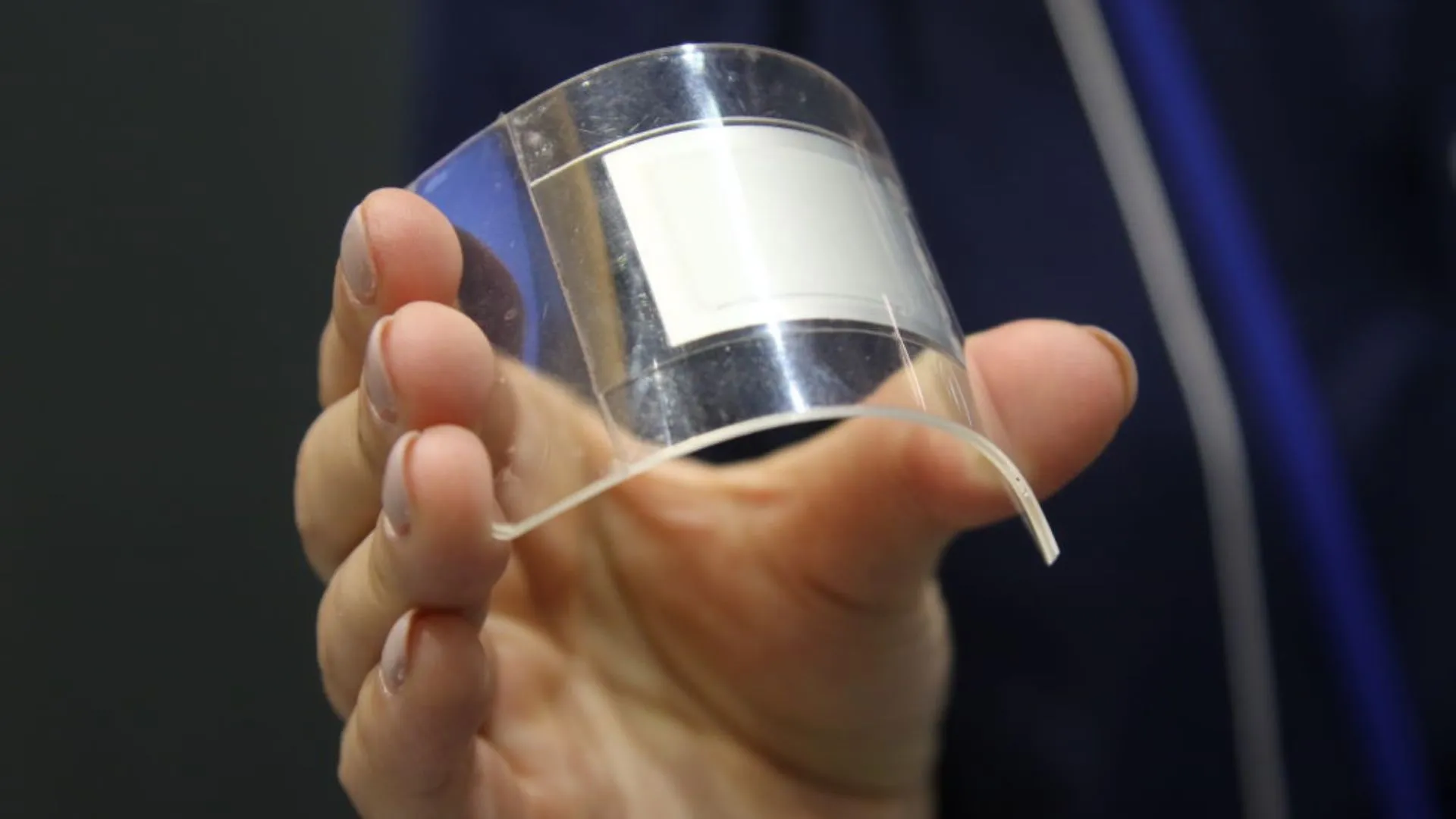
Researchers at the Korea Advanced Institute of Science and Technology (KAIST) have taken a step toward making that possible by developing a nanowire-based lithium-sulfur battery electrode that remains stable even after 1,000 bending cycles.
The new design could let curved components, such as drone legs and robotic frames, double as batteries, reducing overall weight and freeing space for larger payloads or longer operating times.
Conventional batteries are packaged separately from a machine’s structure. But the KAIST team’s battery is designed to become part of the frame itself. The development revolves around nickel cobalt selenide (NiCo₂Se₄) nanowires grown directly onto woven carbon cloth, creating a flexible electrode that maintains electrical performance even when bent into complex shapes.
Structural batteries have long been viewed as a way to make drones, robots, and other lightweight systems more efficient by combining mechanical support and energy storage into a single component. However, most previous designs have focused on flat battery structures that are difficult to fit into curved or hollow parts.
To overcome that limitation, the KAIST researchers grew ultrafine nickel cobalt selenide nanowires directly on interwoven carbon fibers instead of coating active materials onto a flat electrode. The carbon cloth provides a strong, electrically conductive foundation, while the nanowires remain firmly anchored to its surface.
The approach helps solve a common problem with conventional battery electrodes, where coatings can crack or peel away after repeated bending, interrupting electrical pathways and reducing performance.
Source link