

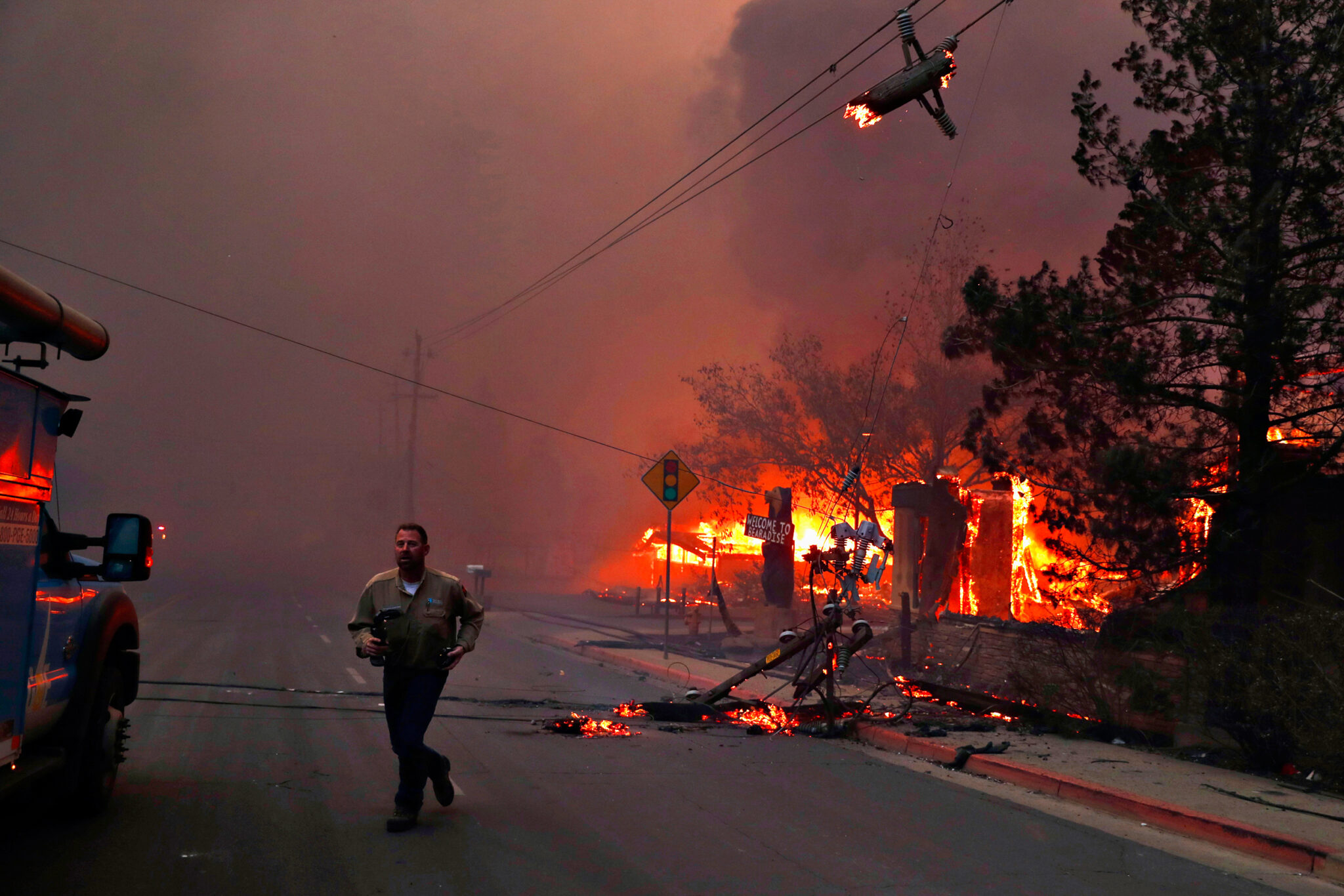
Trial by Fire: Third in a series about the impacts of wildfire litigation.
The small fire slowly licked its way through a dense growth of pine trees in the Sangre de Cristo Mountains of northern New Mexico. A team of federal employees moved in tandem with the flames, dropping more fire from drip torches to clear out the small trees, deadwood, scrub and grasses that could fuel a runaway blaze in the future. Everything seemed to be going to plan.
But come afternoon, strong winds swept into the burn area. Powerful gusts carried the carefully planned fire beyond the control line intended to contain it. By 5 p.m. on April 6, 2022, the U.S. Forest Service reported the burn had escaped its control and declared it a wildfire.
The Hermit’s Peak Fire would eventually merge with another prescribed burn that had survived the winter as a “sleeper” fire in nearby Calf Canyon. In January, the Forest Service had burned piles of tree trunks and limbs left over from previous forest-thinning operations. But embers from the pile burn had smoldered beneath the winter snow and the fire reemerged in the spring.
We deliver climate news to your inbox like nobody else. Every day or once a week, our original stories and digest of the web’s top headlines deliver the full story, for free.
Our #1 newsletter delivers the week’s climate and energy news – our original stories and top headlines from around the web.
Dan Gearino’s habit-forming weekly take on how to understand the energy transformation reshaping our world.
Source link





