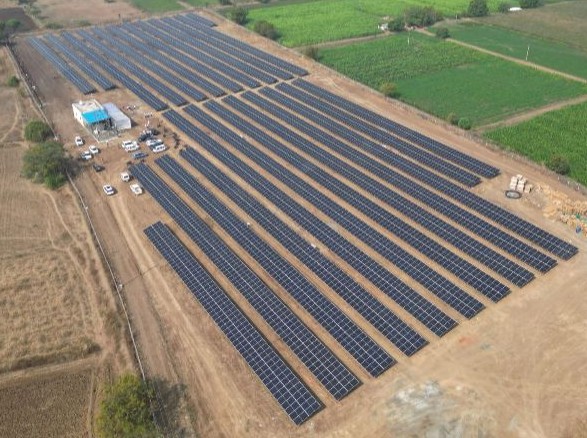
India’s agricultural sector can absorb an additional 116 GW of solar modules, creating a significant opportunity for domestic manufacturers—according to a new report by the Indian Solar Manufacturers Association (ISMA).
Titled “Powering the Farms, Building the Factory (PM-KUSUM: Solarising Agriculture and Strengthening Domestic Manufacturing,” the report was launched at the Bharat RE Summit on 2 November 2026. It highlights the potential of agricultural solarisation to support India’s clean energy transition while creating sustained demand for domestically manufactured solar modules and cells.
With nearly 2.3 crore irrigation pumps across the country, solarisation presents a substantial opportunity to expand the domestic solar manufacturing market.
According to the report, India’s agricultural sector could generate demand for an additional 116 GW of solar modules, comprising 100 GW from grid-connected pumps and 16 GW from diesel pumps, excluding those in groundwater-stressed areas.
The report highlights the growing momentum of PM-KUSUM, which added a record 7.6 GW of solar capacity in FY 2025–26, with over 28 lakh irrigation pumps solarised by July 2026. It also underscores the role of the Domestic Content Requirement (DCR) under Components B and C in driving demand for Indian manufacturers. By October 2026, 13.8 GW had been installed under these components, meeting nearly two-thirds of the 20.8 GW of demand for domestically made solar cells and modules originally projected.
Agriculture is India’s third-largest power consumer. 88% of the country’s electricity consumption in FY 2024. 41 lakh crore in FY25. Solarising agricultural pumps and feeders can help improve power availability for farmers while supporting more sustainable energy use.
Source link