This article has been reviewed according to Science X's editorial process and policies. Editors have highlighted the following attributes while ensuring the content's credibility:
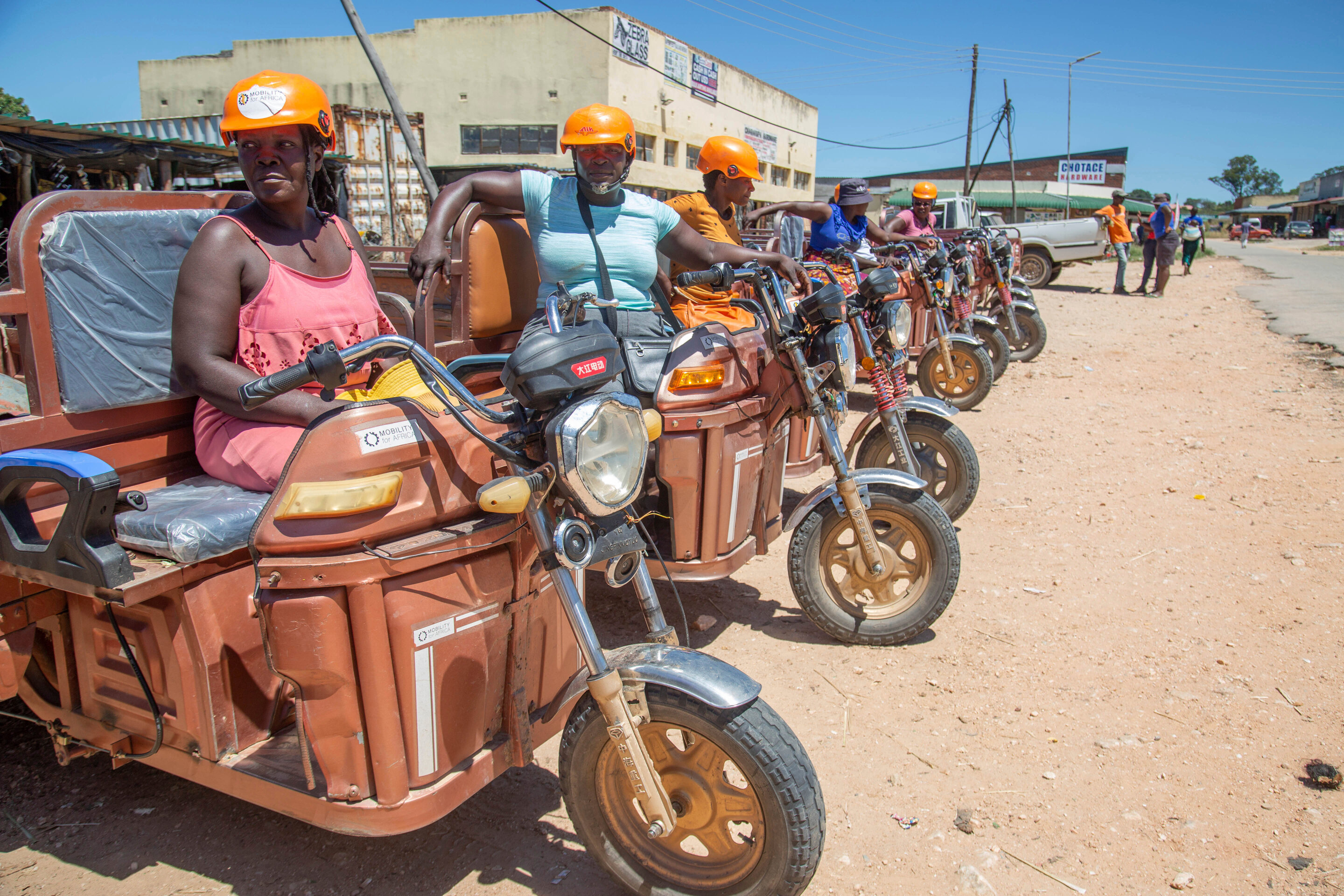
The electric vehicle revolution in Zimbabwe began on rural dirt paths. Three-wheeled vehicles carried cabbages to markets, women farmers to their fields and patients to clinics in communities where transport has long been scarce.
For farmer Agefi Mutambo, the owner of an electric three-wheeler since 2021, it has transformed her business and family.
Before, she walked 7 to 10 kilometers (4.3 to 6.2 miles) balancing a 20-kilogram (44-pound) bucket of tomatoes on her head that she sold for $6.
"The money wasn't even enough for food. I would do a single trip a day, arrive at the market late and the produce would no longer be as fresh," the 56-year-old said.
Now she makes two to three deliveries a week transporting 300 kilograms (661 pounds) of produce on each trip, grossing roughly $80 a trip supplying schools and clinics. She also ferries neighbors to the hospital, sometimes at midnight for a woman in labor.
"When my battery is low, I simply swap it for $4, and I am back on the road," she said.
Mutambo is among dozens of rural women entrepreneurs in Zimbabwe whose lives have been transformed by electric tricycles introduced by local social enterprise Mobility for Africa in 2019.
The company introduced the solar-charged tricycles, powered by lithium-ion batteries, mainly for rural women, under a lease-to-own scheme costing about $30 a week.
Source link