Researchers in China have developed an acid-free method to recover silver wires from end-of-life aluminum back-surface-field solar cells using a molten mixture of sodium hydroxide and potassium hydroxide (NaOH-KOH).
The molten salt etches the cell’s silicon nitride (SiNx) passivation layer and weakens the bond between the silver and the SiNx, allowing the silver wires to detach and be recovered directly as metal, rather than being dissolved into silver ions and recovered later.
At 230 C for 150 seconds, the process recovered 94.34% of the silver and effectively removed the SiNx layer, the researchers said. Maximum silver recovery reached 97.11%.
Silicon substrate loss was limited to 2.62% at 230 C for 100 seconds. The researchers found that once the SiNx layer is removed, the exposed silicon is attacked by hydroxide ions in the molten salt, causing pitting and converting silicon into soluble sodium and potassium silicates.
The work builds on an earlier NaOH-KOH molten salt recycling approach reported in 2024. The researchers said existing molten salt methods avoid acids but do not effectively control silicon substrate loss, and that the new study clarifies the mechanisms behind both silver recovery and silicon loss.
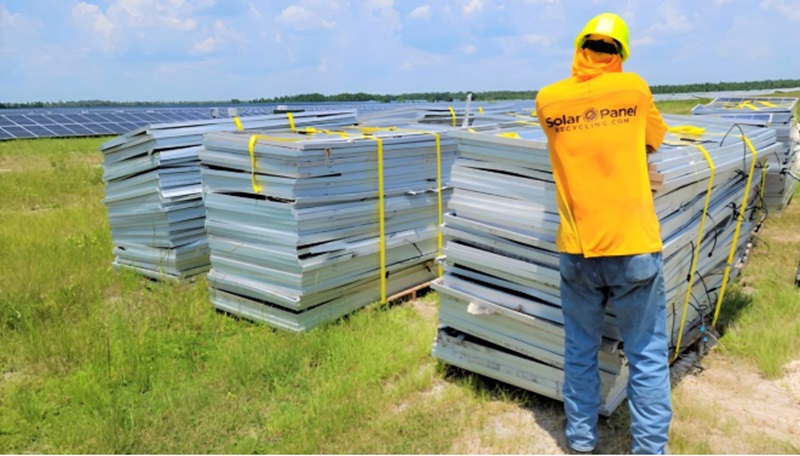
Most silver recovery from end-of-life modules still relies on acid leaching with nitric acid and other strong acids, which converts silver into ions and generates nitrogen oxide (NOx) emissions and acidic wastewater, according to the researchers. 03% of the weight of an end-of-life module but nearly half of its total value, and that the first generation of commercial PV modules is now reaching the end of its 25- to 30-year life.
Source link