
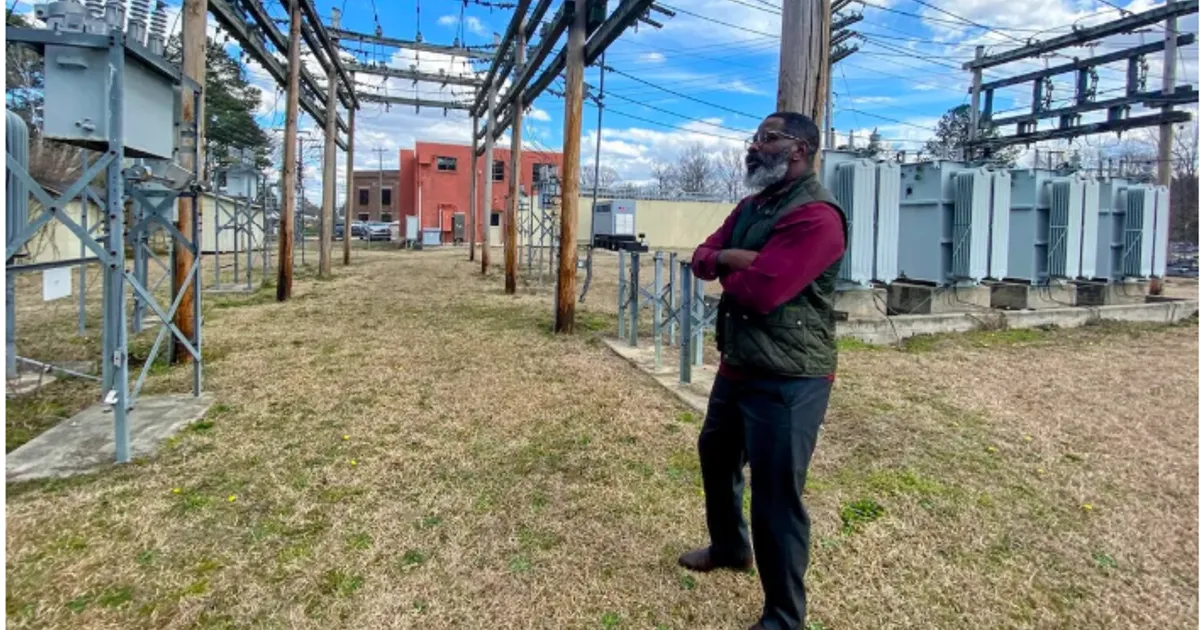
As the mayor of tiny Enfield, North Carolina, Mondale Robinson has huge clean energy ambitions. Among them: building a solar farm to power the entire town of about 2,000, replacing the town’s decrepit substation to distribute those renewable electrons, and building a thermal energy network to provide heating and cooling and reduce exorbitant electric bills.
But Enfield is one of the poorest towns in the state, where the average household income hovers around the poverty line. As mayor, Robinson earns $500 a month. There are no sustainability officers, no grant writers, no policy teams to help him push this plan forward.
One way Robinson is trying to overcome these hurdles is by working with allies from the closest major metro area. Lawyers from Chapel Hill’s Southern Environmental Law Center, for instance, are negotiating the town utility’s next electricity contract so that it can produce its own solar energy. Researchers at Durham’s Duke University are helping design the geothermal project.
Yet too many doors remain closed to Robinson. The U.S. Conference of Mayors, which has galvanized city leadership on climate solutions, doesn’t extend full membership to leaders of towns as small as Enfield. And most foundations tend to overlook such communities.
So Robinson, a longtime political organizer, decided to do what he’s always done: Join together with his cohorts to fight for change. At a Canary Media summit on clean energy in rural America in September, he announced that he’s launching a new small-town coalition. If towns like his work together, he believes, they can help get new federal policies enacted, attract new donors, and have greater access to experts who can help them confront a host of challenges, from the climate crisis to housing and food insecurity.
Source link





