

This blog examines the use of plasma technology as an alternative surface treatment method for liquid crystal polymer (LCP) materials. The study demonstrates how optimized plasma processing can achieve effective surface roughening and activation, providing a viable alternative to conventional KOH treatment while delivering the coverage and adhesion required for subsequent electroless copper plating.
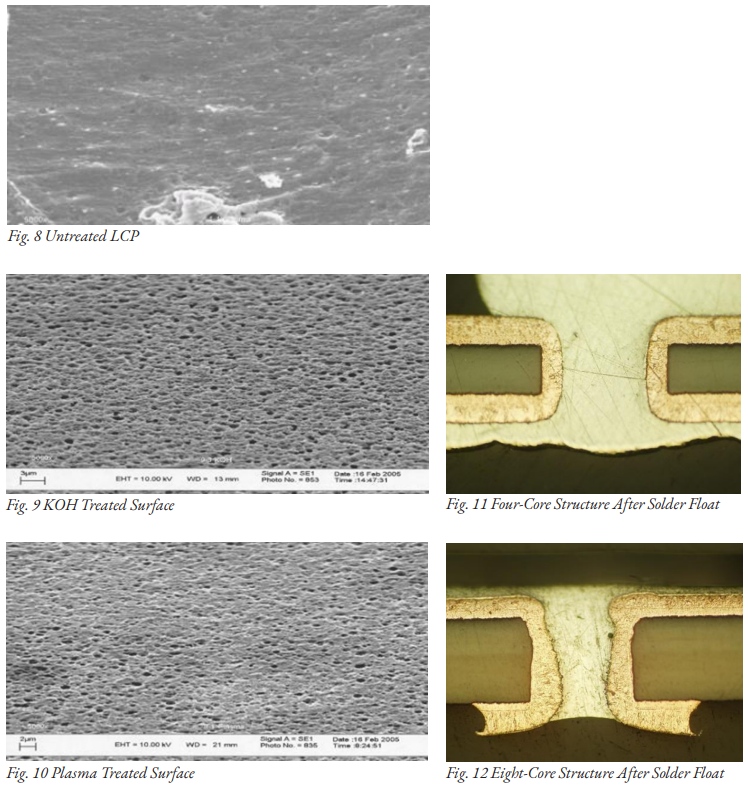
LCP is a high-performance engineering plastic widely used in the electronics, automotive, medical, and communications industries because of its excellent mechanical properties, thermal stability, and electrical insulation characteristics. However, untreated LCP surfaces are extremely smooth, exhibit low surface energy, and have poor wettability. As a result, direct electroless copper plating typically cannot achieve the adhesion and coverage required for manufacturing processes.
Traditionally, KOH treatment has been the only widely accepted industrial solution for processing LCP materials. However, KOH is a strong alkaline chemical that requires special safety precautions and dedicated process infrastructure. Many PCB manufacturers do not have KOH desmear capability and are reluctant to add a chemical process to their production facilities.
The objective of this project was to determine whether plasma processing could provide a practical alternative to KOH by addressing several key challenges:
Nordson’s applications team evaluated plasma processing using the Nordson MARCH MaxVIA system, a high-performance platform engineered for high-volume PCB plasma treatment. Featuring an advanced power-power electrode configuration, the system delivers outstanding etchback and desmear uniformity while ensuring excellent process consistency. Together with sophisticated vacuum and gas-flow control and enhanced temperature management, the MaxVIA system enables reliable, repeatable plasma processing for demanding manufacturing applications.
Source link





