
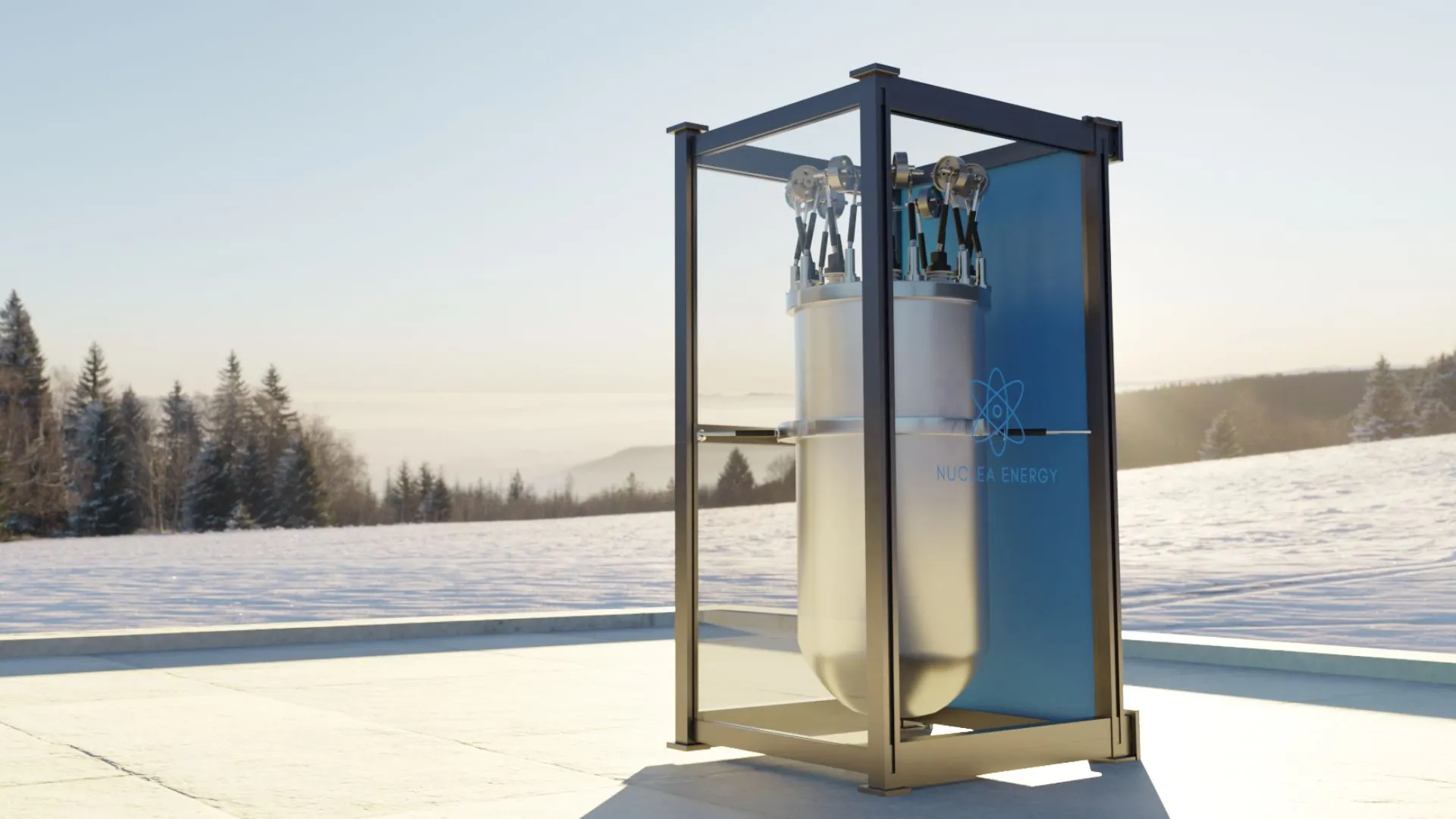
The global energy sector faces a twin crisis: surging electricity demand from artificial intelligence and a looming shortage of mined uranium. Nuclear technology firm Nuclea Energy plans to tackle both problems using radioactive waste.
Nuclea has finalized the purchase of key technologies and intellectual property from Moltex Energy Limited. The transaction, executed through its subsidiary Nuclea Energy Canada, clears a major condition for Nuclea’s upcoming stock market debut.
Before going public, Nuclea must finalize its $350 million business combination with NorthStrive Acquisition Corp I. That valuation remains subject to standard closing adjustments, alongside NSAI shareholder approval, Form S-4 registration effectiveness, and a $3 million minimum cash requirement. Once listed, the merged company will hold a portfolio protected by more than 80 granted patents.
Until now, Nuclea’s business centered on its Morpheus microreactor, a 3.5 to 50 MWe lead-cooled unit built to supply off-grid power for remote communities, defense installations, and mining sites. Acquiring Moltex’s assets expands Nuclea into large-scale grid power and creates a closed fuel loop where radioactive waste generates new electricity.
Central to this expansion is the Stable Salt Reactor Wasteburner (SSR-W), a 300 to 500 MWe fast-spectrum molten salt reactor built for continuous grid supply. Unlike conventional pressurized water reactors, the SSR-W runs at atmospheric pressure with liquid fuel salts sealed inside standard assemblies.
This architecture avoids high-pressure containment vessels and reduces complex safety engineering. Regulators have already cleared the design through Phase 1 of the Canadian Nuclear Safety Commission’s Vendor Design Review.
To feed the reactor, Nuclea acquired the Waste To Stable Salt (WATSS) recycling process, which researchers have successfully tested on real spent fuel at Canadian Nuclear Laboratories.
Source link





