Researchers from the Korea Institute of Materials Science (KIMS) have discovered that aluminum alloy used to store spent nuclear fuel loses strength and is prone to degradation when exposed to temperatures exceeding 300 degrees Fahrenheit (°F) for a prolonged period.
During the experiments, the team noted that after about 10,000 hours of exposure to temperatures between 300-470°F (150-240°C), nanoscale changes occurred in the storage material. These microstructural transformations lowered the strength and hardness of the alloy, making them unsuitable for long-term storage of the nuclear fuel waste.
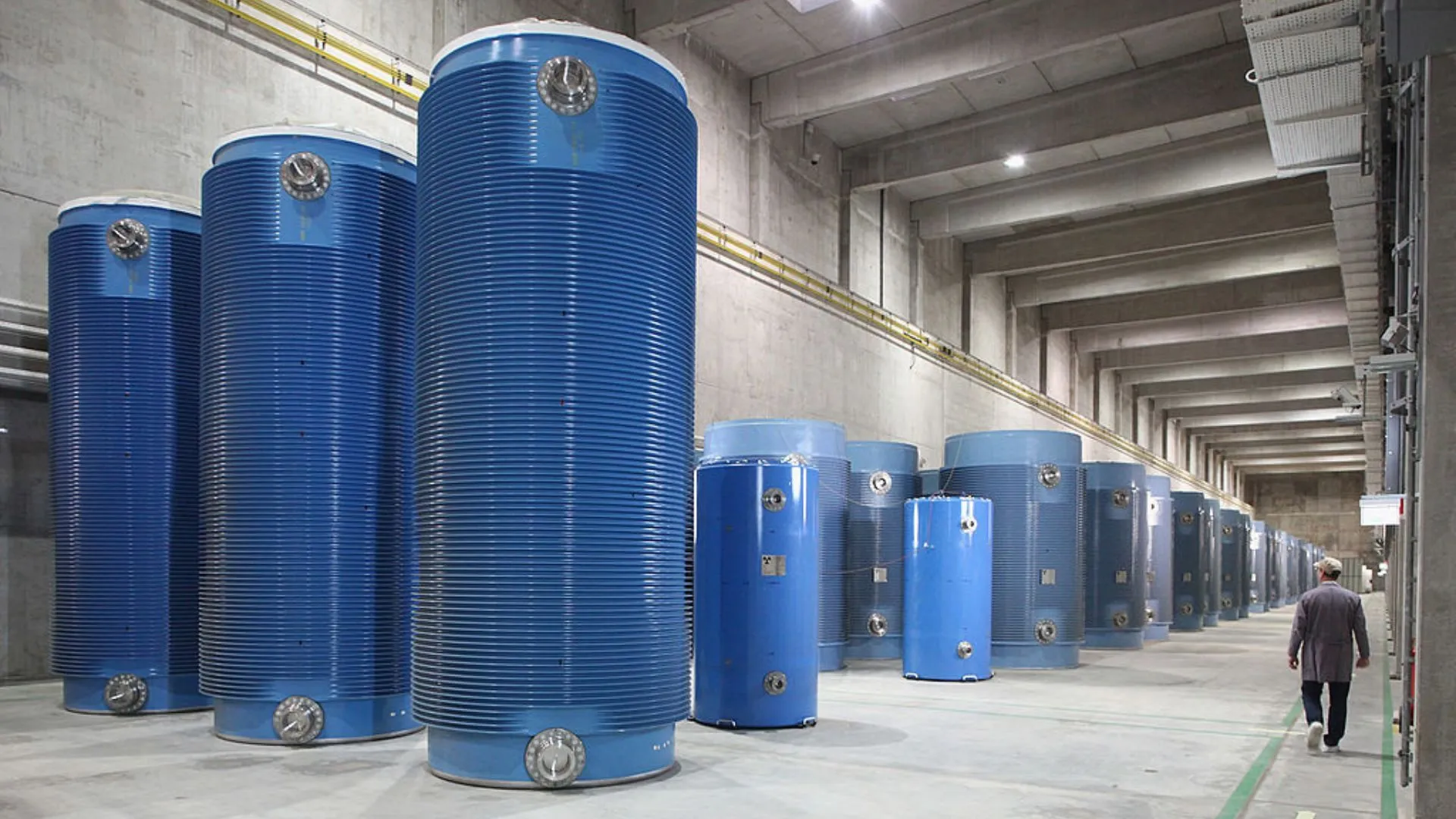
Existing methods for storing spent (used) nuclear fuel after it has been removed from a reactor include interim dry storage. Instead of keeping the fuel in water-filled cooling pools, it is placed inside large, sealed metal-and-concrete containers called dry casks.
The fuel is still hot because it continues to produce decay heat (heat from the radioactive decay of leftover radioactive materials). The casks are designed to release this heat naturally through air circulation, so they don’t need water for cooling.
Moreover, inside each cask are metal support structures, such as basket rails and shims, which hold the fuel assemblies securely, keep them properly spaced for safety, and remain inside the cask for decades. Because these parts are continuously exposed to heat and cannot be easily inspected or replaced after the cask is sealed, researchers need to know how their strength and other material properties will change over many years.
This is where the latest research, led by Senior Researcher Junho Lee of the Department of Nuclear Safety Research at KIMS, comes in.
Source link