The N.C. Clean Energy Technology Center (NCCETC) today released its Q3 2026 edition of “The 50 States of Solar” report. The quarterly series provides insights on state regulatory and legislative discussions and actions on distributed solar policy, with a focus on net metering, distributed solar valuation, interconnection rules, community solar, residential fixed charges, residential demand and solar charges, financial incentives, third-party ownership and plug-in solar.
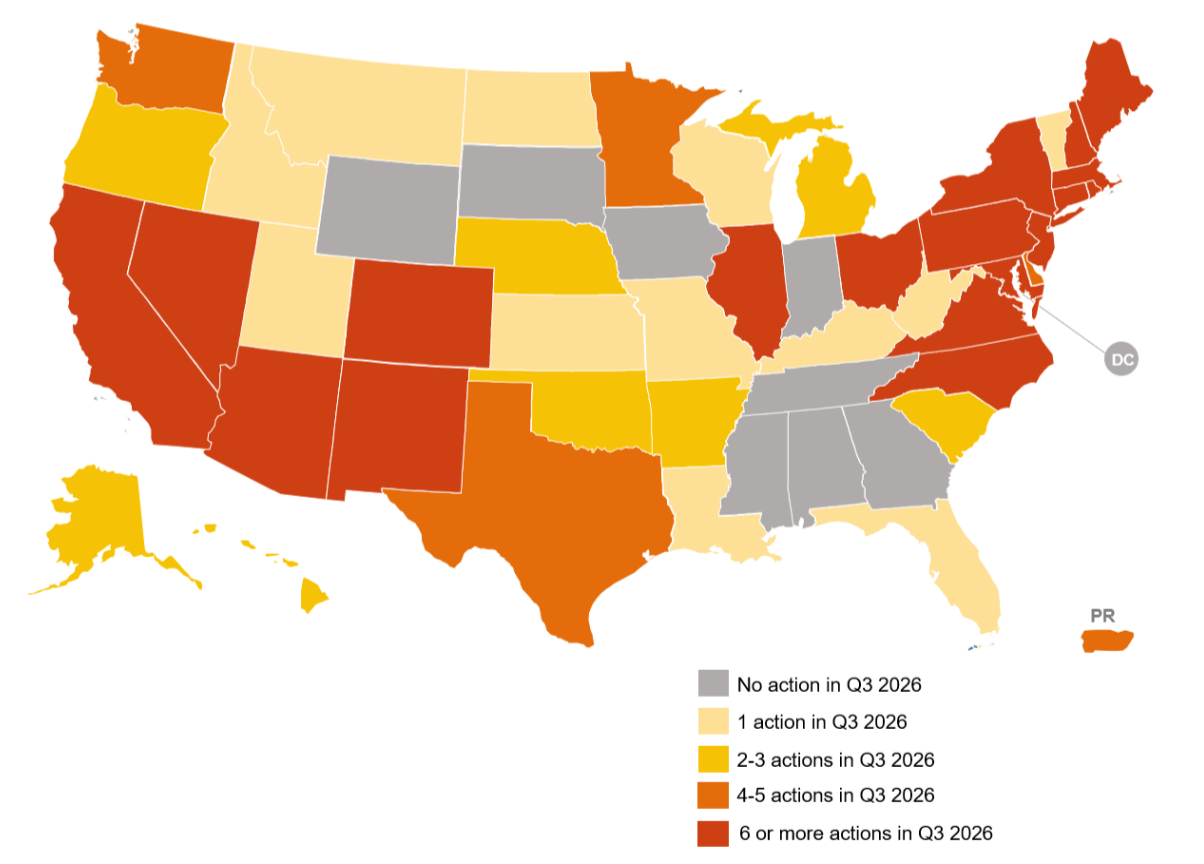
The report finds that 42 states, plus Puerto Rico, took some type of distributed solar policy action during Q3 2026, with the greatest number of actions continuing to address net-metering policies (47), residential fixed charge or minimum bill increases (45) and interconnection rules (43). A total of 221 distributed solar policy actions were taken during Q3 2026, with the most actions taken in Illinois, New Jersey, Maryland, California and Massachusetts.
The report identifies three trends in solar policy activity taken in Q3 2026: (1) regulators developing rules to allow for the use of meter socket adapters, (2) states expanding compensation for distributed energy resources beyond traditional generation-based models, and (3) states incorporating consolidated billing into community solar programs.
“This quarter, regulators in several states focused on enabling meter socket adapter use, which could streamline and reduce the cost of distributed energy resource installation,” observed Caitlin Flanagan, Policy Analyst at NCCETC. “Meter socket adapters allow customers to connect their distributed energy systems directly to their meter, while avoiding electrical panel upgrades.”
The report notes the top five distributed solar policy actions of Q3 2026:
“States are looking for alternative mechanisms to compensate customers for on-site energy resources, outside of traditional net metering for distributed solar,” noted Rebekah de la Mora, Project Manager at NCCETC.
Source link