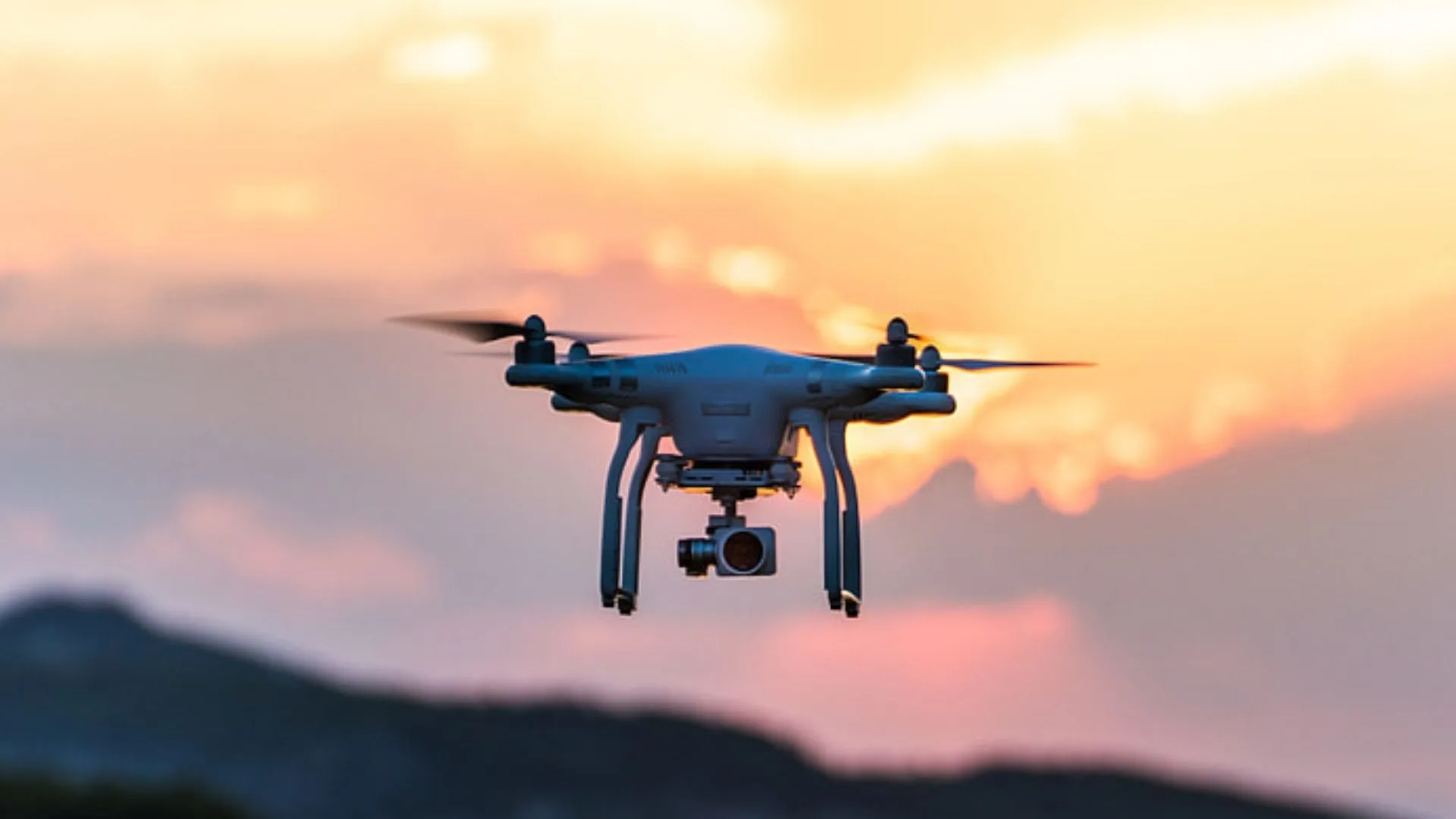
A drone losing its connection to the remote controller does not necessarily mean it will fall out of the sky. Depending on its configuration, it may hover in place, return to its launch point, or attempt to land automatically. But if the aircraft also loses access to reliable navigation data, the situation can become considerably more complicated.
What happens next depends on which connection has failed, what flight-control systems remain available, and how the drone has been programmed to respond.
Most consumer drones rely on several communication and navigation systems working together. The most obvious is the command-and-control link between the aircraft and its remote controller. It carries the pilot’s instructions, such as changes in direction, altitude, and speed.
Many drones also transmit a live video feed and flight telemetry to the controller. These connections may experience interference or dropouts independently of the control link, meaning a pilot can sometimes lose the camera feed while retaining control of the aircraft.
Navigation is another matter. Drones commonly use Global Navigation Satellite Systems (GNSS), including GPS, alongside onboard sensors such as compasses, accelerometers and gyroscopes. These help the flight controller determine the aircraft’s position, orientation and movement.
Losing the controller connection does not automatically mean losing GPS navigation. Similarly, a drone can lose reliable GPS or compass information while remaining connected to its pilot.
Many modern drones have a failsafe feature called Return to Home (RTH). When the command link is lost for a configured period, the aircraft can use its stored home-point coordinates and navigation systems to fly back to its launch location.
Source link