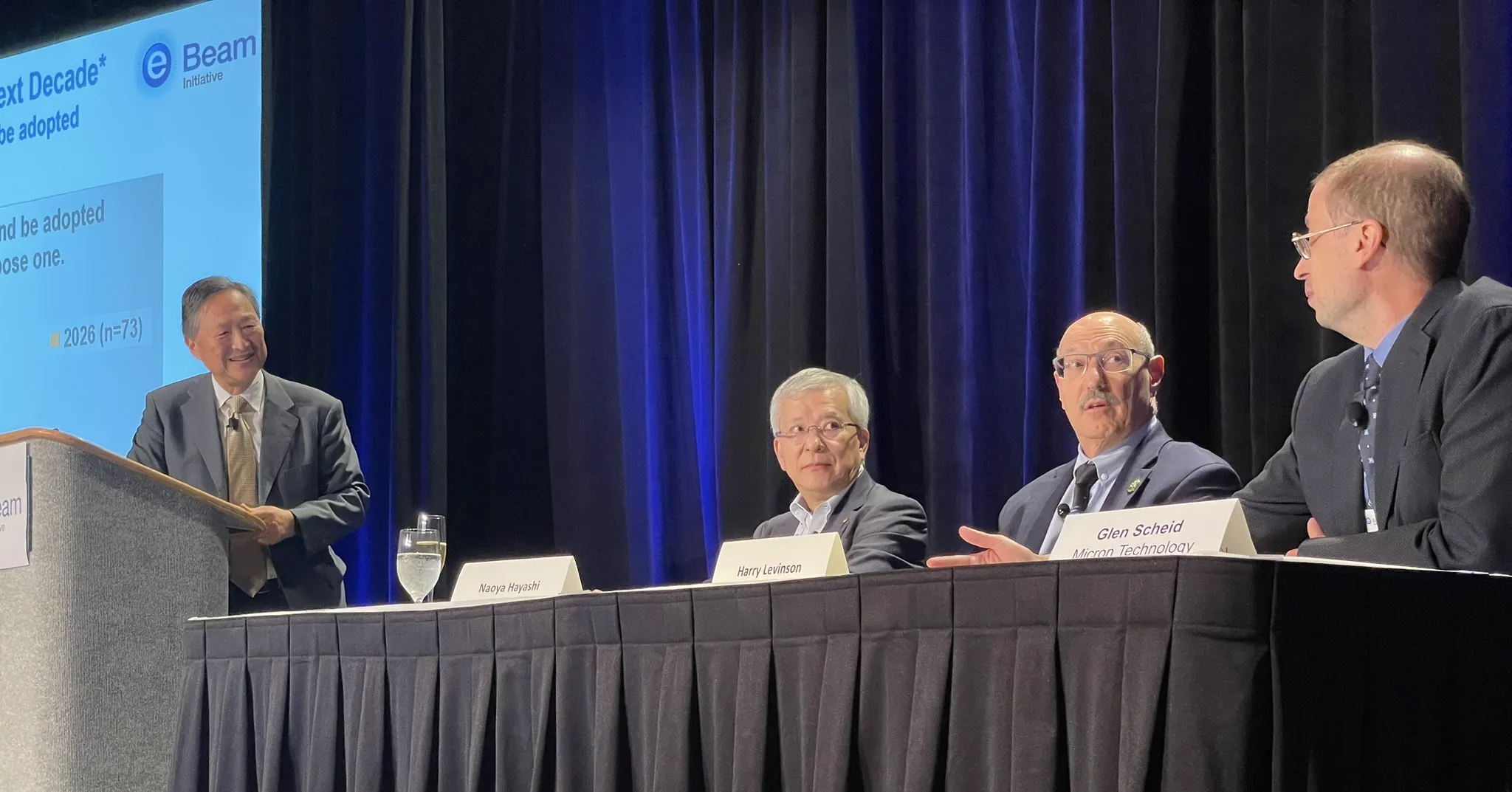
Experts At The Table: Testing cost for optical components is high, approaching the manufacturing cost. Loopback capability is an important part of failure diagnosis. Semiconductor Engineering sat down with Matt Griffin, senior product manager for optoelectronics test at Teradyne; Ira Leventhal, vice president of research and venture at Advantest America; Dave Armstrong, fellow at ISE Labs, a subsidiary of ASE Group; and Kazuo Yamaguchi, silicon photonics researcher and engineer at Keysight Technologies. What follows are excerpts of that conversation. To view part one, click here. Part two is here.

Fig. 1: (L-R): Teradyne’s Griffin; Keysight’s Yamaguchi; ISE Labs’ Armstrong; Advantest’s Leventhal
Yamaguchi: We always look at the reference plane. For the testing, these are the physical, electrical, and optical boundaries at each of the measurement planes — for example, determining where this boundary sits. Is it at the die pad, package balls, the connectors, or the fiber interface? We also need to think about de-embedding everywhere between the boundaries — for instance, probe, socket, trace, connectors, patch cord — whatever we are introducing, and making sure the same boundaries are used at testing insertions 1, 2, and 3. We need to align those boundary conditions, as well. So then we emulate the missing half. For example, to test the optical engine alone, you replace the neighbors with a known characterized substitute. If we have a golden reference laser source, that can be used.
Griffin : We are seeing customers add monitor photodiodes into their light paths, so that if they see an unexpected result from the transmit or receive path, they can trace it back.
Source link