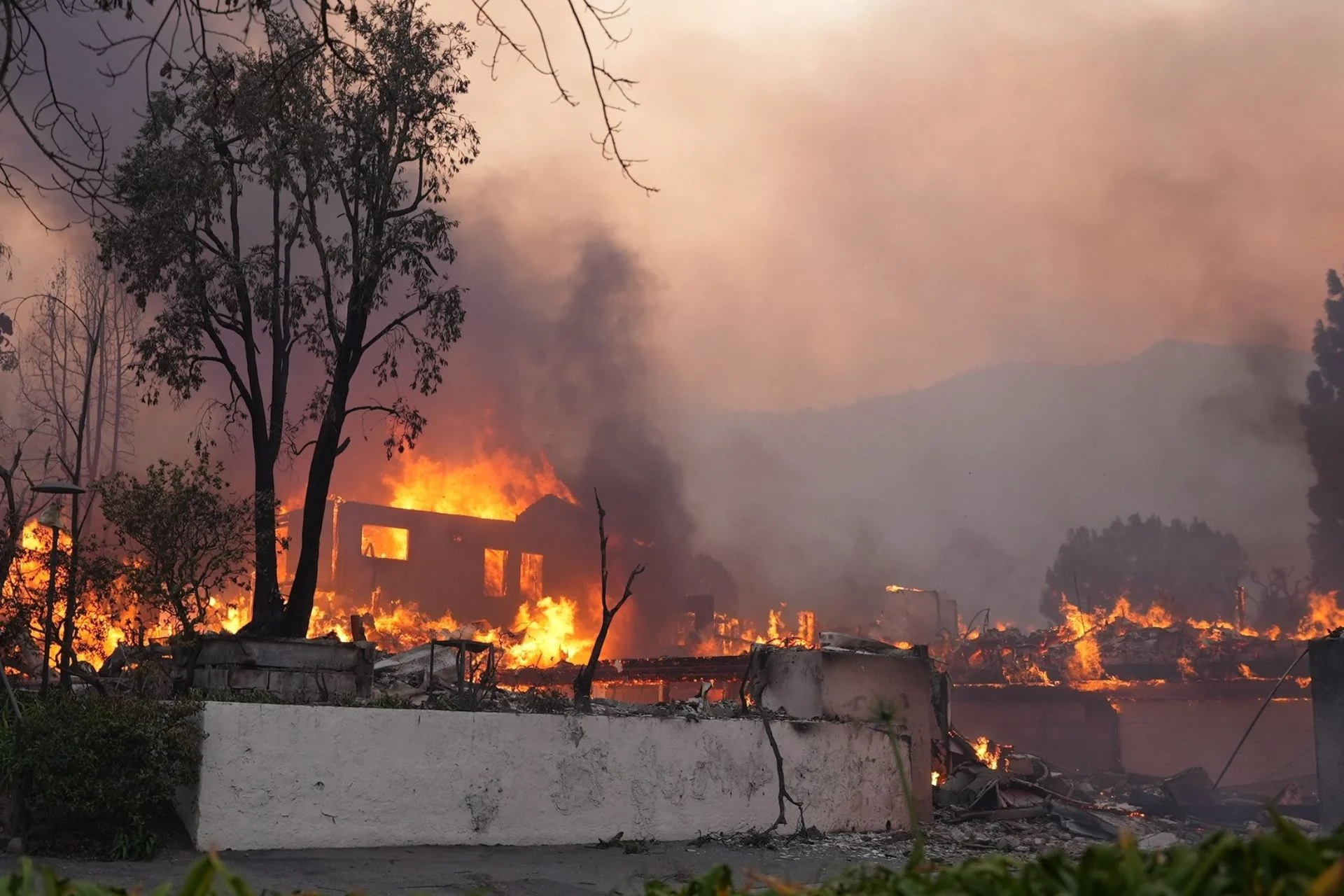
The Palisades and Eaton fires, which tore through Los Angeles County in January 2025, marked one of the most destructive wildfire disasters in U.S. history. Together, they destroyed about 16,000 buildings—roughly four times the typical annual number of structures lost to wildfires across the entire country.
This tragic event exemplifies a growing risk to homes, businesses, and infrastructure across the United States, particularly in the West. According to a study published today in Nature Communications, that risk is on track to triple by mid-century. The researchers found that some 300,000 buildings could be destroyed or damaged by wildfire by 2060 unless we take meaningful action to curb global warming and adapt to fire.
“The central message of our research is that the projected increase in wildfire losses is not inevitable,” lead author Virginia Iglesias, director of Earth Lab at the University of Colorado Boulder, told Gizmodo in an email. “Our estimates describe what could happen if current patterns of mitigation, development, and structural vulnerability persist without additional adaptation. The decisions we make today can substantially change that trajectory.”
To project wildfire risk to U.S. buildings decades into the future, Iglesias and her colleagues first reconstructed that risk from 1945 to 2023 using historical data about burned area, development patterns, and fire impacts. They then fed this reconstruction into a model along with weather, climate, and housing-density data to calculate how many structures could burn between now and 2060.
The researchers found that, under business-as-usual conditions with no adaptation, between 133,200 and 449,100 buildings could burn by mid-century, with an average of 300,000.
Source link