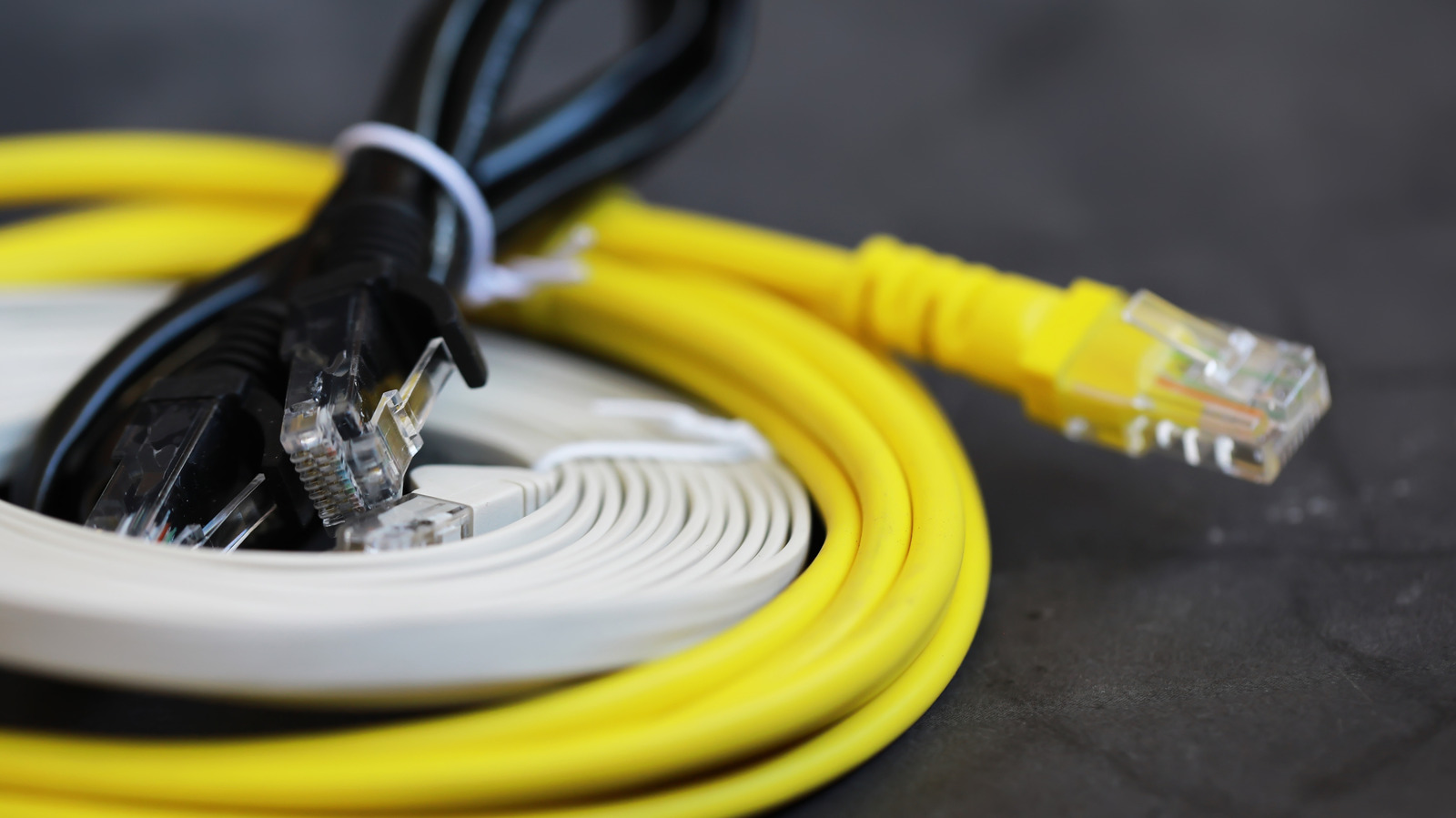
Normally, "twisted" and "cable" are two words you don't want to have in the same sentence. And it's true that if there are tangles or kinks in a wire, that can cause performance issues or possibly lead to breakages. But when it comes to the cables that bring internet into your home, there are twists on the inside that are key to delivering the best possible internet signal. Let's get into the science behind why ethernet cables are hiding twisted wires.
Twisted pair wires aren't a new technology. In fact, the concept is credited to Alexander Graham Bell, and its use begins back in the 1880s. Twisted pair cables were used for the first telephone lines in the US. Many decades later, they are now the industry standard for ethernet as well.
The reason a twist is beneficial for any type of communications cabling comes down to electromagnetism. When electric charges travel along a wire, they create a magnetic field around the thin metal strand. If two separate wires are placed beside each other in parallel, the magnetic field created by one can impede the movement of the electricity on the other, meaning a slower-moving signal. Twisting the wires together means there's an opposing magnetic field to cancel out the possible impediments, meaning the electric signals can travel at their peak speeds. It's all about reducing interference.
Most modern Ethernet cables are comprised of four twisted pairs of copper wires. Depending on how much information is being transmitted, not all pairs may be in use at any given time.
Source link