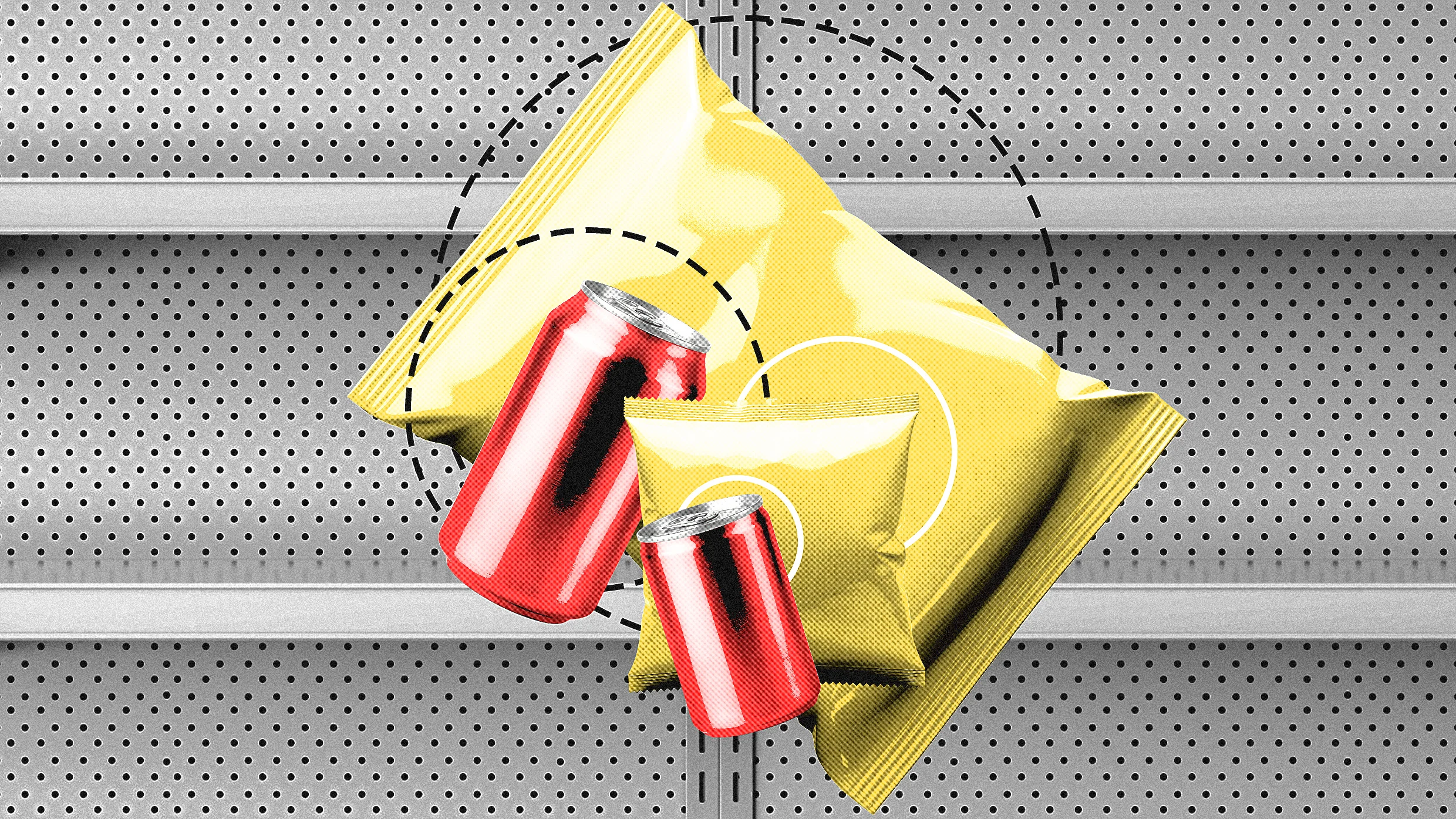
While warehouse stores offering food and household items in bulk will always have a draw among consumers looking for volume discounts, the grocery store of 2035 could look different from today’s, with tinier packaging on its shelves, according to a new report. Unlike stealth shrinkflation, which packs less product into the same sized package for the same price, the new era of smaller portions is part of the selling point.
Traditional packaging strategies for consumer packaged goods (CPG) prioritize things like upselling, pantry loading, and increased consumption, but those strategies are becoming less relevant, warns the report, from the consumer intelligence company NielsenIQ. Instead, manufacturers, retailers, and designers must rethink their packaging formats to meet the needs of multiple shifting consumer trends at once.
Household sizes keep going down, living costs keep going up, and the growing adoption of GLP-1s means more consumers are buying less. In other words, packaging design for high consumption and big families with deep, full pantries is packaging design for a world that no longer exists. Instead, companies need to think smaller.
“If the American household is shrinking, the way it shops is shrinking right along with it,” the report says.
Already, CPG giants like PepsiCo have begun testing smaller units. S. beverages division, said in June the company was introducing mini cans at a low price point and considering “new price points and pack sizes” for other beverages too. 5-ounce single packs of Goldfish that retail for less than $2 .
Source link