Your power strip needs a wall outlet and not another power strip.
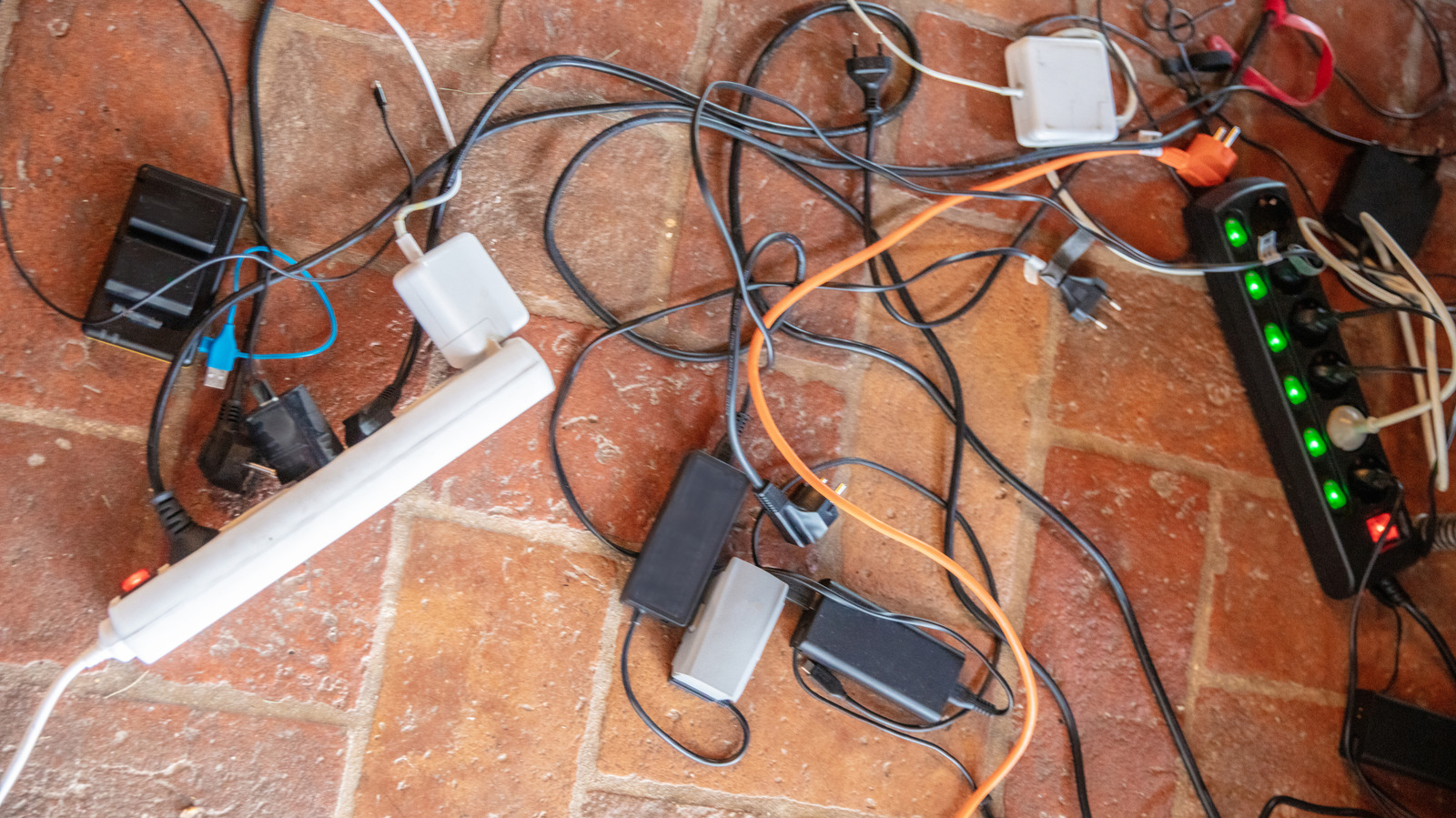
There are so many work-from-home devices nowadays that running a home office or a gaming area easily turns into a charging and power-consumption nightmare of tangled cords, ports and outlets. The idea of stringing power strips together by plugging one into the other (daisy-chaining) is a convenient, understandable solution. More outlets and ports mean more organization and power for each device. Unfortunately, it's not the greatest of ideas, especially if tripped breakers and house fires aren't on your to-do list.
The first problem is that adding sockets doesn't increase electrical capacity. Everything connected to the second strip draws electricity through the first strip's plug and internal components. The first strip is now carrying the combined load of the devices plugged into the second strip. The second problem is each strip's maximum rating, typically expressed in amps. If a second power strip is plugged into the first and the first is maxed out, the second strip could be the straw that breaks the proverbial camel's back, drawing too much and overheating the first strip.
Pushing too much current through the internal wiring and components of the first power strip generates "resistive heating." Given enough time, it can melt the casing and wire insulation, possibly igniting nearby materials. In the aforementioned home office scenario, flammable materials are abundantly present in most cases.
What to do when one power strip isn't enough depends on what you need. Do you need more sockets?
Source link