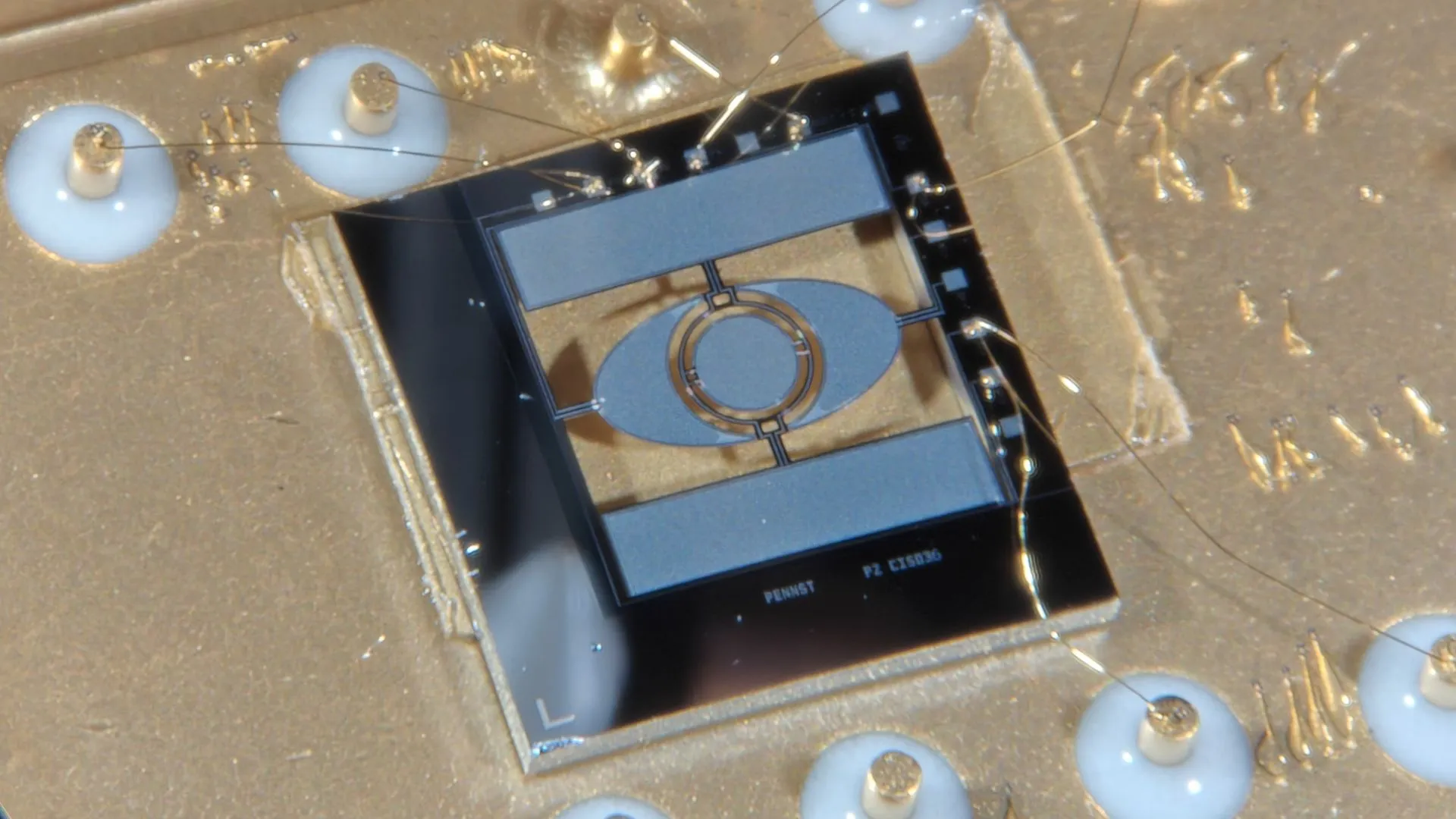
Researchers in the United States have developed a mirror, which could open the door to smaller, faster and more versatile optical systems.
Developed by researchers at Pennsylvania State University, the micro-electromechanical system (MEMS) micromirror capable of doing something that traditionally requires multiple optical components: steering a laser beam in two directions while simultaneously changing its focus at different depths.
“Being able to quickly control light in three dimensions with a single device offers a significant improvement in the overall size and weight of an optical system,” said Hunter Shillingburg, doctoral student in electrical engineering and first author of the study published in Microsystems & Nanoengineering. “Although the fields are all strongly related, I see the most potential being in neurobiology. ” Controlling a laser beam in three dimensions is more complicated than simply moving it from side to side. Conventional optical systems often need separate components to steer a beam and adjust its focal point. The Penn State device combines these functions into a single tiny mirror. The micromirror can tilt in two directions, allowing it to move a laser beam across an area. At the same time, the mirror can change the shape of its reflective surface. Making the mirror flatter or more curved changes the point at which reflected light comes into focus. This means that the same device can control both the position and depth of a laser beam.
Source link