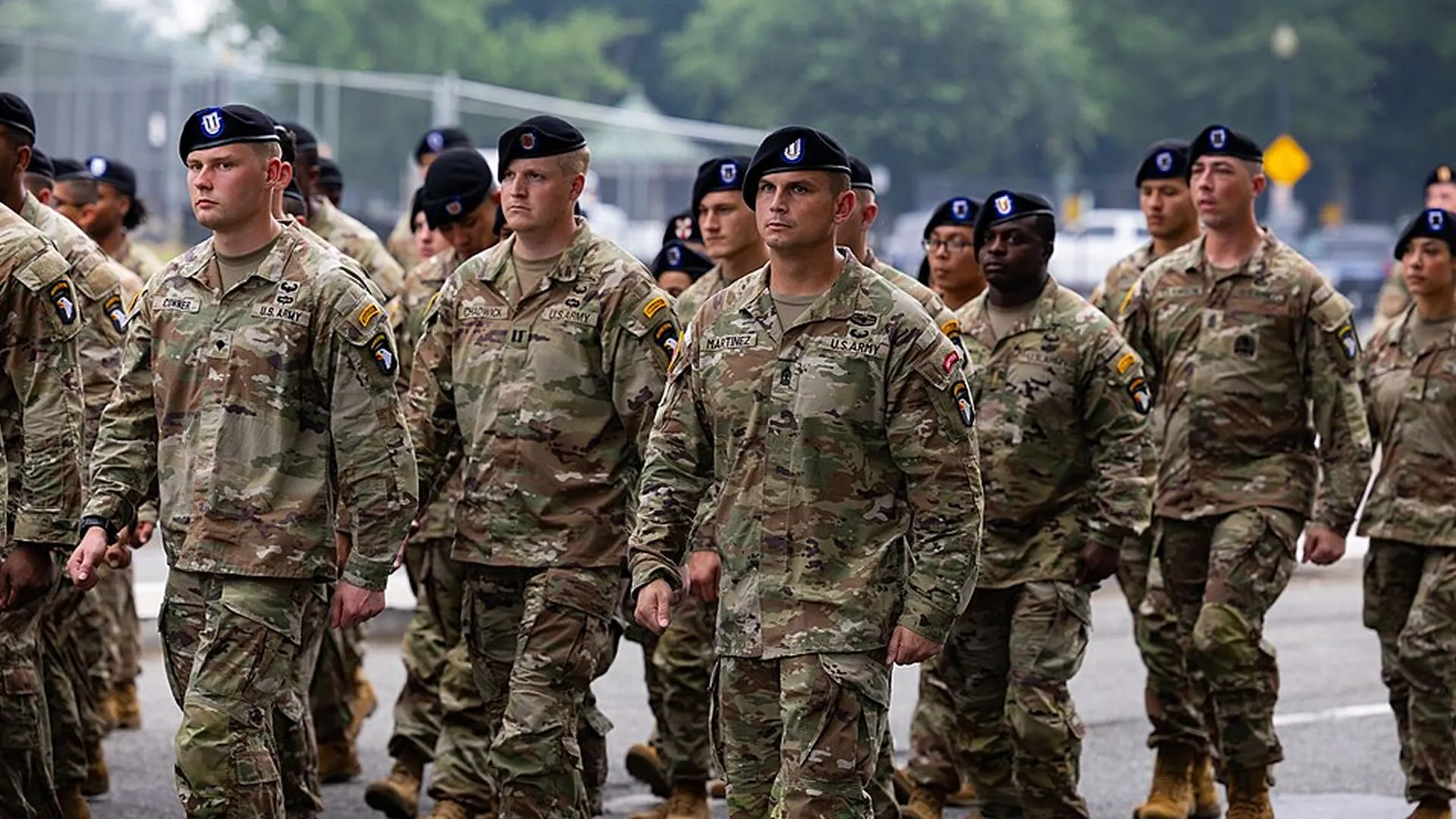
Senior US Army leaders have highlighted the importance of having more land-based troops and assets in the Indo-Pacific should a conflict erupt in the region. In fact, this would likely be as important as Navy and Air Force resources in the region.
During the Association of the United States Army’s annual meeting this week, General Ron Clark (Commander of the US Army Pacific) explained that “the tyranny of distance” would be a major factor during such a conflict.
That might sound a little strange on the surface (no pun intended). The Pacific is an enormous ocean, so logically, emphasis should be placed on naval and associated air assets.
But that is not necessarily the case. In fact, islands, regional allies, and other land-based assets, like missile systems, could be just as important. Arguably more in some circumstances.
Gen. Clark’s comments are essentially saying that, should such a conflict erupt, the US would be at a major disadvantage from the outset. China would be conducting such a war effectively in its backyard, with supply chains much closer to home.
The US, on the other hand, would need to project and supply its power thousands of miles away. Ships and aircraft need fuel and ammunition, maintenance, and other logistical support.
That would not be an easy task over such distances. Chinese assets, on the other hand, would benefit from support and a supply chain very close to potential hotspots like Taiwan.
So, what can be done about it? Well, various island chains are conveniently placed in the region and could be put to use to even the odds.
Source link