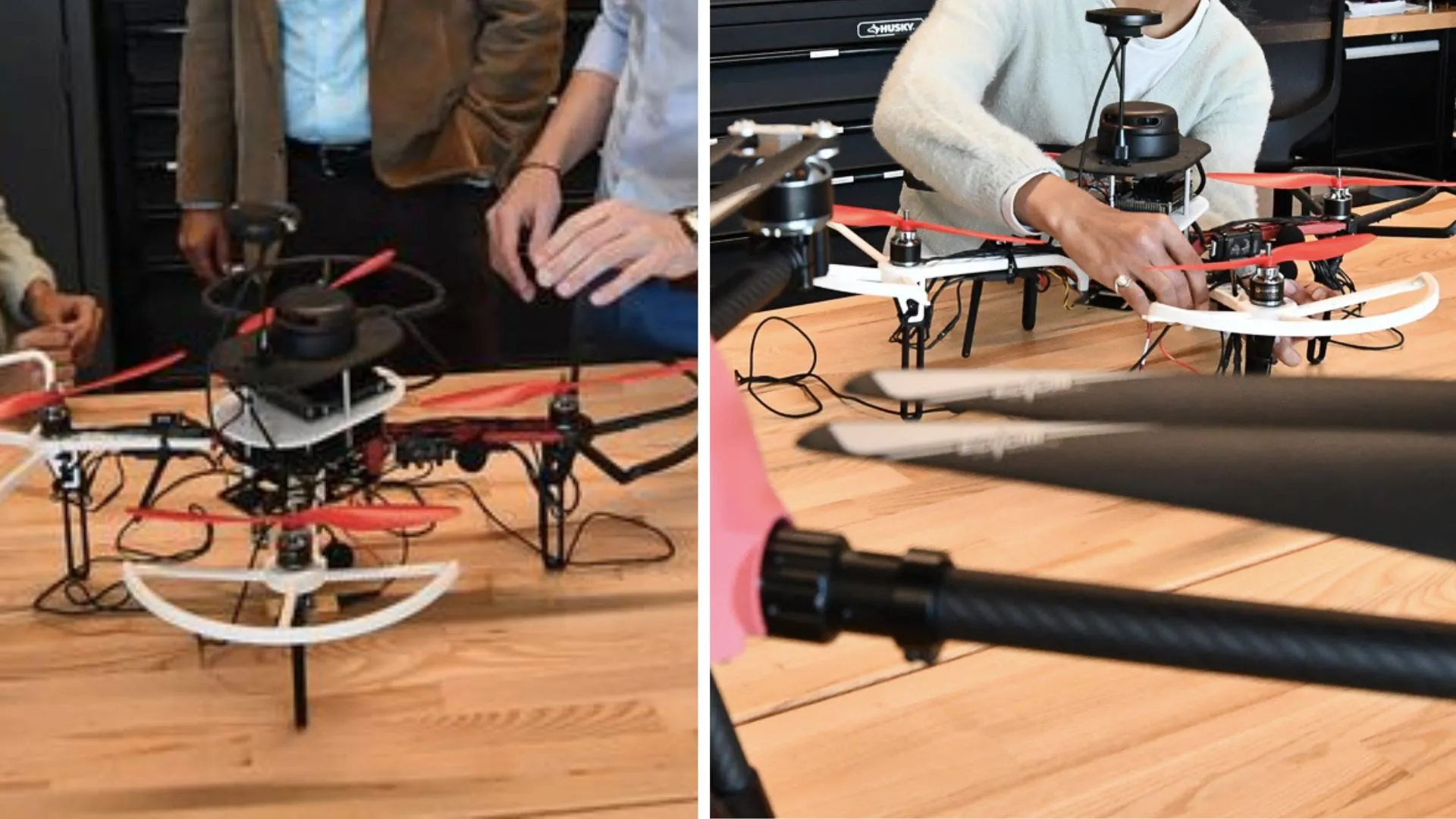
Engineers in the United States are using sound to identify potential catastrophic failures of drones. The team from the University of Cincinnati are using sound to help NASA detect if a drone’s motors or propellers are damaged to prevent a crash.
Research partners recorded the various sounds that drones make when their propellers get chipped or cracked or their motor becomes damaged or begins to fail. They converted the recordings into valuable data that computers at a ground station can use to alert operators that a drone is not airworthy before it takes off.
“The project started in 2024 with interest by NASA in detecting problems with motors before a drone took off,” said UC College of Engineering and Applied Science doctoral student Prissha Chawla. “More and more, drones are being used for public safety. You don’t want them to crash.”
Eventually, the students envision an autonomous drone that can use sound alone to detect damage to its own propellers and other mechanical systems in flight so it can return to base before sustaining a catastrophic failure, according to a press release.
Besides chips or cracks in propellers, Chawla said grit and other debris can get into motor bearings, causing it to seize.
“We’re focusing on pre-flight tests that NASA already runs,” she said. UC student Luke Busse said the damage-detection system could be a feature of fully autonomous “drone-in-a-box” systems. Drones deploy from a weatherproof docking station that handles launch, landing, charging, data upload and mission scheduling without an on-site operator.
Source link