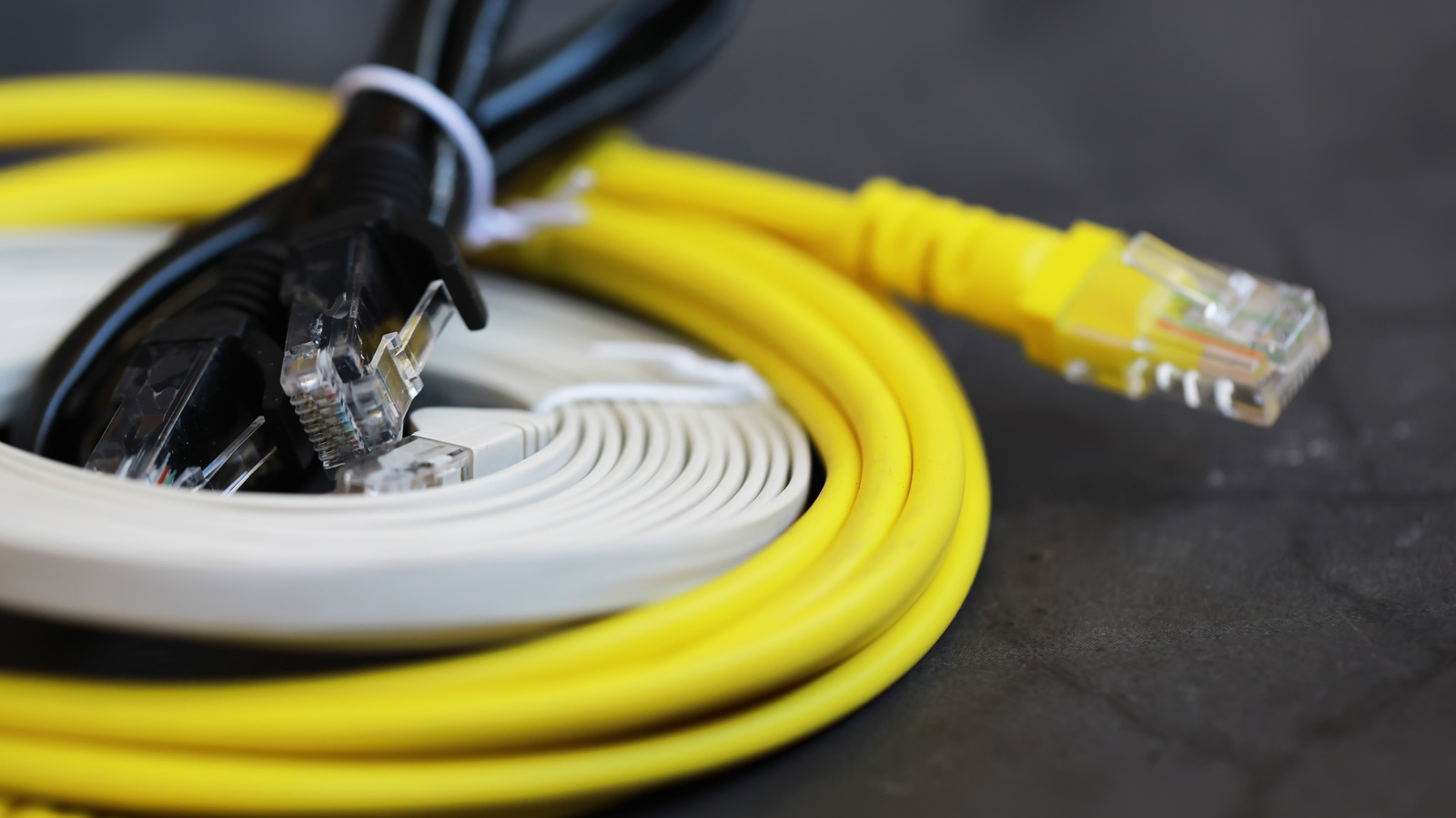
Cable category terms like Cat5e and Cat6 have that industrial twang, so, understandably, some may assume they're tough enough for outdoor use. And they can do more than just improve home internet, which is especially helpful for security cameras on your porch or in your yard. Sure, you can use standard Ethernet cables outdoors, but you can also run outside in a lightning storm with a ten-foot metal pole above your head — just because you can do something doesn't mean you should. Standard indoor cables have a flexible PVC jacket, which is susceptible to sunlight. Over time it will fade and crack, exposing the internal components and ultimately degrading the connection.
Outside temperatures and rain accelerate the problem. The copper in an Ethernet cable won't have proper protection from lightning strikes and other elements. Use a cable specifically rated for outdoor exposure, such as a direct-burial-rated cable made for an in-ground run across the yard. Direct-burial cables are specifically designed for this, and it will be written clearly on the cable jacket. Whatever the cable rating, it's best practice to install surge protection on either end of the cable. While it requires additional hardware, you can avoid the risks of running copper outdoors by using outdoor-rated fiber optic cables instead of Ethernet, though any equipment exposed to the elements would still be at risk.
There's a difference between a direct-burial and an outdoor Ethernet cable. Outdoor cables typically use a more weather-resistant polyethylene jacket (such as LLDPE or PE) instead of the standard PVC jacket.
Source link