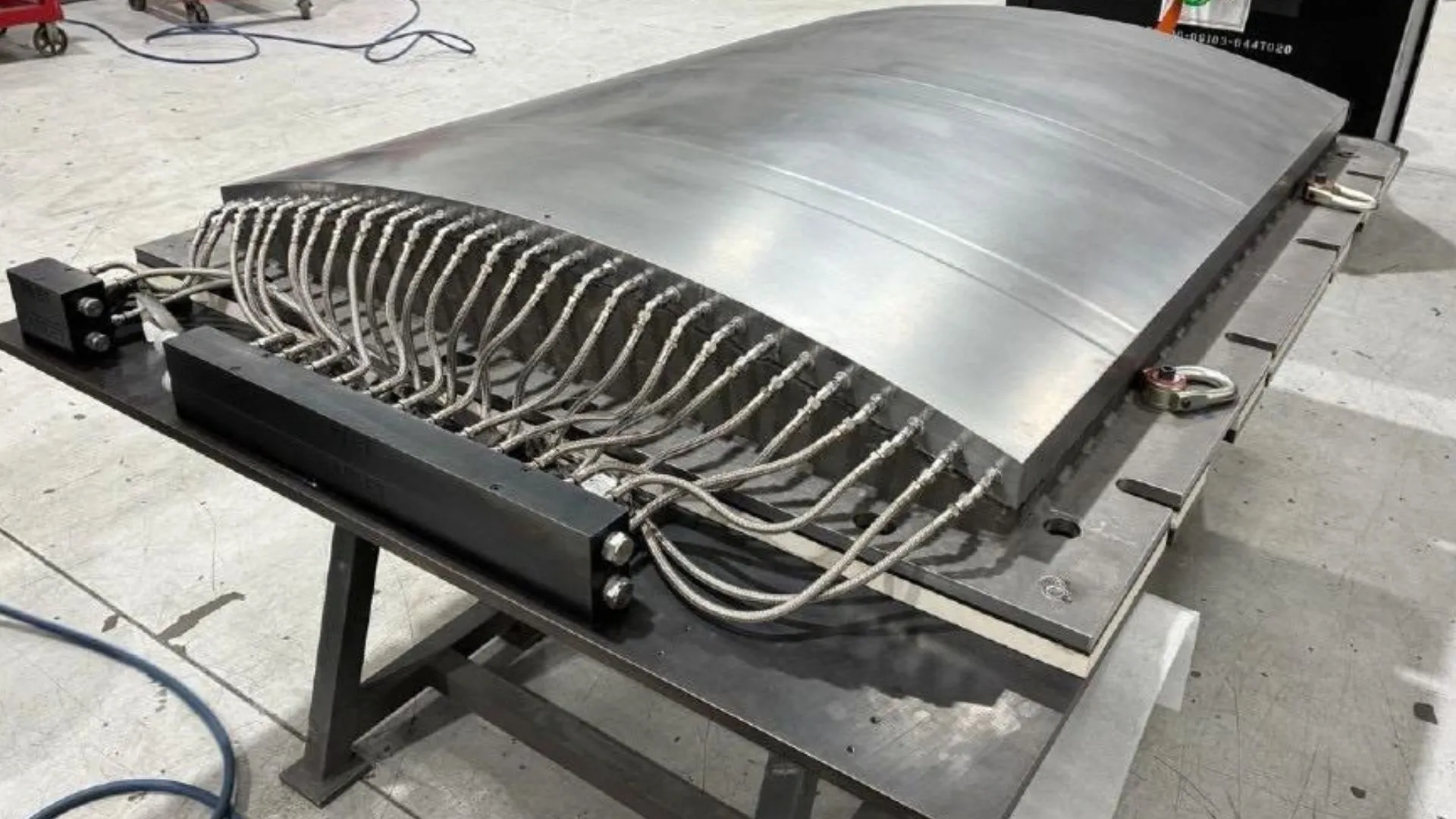
Inside a Tennessee laboratory, a robotic arm spent eight weeks 3D-printing a two-ton, six-foot-tall block of molten steel. Though the massive structure resembles an industrial sculpture, it is actually a cutting-edge piece of aviation equipment.
Known as a Stamp Form Die (SFD) mold, the tool is designed to shape lightweight, high-performance thermoplastic composite doors for next-generation aircraft.
Engineers from Oak Ridge National Laboratory and Boeing 3D-printed this metal mold using advanced wire-arc additive manufacturing. It combines mild and stainless steel alongside internal curved cooling channels to optimize strength, durability, and thermal control.
It is designed to support NASA’s Hi-Rate Composite Aircraft Manufacturing (HiCAM) project, which aims to make commercial planes lighter and more fuel-efficient.
“NASA and its industry partners are working to increase the production rate of composite aircraft to meet the growing demand for air travel and to reduce aircraft weight, which improves fuel efficiency, lowering costs for aircraft operators,” said Richard Young, NASA HiCAM project manager. “Doing so is essential to maintaining U.S. competitive advantage in the commercial aircraft industry.”
Normally, manufacturing a mold this size takes months of traditional metalworking—casting, forging, and heavy drilling. But researchers wanted to push technical boundaries. The project tested whether additive manufacturing can produce thermally controlled molds faster and cheaper than standard metalworking techniques.
To replace standard manufacturing methods like machining and casting, Boeing partnered with small and large American businesses and ORNL to 3D-print a Stamp Form Die tool. This metal punch press mold functions like slices of bread in a sandwich, stamping hot plastic sheets into lightweight thermoplastic aircraft doors.
Source link