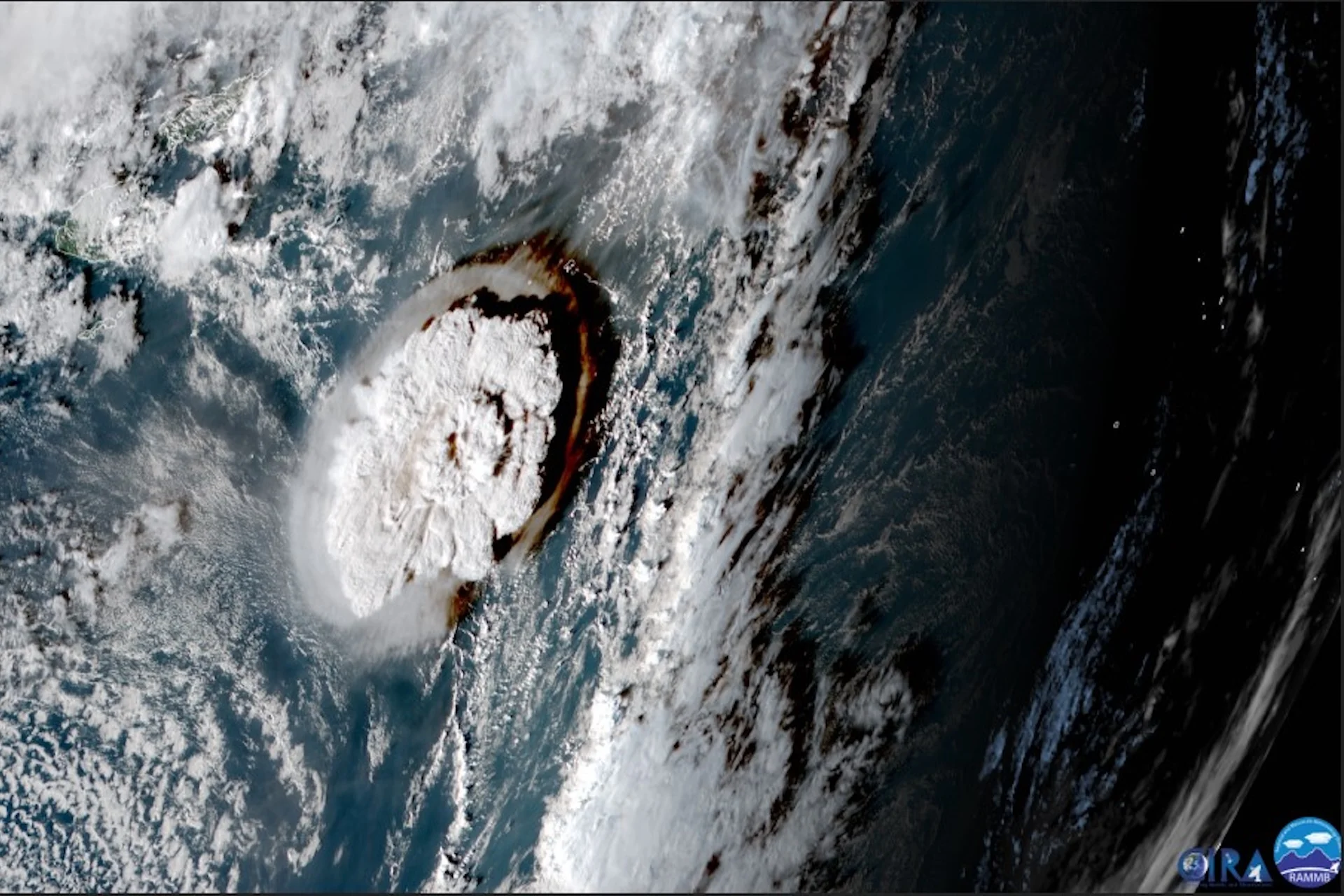
Every single house on Mango Island was swept away by the tsunami that radiated out when the submarine volcano Hunga-Tonga Hunga-Ha’apai exploded off the coast of Tonga in 2022. Only two buildings survived on nearby Fonoifua Island. Seven people were killed, and at least 19 more were injured—with many cries for help lost as the eruption’s undersea avalanche severed telecommunications cables. It was reportedly the largest and highest tsunami ever documented from an undersea volcanic blast.
The event was so powerful that scientists unofficially debated creating a new “ultra” category to describe it. But despite Tonga’s eruption being visible from space, very little data exists on submerged volcanoes like Hunga-Tonga Hunga-Ha’apai due to these geological formations’ deep-sea depths and the obvious challenges of doing science fathoms below sea level across far-flung patches of ocean. Nevertheless, a team led by marine geoscientist Marta Ribó at the Auckland University of Technology (AUT) in New Zealand has managed to amass an impressive body of evidence for what made Tonga’s 2022 blast so deadly.
Using rare high-resolution sonar maps collected before and after the event, among other tools, Ribó and her team have determined that Tonga’s eruption created its unusually powerful tsunami by blasting out the geological formation above it into nearly one large, contiguous block. The heaving collapse of this mass back into the post-eruption depression, which geologists call a “caldera,” helped launch volumes of ocean water at “exceptional tsunami magnitude,” the researchers wrote , with waves as high as 131 feet (40 meters) as far away as 62 miles (100 kilometers) from the blast.
Source link