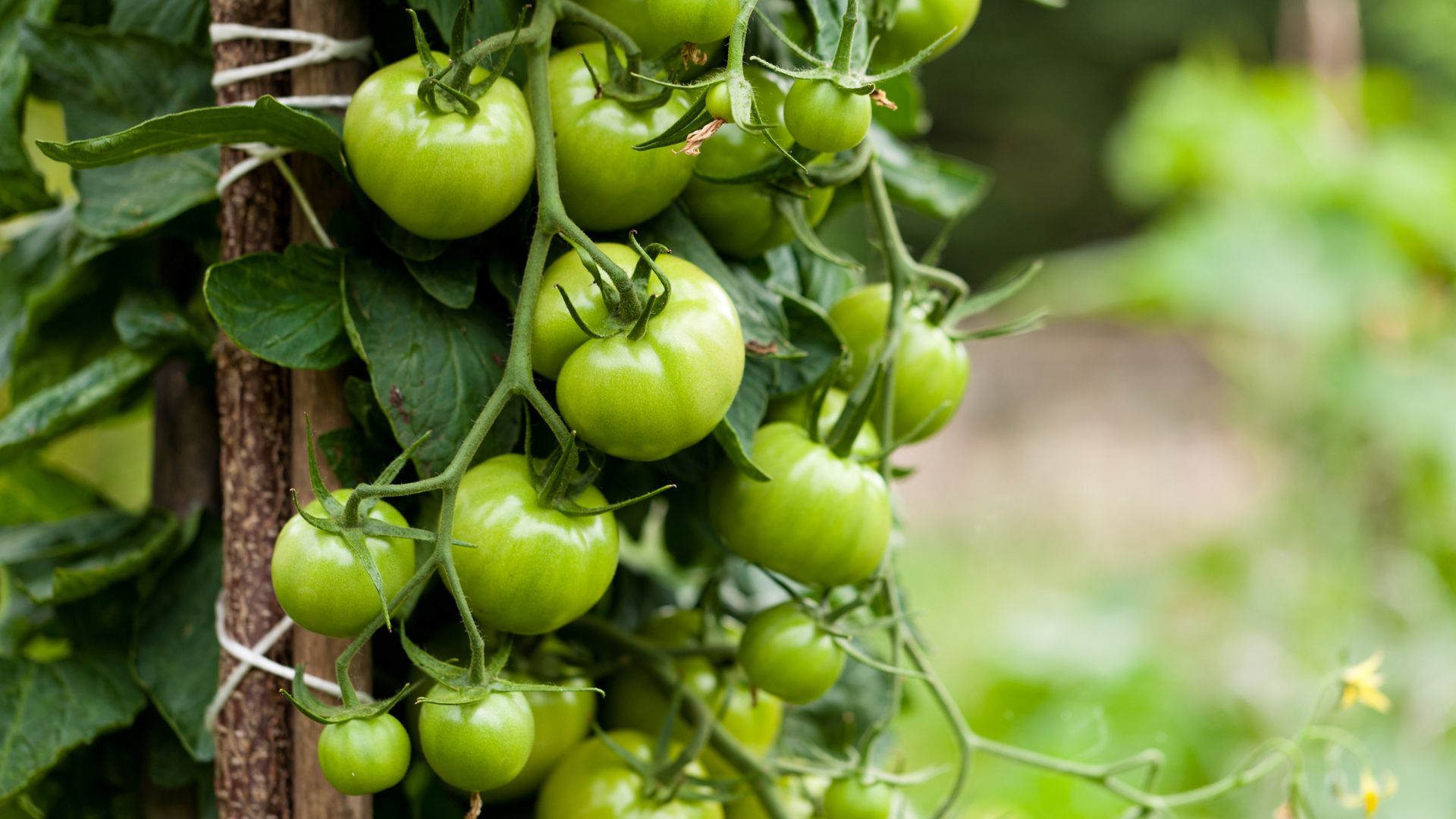
Ask around any plot come autumn, and you'll find two types of growers: those harvesting bowls of sweet red fruit, and those staring at vines heavy with stubbornly green tomatoes as the first frost looms. If you belong to the second group, don't panic.
Many assume late-season tomatoes just need more sunshine or extra time. In reality, tomato ripening is controlled by a specific biological trigger — and with one simple pruning technique, you can trick the plant into turning those green fruits bright red before cold weather shuts everything down.
To understand why tomatoes refuse to turn red early fall, you have to look at the pigments inside the fruit. Tomatoes rely on two primary compounds for color: carotene, which creates yellow and orange tones, and lycopene, which provides that rich, classic red.
The production of lycopene relies heavily on ambient temperature. Tomato plants actively synthesize lycopene within a specific thermal window — ideally between 68°F and 77°F (20°C to 25°C).
When temperatures climb above 85°F (29°C) during late-summer heatwaves, or dip below 55°F (13°C) as autumn nights cool down, lycopene production halts entirely.
The plant then enters a state of pigment paralysis. The fruit is mature, but the chemical switch required to turn it red is locked. Sunlight actually has very little to do with this phase; heat and internal plant hormones drive the entire process.
When fall temperatures drop, force your plant into emergency survival mode to redirect its energy into existing fruit. Start by snipping off the main growing tip at the top of the plant to stop vertical growth.
Source link