The oceans are filled with all sorts of wonders and horrors alike. And don’t worry, scientists are still discovering new species of life that fit into the latter camp.
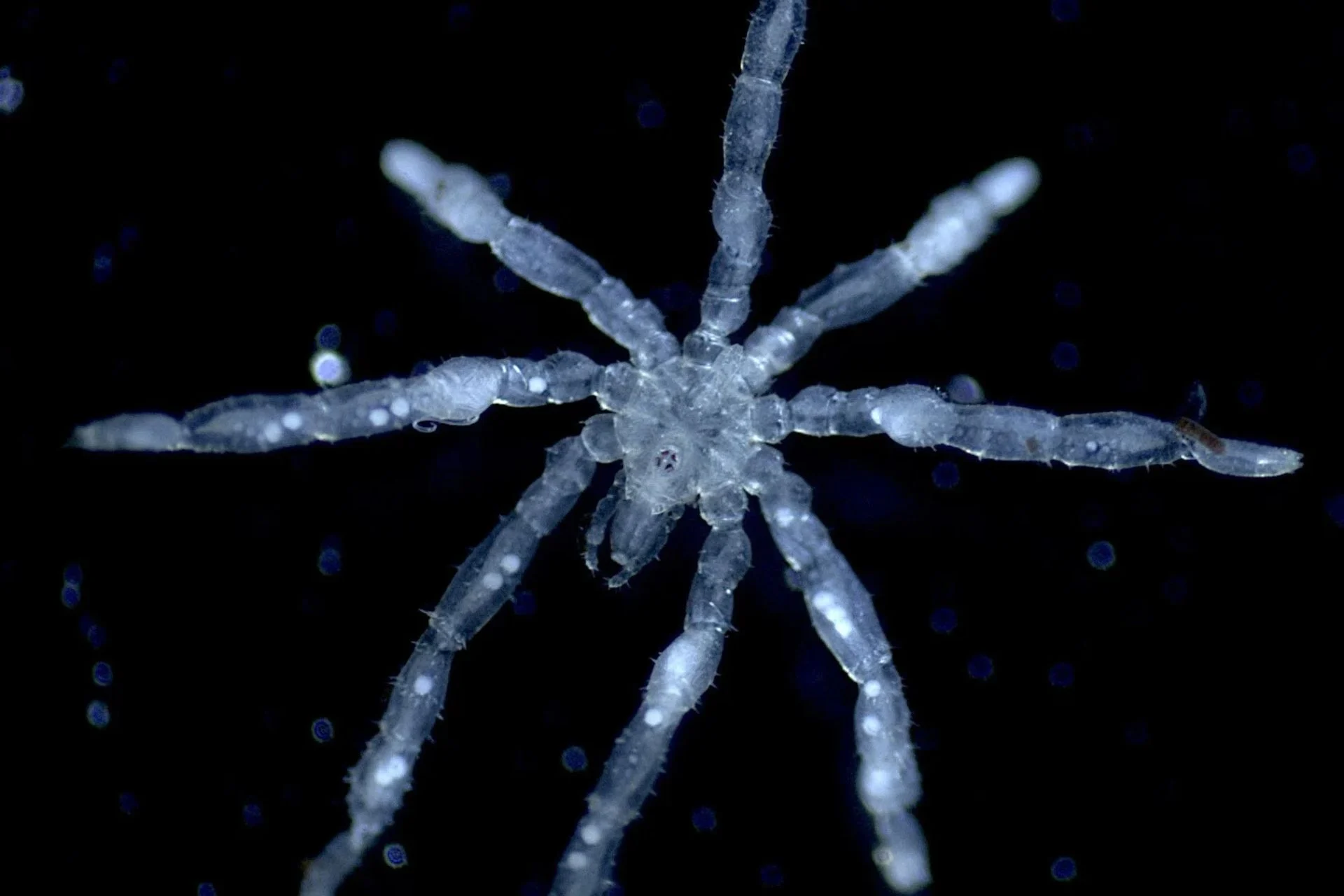
Researchers at the University of British Columbia in Canada have been exploring the waters of the Salish Sea in the Pacific Northwest. In a recent study, they described finding two new species of sea spiders in the area, both of which have unique features. One boasts red eyes, hairy legs, and a three-lipped mouth, while the other, a parasitic critter, was found with its own tinier parasites.
The team’s work “is a testament to how effective targeted sampling efforts, such as scuba diving, can be for discovering new species,” lead study researcher Cormac Toler-Scott told Gizmodo.
Sea spiders belong to the branch of life known as chelicerates, a broad group of arthropod life that also includes spiders and other arachnids. However, they emerged roughly 500 million years ago, long before the arrival of the first true spiders, according to Toler-Scott. And unlike most chelicerates these days, these animals were perfectly content to stay in the water (horseshoe crabs are another marine cousin of theirs). Sea spiders are also called pycnogonids.
There are many species of sea spider out there waiting to be classified, yet scientists only discover a few every year, Toler-Scott says. Practically speaking, that’s because they tend to be tiny and cryptic animals, meaning that species in a region are hard to spot and often look very similar to one another, at least at first glance.
Source link