Compared with Neanderthals, Denisovans are a relatively recent discovery. But evidence suggests they’re among our closest extinct relatives—and now, we may finally have a face to put onto a Denisovan’s name.
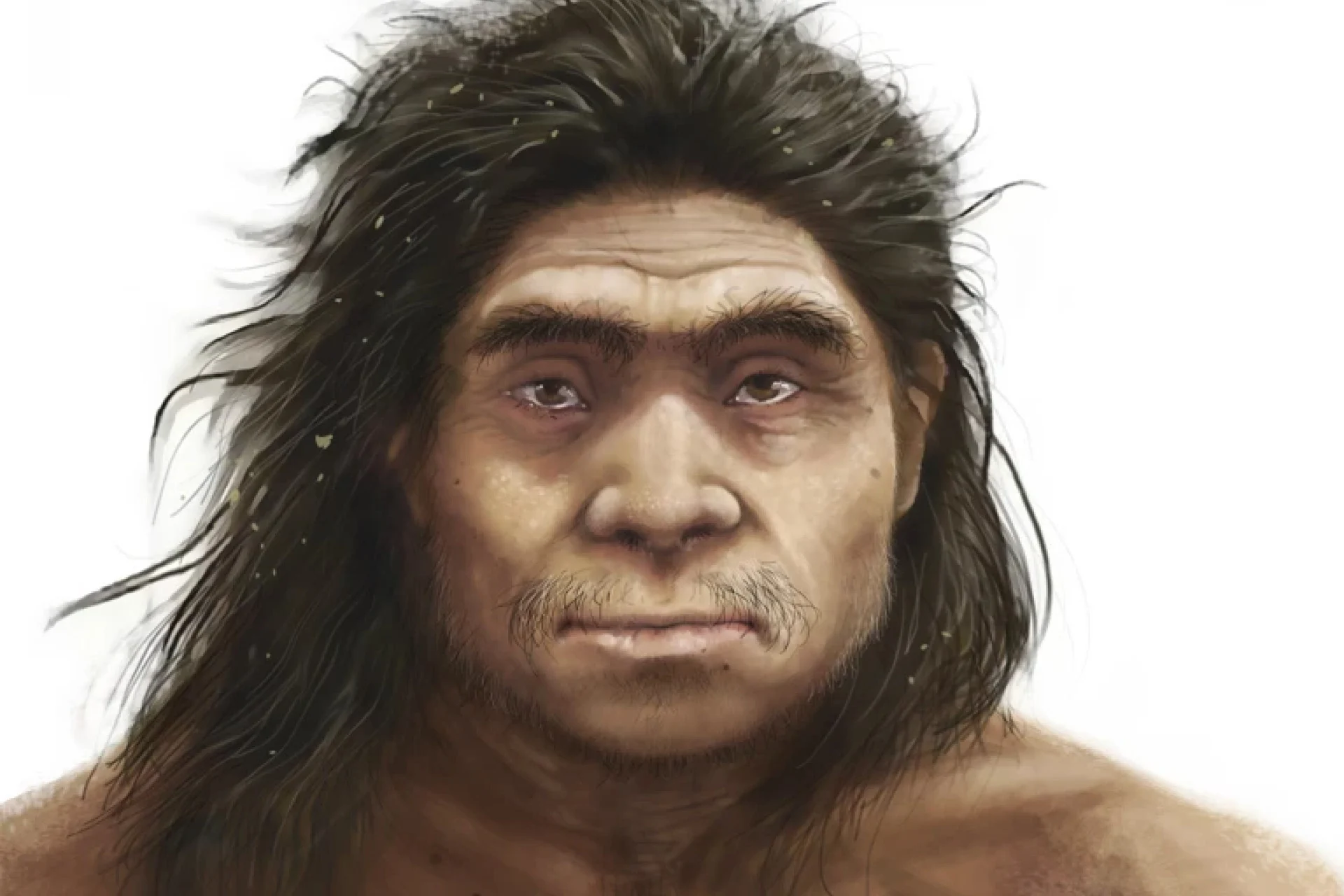
Just last month, research teams primarily based in China reported the discovery of Denisovan remains that shed light on their geographical distribution, as well as their biology, diet, and societal practices. Yesterday, a different team involving many of the same researchers published new analyses in Nature of a collection of 20 fossils from Xujiayao, a paleoanthropological site in eastern China. From protein analysis, the team affirmed that the remains—dated to between 138,000 and 199,000 years old—were Denisovan. Further investigations of the fossils’ physical features allowed the team to guess what these ancient humans might have looked like—hence, the illustration above.
According to the study, Denisovans had a low cranial profile, rectangular eye sockets, a massive brow ridge, flat cheekbones, and a slightly protruded jaw. Overall, the Denisovans shared some features with the Neanderthals but were different in several important aspects, according to a statement (translated via Google) on the findings from the Institute of Vertebrate Paleontology and Paleoanthropology at Chinese Academy of Sciences (CAS).
K. Natural History Museum. Since then, discoveries—primarily in Asia—added to evidence that the Denisovans were a genetically distinct species from Neanderthals .
Source link