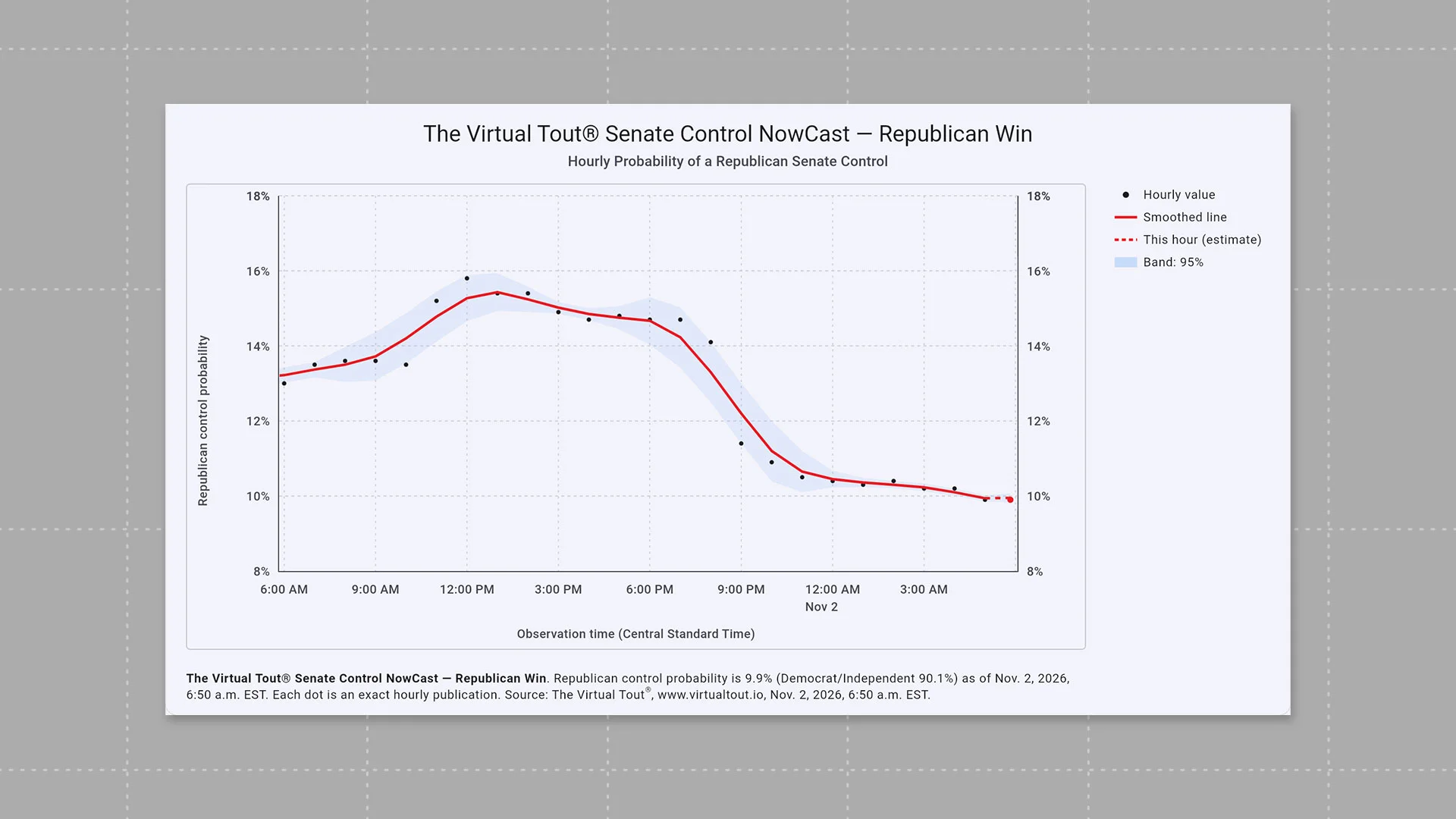
With control of the U.S. Senate on the line, a new tool is tracking the battle in near real time.
Throughout the day, the platform pulls data from the prediction markets Kalshi and Polymarket, and then uses statistical models to simulate a million versions of the midterm elections, with outcomes for each of the 35 races in play.
“Every 10 minutes, I’m running a gigantic simulation,” says Thomas Miller, the faculty director of the master’s in data science program at Northwestern University, who created the approach.
He calls it “NowCasting.” Prediction markets change very quickly, and so do the forecasts. “There’s value in that they’re very responsive to the news,” he says.
Some research suggests that prediction markets can be more accurate than polls. Still, the price that traders are betting on a candidate is not the same as a probability—if it costs 60 cents to bet that a Republican candidate will win, that’s not the same as a 60% chance of winning. For one thing, a large bet from a single trader could theoretically distort the price.
Platform fees and other pricing dynamics also affect the numbers. The prices of bets on all candidates in an election can add up to more than $1, even though their probabilities of winning should add up to 100%.
Miller’s approach adjusts the prices and combines them with statistical modeling used in finance and econometrics. “It’s data driven—I’m a data scientist, not a politician, not a pollster,” he says.
Source link