Many ancient creatures were somehow both terrifying and awesome at the same time. Take, for instance, humongous griffinflies big enough to blot out the view of the Sun. Similarly, a newly discovered ancient amphibian is terrifying, awesome—and, importantly, illustrative of the remarkable evolutionary pathways of life on Earth.
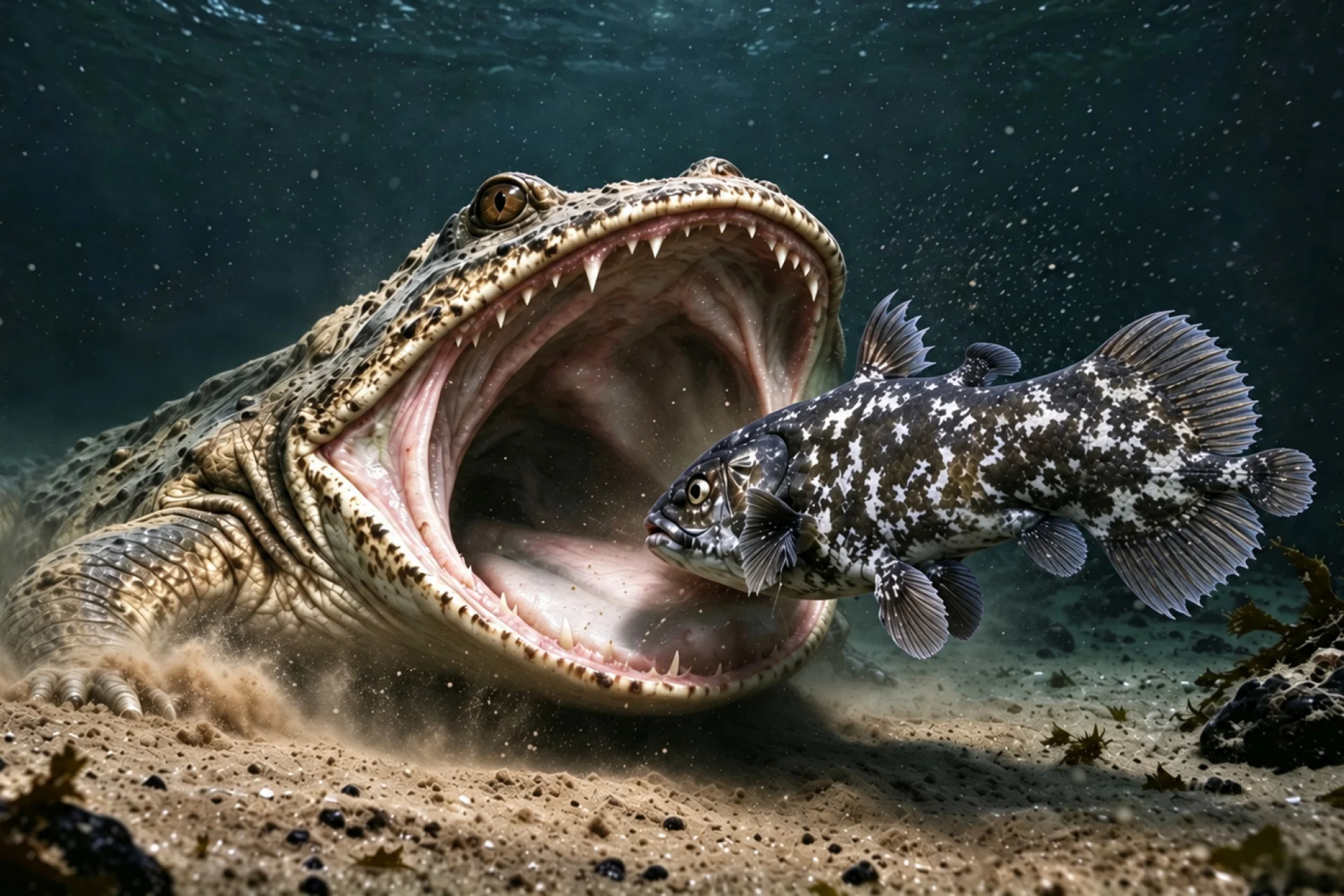
A study published today in Nature Ecology & Evolution describes the physiology and biology of Gerrothorax maritimus, an amphibian from roughly 237 million years ago, during the Late Triassic. The amphibian’s skeletons—recovered from previous excavations in China—were nearly complete, allowing the researchers to estimate its length at about 30 inches (75 centimeters). Similar to an extant suction-feeding shark, the animal likely sat in wait on the seafloor for prey unfortunate enough to cross its path—as vividly depicted in the terrifying image above. Importantly, the creature, thanks to its heavily armored body, is the first known amphibian to fully adapt to life in salty ocean water.
“We hitherto did not know of any amphibians that live in the sea full-time,” corresponding author Ryosuke Motani told Gizmodo. This was “despite the fact that all other land vertebrate lineages have such members and that there are over 8,000 amphibian species today,” added Motani, a vertebrate paleontologist at the University of California, Davis.
The two skeletons analyzed for this study were initially collected by local farmers in Guizhou Province, southwestern China, and recently acquired by a local fossil repository. This province is now inland, but the fossils were deposited at least 18 miles (30 kilometers) away from any islands, according to the paper.
Source link