The U.S. Air Force wants to use rockets to deliver cargo from the skies at a fraction of the time it takes for regular transportation, and a recent test brought the concept one step closer to reality.
The Air Force Research Laboratory (AFRL) recently used SpaceX’s Starfall reentry capsule to study how survival equipment fares during the journey to space and back. The test is part of a broader effort to develop military supply deliveries from space to remote locations that may not have roads or runways.
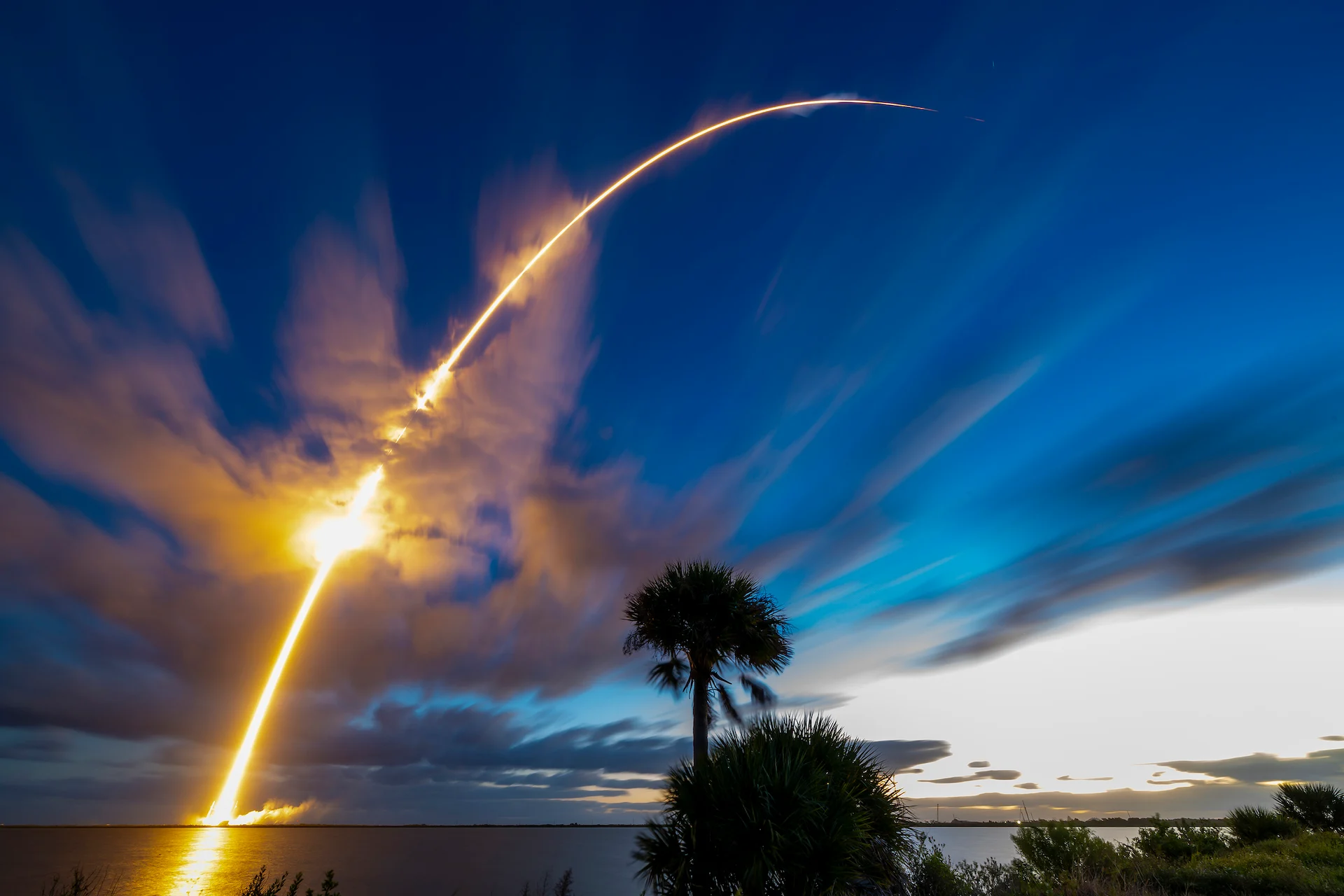
On October 20, SpaceX launched its Starfall capsule on board a Falcon 9 rocket as part of the company’s Bandwagon-5 rideshare mission. Starfall is a disk-shaped reentry vehicle designed to perform research and development in the microgravity environment, as well as provide point-to-point cargo delivery.
The capsules can carry up to 2,205 pounds (1,000 kilograms) and are equipped with a heat shield designed to withstand the scorching temperatures of the fiery descent through the atmosphere. Using a single main parachute, along with pilot and drogue parachutes, Starfall is designed to perform a relatively soft landing after it survives the journey from orbit.
For the recent demonstration, researchers from AFRL loaded the capsule with experimental cargo pods. Each pod carried equipment for a specific mission, as well as environmental sensors to measure shock, temperature, and vibration during the journey to space.
The team was particularly interested in measuring the durability of electronics and survival equipment, including batteries, a satellite communications-enabled tracker, a reverse-osmosis water desalination system, emergency medical supplies, and survival gear, according to AFRL .
Source link