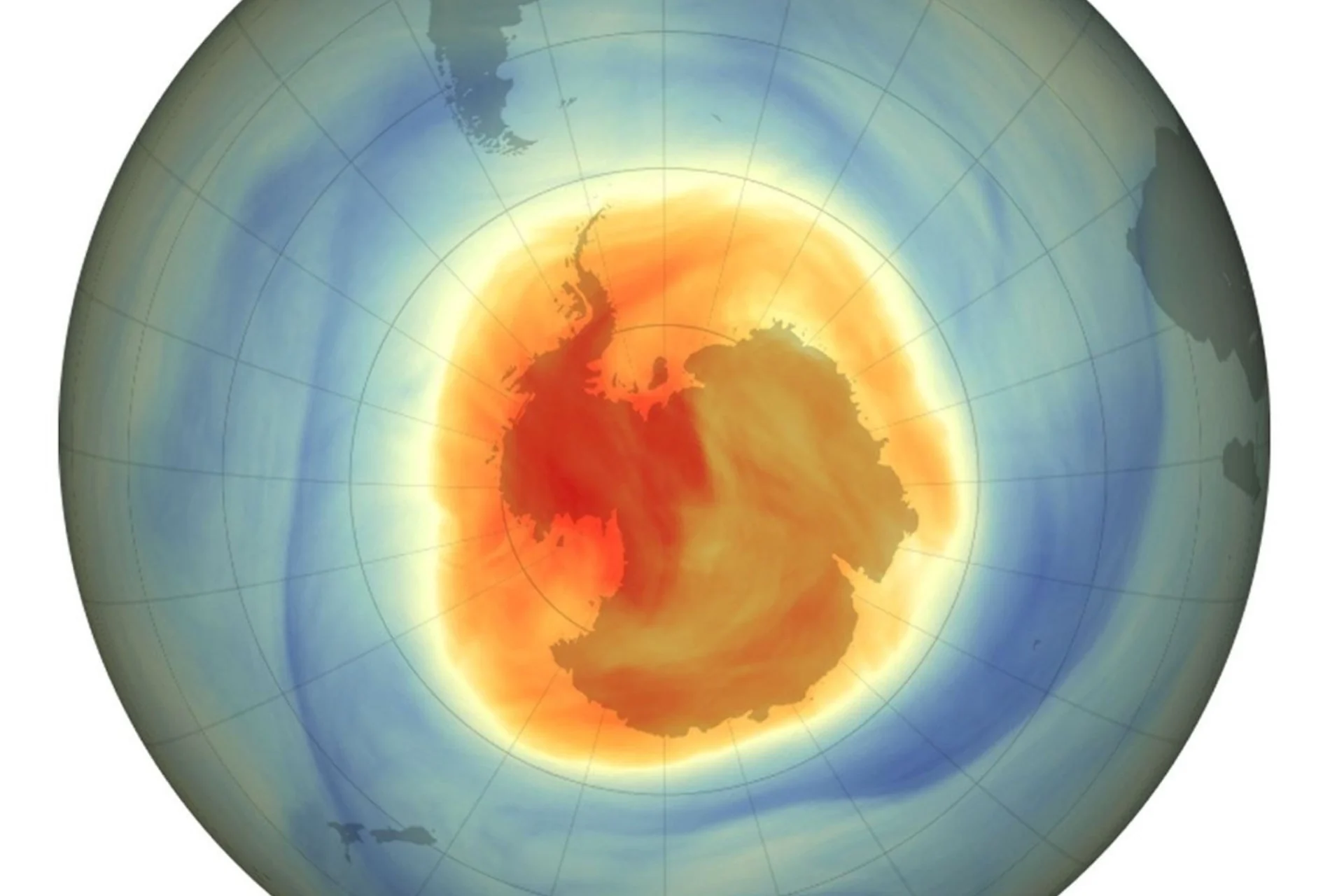
The ozone hole has made its annual appearance over the South Pole, and this year, it’s the biggest it’s been in a decade. Scientists believe “atypical weather conditions” are to blame.
An unusually powerful polar vortex allowed the hole to grow particularly large in September, according to a report from NASA and the National Oceanic and Atmospheric Administration (NOAA). When it reached its greatest extent on September 18, it stretched across 10.5 million square miles (27.1 million square kilometers). That’s nearly three times the area of the United States, and about 90% as large as the biggest ozone hole ever observed, which occurred on September 9, 2000.
Last year, federal scientists reported a relatively small hole—the fifth smallest since 1992. Despite this year’s significant size jump, experts say the ozone hole is still on track to recover by the end of the century.
“The annual ozone hole has been forming later in the season in recent years, which tells us the ozone layer is healing,” Paul Newman, a senior scientist at the University of Maryland and leader of NASA’s ozone research team at Goddard Space Flight Center, said in a statement. “But an unusually powerful polar vortex has extended ozone depletion in the Antarctic this season, allowing the hole to grow to proportions we haven’t seen in a decade.”
This region of exceptionally depleted ozone forms in the Antarctic stratosphere in late winter and early spring. Human-made air pollutants containing chlorine and bromine, primarily chlorofluorocarbons (CFCs), initiate the depletion process.
Source link