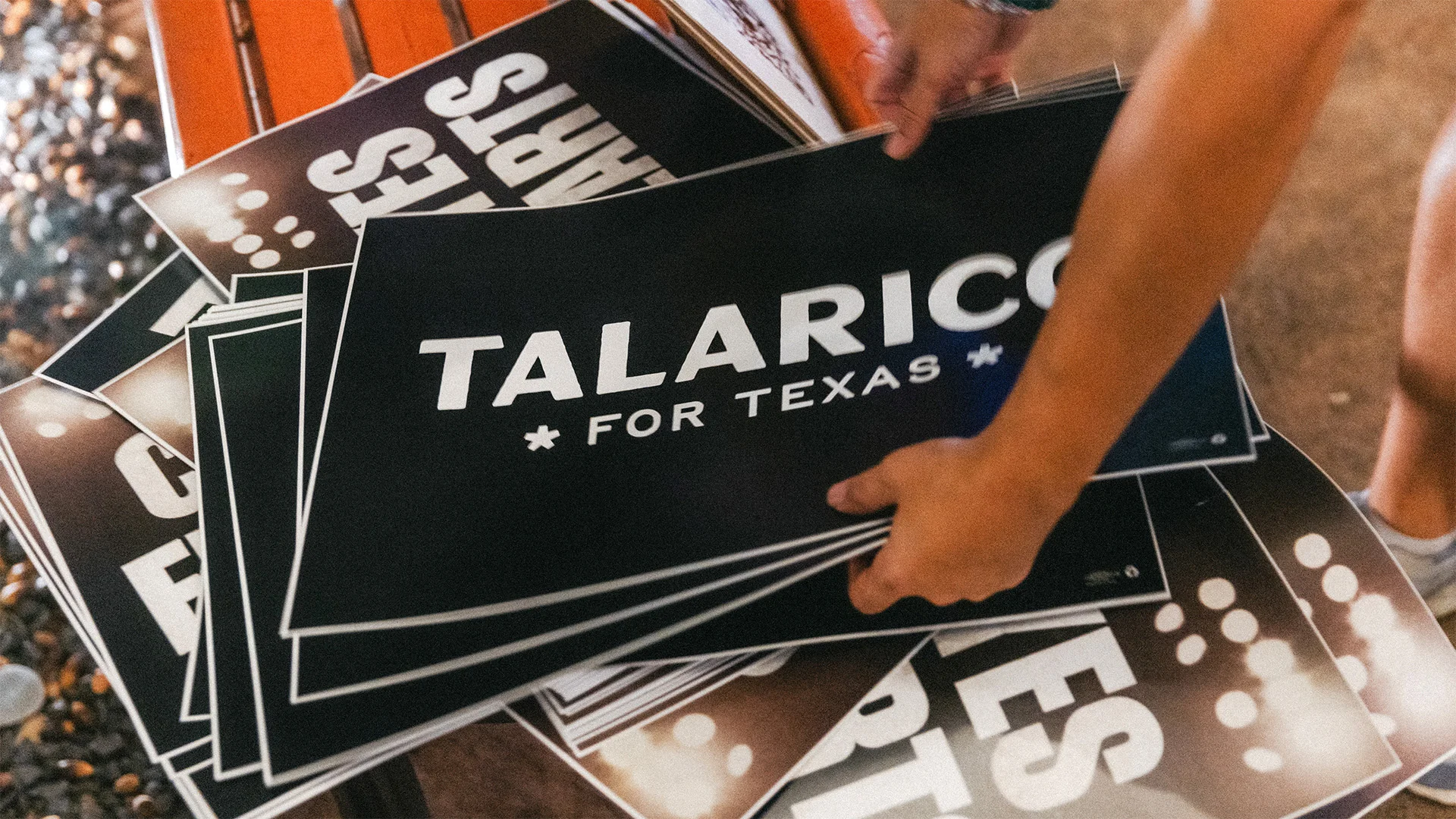
When Griffin Glaze, a graphic designer, got the job to design James Talarico’s campaign branding, she had just 10 days to do it. Talarico, a Texan who is running for a seat in the U.S. Senate, wanted something that looked unique and nonpartisan.
“A lot of what they were looking for was something that felt different,” Glaze tells Fast Company. The North Carolina designer came up with a visual identity inspired by hand-painted signage at Baptist churches, with texture and imperfection designed into its typography and asterisks for decorative Texas stars. Though they tried out different color palettes, they kept coming back to black and white because it didn’t feel linked to a political party.
“I think for him, it was really about finding something that could be healing, more of a bridge builder, that when people saw it, they weren’t immediately jumping to a specific party,” Glaze says.
Across the midterm campaign, candidates have branded themselves to play down their party affiliation, and for good reason. Gallup polling earlier this year found 45% of U.S. adults self-identify as independent, a record high. In an environment where both major parties and the president are unpopular, candidates would rather not be associated with any of it, and it’s showing up visually in their logos, mailers, and advertisements.
For candidates actually running as independents, the trend towards less partisan branding means designing the word “independent” directly into their logos . But Democrats and Republicans too have found ways to signal a break from their parties.
Source link