The rise of private spacetech in India is frequently celebrated through triumphant headlines, but behind every successful rocket launch or satellite deployment lies a gritty reality defined by hundreds of investor rejections, acute supply chain bottlenecks, and the constant threat of orbital failure.
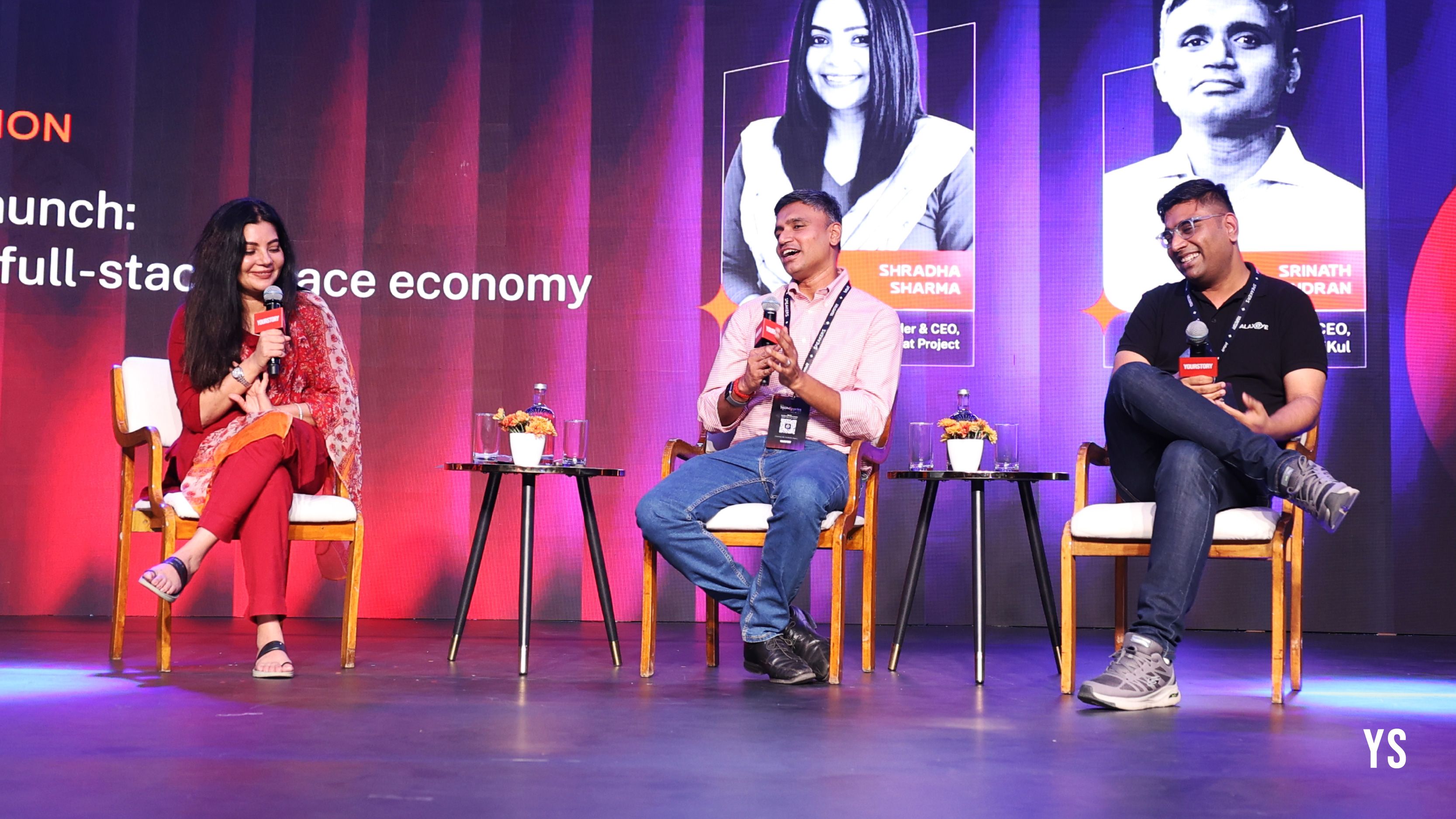
Speaking with Shradha Sharma, Founder and CEO, YourStory and The Bharat Project, at the 17th edition of YourStory’s flagship tech-startup event, TechSparks, Srinath Ravichandran, Co-founder and CEO of AgniKul Cosmos, and Suyash Singh, Co-founder and CEO of GalaxEye, shared practical insights into the complex task of building aerospace ventures in an emerging market.
When AgniKul started in 2017, the Indian regulatory framework for private space technology was still evolving, and local venture capital for deeptech was nearly non-existent. Ravichandran faced 275 investor rejections before securing initial backing. Singh encountered similar headwinds at GalaxEye, facing roughly 100 rejections. Their early survival required breaking down ambitious goals into manageable steps rather than relying on rigid long-term master plans.
“The first thing to do is to get started, one way or the other... break it down into smaller milestones and start doing something... patience building was the big thing for me at least,” Ravichandran said.
This pragmatic mindset also reshaped how both founders approached business models. In Western nations, legacy aerospace programmes often require half a billion dollars in capital before generating revenue. In contrast, AgniKul focused on a pay-per-kilogram transportation model for small satellites, effectively operating as a cargo carrier to orbit, aiming for commercial viability at the $50 to $60 million mark.
Source link