A new sensor thinner than a strand of hair that is being developed by scientists in Germany could reportedly measure temperature, pressure, and lubricant thickness directly inside hydraulic pumps, and detect early signs of wear.
The device comes from the Fraunhofer Institute for Surface Engineering and Thin Films (IST). It is intended to make monitoring hydraulic pumps easier. The project, known as ThinSor, also involves scientists from the University of Magdeburg and RWTH Aachen University.
The sensor is composed of a layer system that’s just a few micrometers thick. It is applied directly to a pump’s valve plate, where it could monitor critical operating conditions without requiring holes or other modifications.
According to the researchers, it could measure pressures below 7,252 pounds per square inch (50 MPa), along with temperature and lubricant thickness. In addition, the system could improve hydraulic pump efficiency, extend pump lifespan, and reduce unexpected downtime.
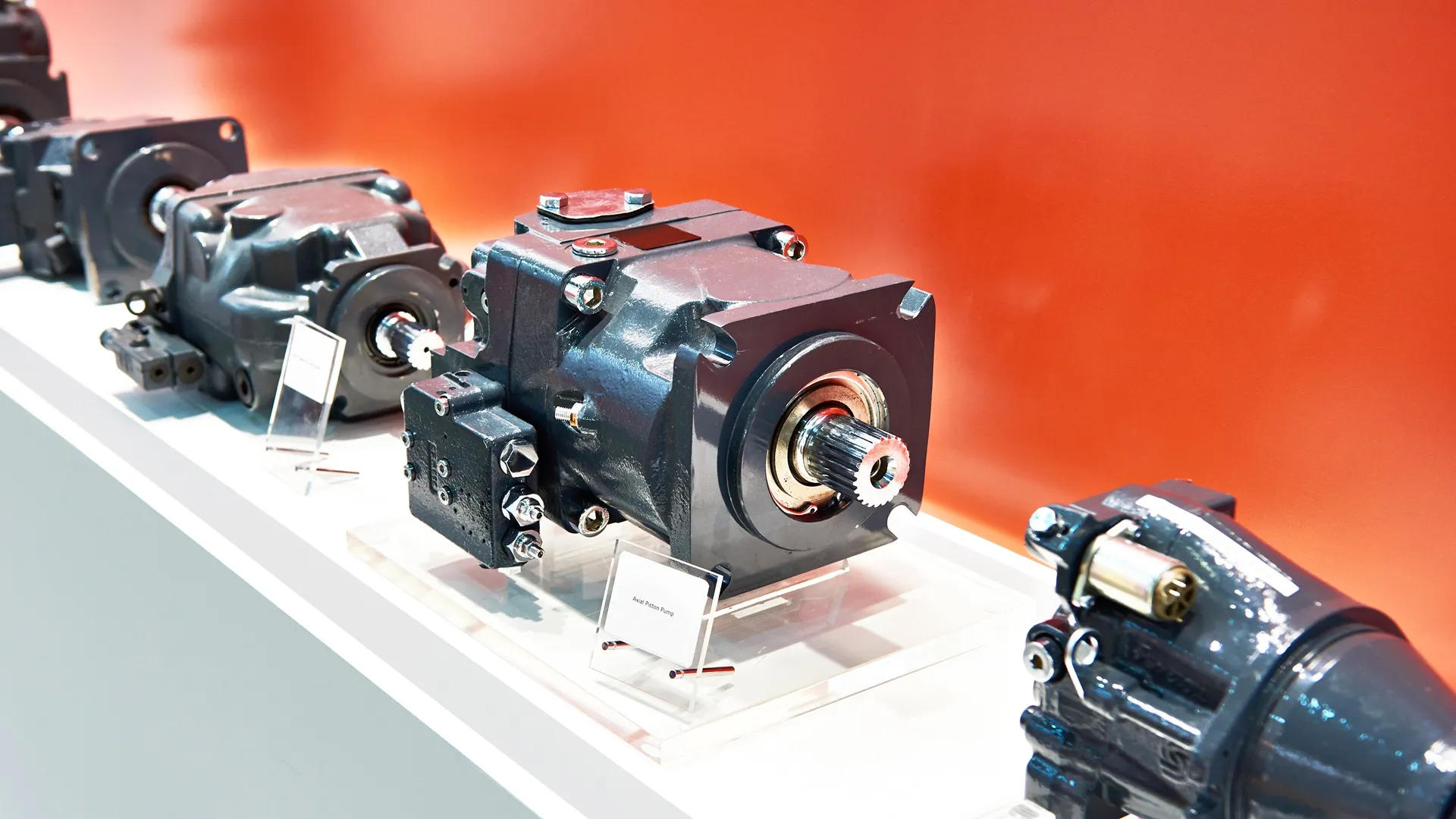
Axial piston pumps rely on pistons that move back and forth along or at a slight angle to a rotating drive shaft. These are commonly found in hydraulic systems, where they move fluid under high pressure. Their performance depends heavily on the interaction between the rotating cylinder barrel and the stationary valve plate, which are separated by a thin film of lubricant.
The lubricant reduces the friction between the two parts and prevents them from wearing out too quickly. Still, measuring what happens in this narrow gap during operation remains difficult.
Traditional methods often require drilling holes or modifying pump components to install the sensors.
Source link