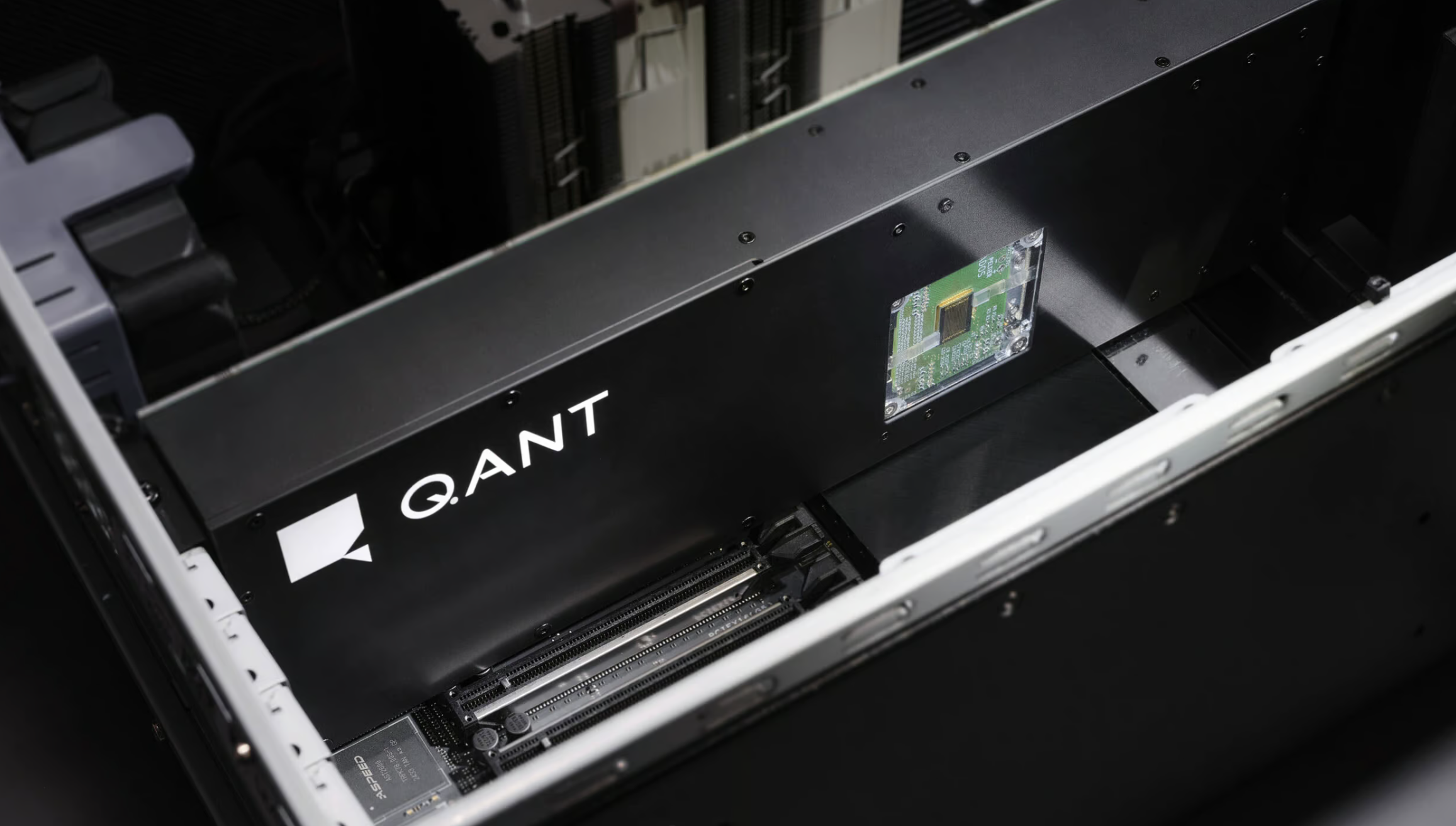
Q.ANT, a startup out of Stuttgart, Germany, builds processors that use light instead of electricity to do some of the math behind AI. The company pitches them as a way to run AI on a fraction of the power today’s chips need.
Now developers can start writing software for those chips without owning one. Q.ANT pushed a free, open-source software kit to GitHub this week that lets developers build and test programs on a normal computer, then run them on the real chips once they get access.
This is a move out of Nvidia’s playbook. Nvidia owes its lead in AI as much to CUDA, the software developers use to program its GPUs, as it does to the chips themselves.
But with Q.ANT, the catch is the hardware. Q.ANT’s chips are running at a few research computing centers, and everyone else has to wait “the coming months” for cloud access through German provider IONOS or an on-site server from Q.ANT.
The kit, called the Q.ANT Native Computing Toolkit, is free on GitHub under a license that allows commercial use. Developers can work in Python or C. The key piece is a simulator that mimics the chip on a regular computer, with no Q.ANT drivers required.
What can it do today? The AI tools in this first version focus on running models that have already been trained. The examples read handwritten numbers, identify objects in photos and outline shapes in images. Training still happens on regular CPUs and GPUs.
Source link