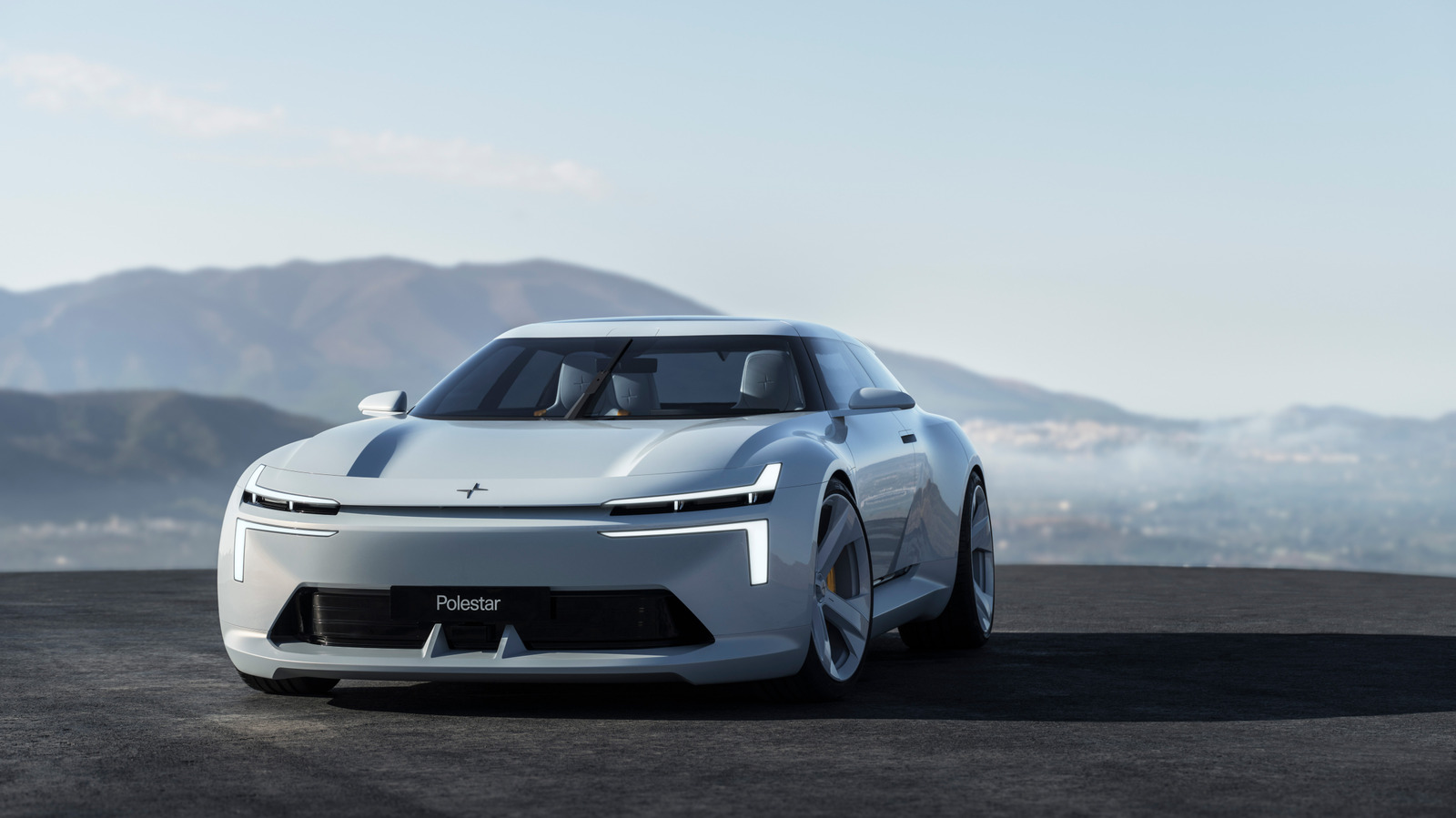
The Formula 2030 has inflatable seats, a pop-up LiDAR sensor and physical buttons.
Polestar's new concept EV understands the assignment: build hype for the brand by showcasing a futuristic car that gets auto enthusiasts drooling. But if you live in the US, you can't buy the Formula 2030. To be fair, nobody can buy it, since it's a concept. However, unless something changes, Americans won't be able to buy the future EVs it inspires, either.
Starting in 2027, the US Bureau of Industry and Security won't let Polestar sell new models. The decision stems from the Connected Vehicle Rule, which restricts the sale of cars with software or hardware from China or Russia. The only exception is if automakers get authorization, which Polestar hasn't received. Polestar is majority-owned by China's Geely; Volvo falls under the same parent company, but it received authorization.
That said, if you're the type to get excited about a car you know you'll never own, the Formula 2030 offers plenty of eye candy. The low, compact four-door sports car stands just 53 inches tall and measures 184 inches long. It has Polestar's Dual Blade headlights, a wraparound windshield and what Polestar describes as a "UFO-esque" rear.
Polestar skipped the full-width light bar common on EVs in favor of Single Blade rear lights, which the company says will appear on future production models. There's even a concealed LiDAR sensor that only appears when the car switches to autonomous mode.
2-inch center screen. Four individual seats have inflatable bolsters that adjust to whoever's sitting in them, and the seat backs are made from a combination of European flax and bio-based polypropylene.
Source link