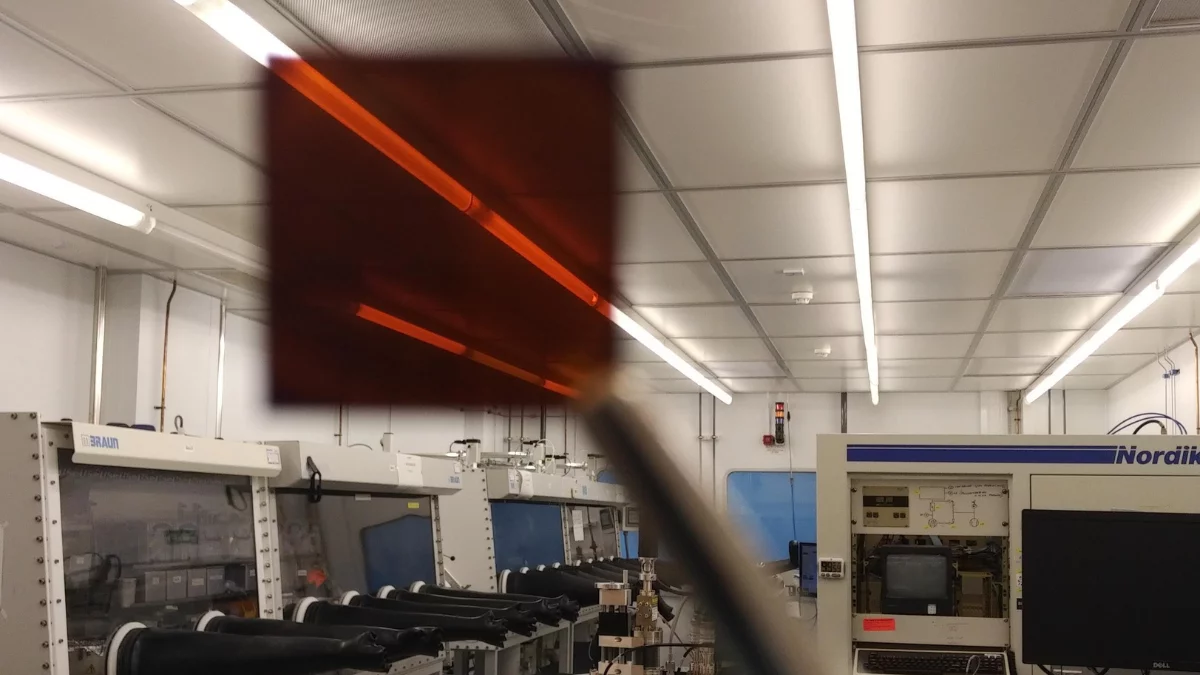
A new, greener, lower-toxicity method could help manufacture flexible perovskite solar panels at an industrial scale using a roll-to-roll printing.
The University of Surrey has proposed this safer method for producing high-efficiency perovskite solar modules. It uses a low-toxicity, bio-derived solvent formulation that operates at room temperature and reduces the use of hazardous industrial chemicals.
The process uses continuous printing techniques similar to newspaper printing, which could make large-scale production both eco-friendly and cost-effective.
“The potential impact of our innovation extends beyond simply replacing a hazardous solvent. A process based on easy-to-use, non-toxic solvents and simpler coating steps reduces the need for solvent handling, waste treatment and the safety infrastructure that goes with them,” said Professor Ravi Silva, Distinguished Professor, Director – Advanced Technology Institute (ATI) and Head of NanoElectronics Center.
Lightweight, flexible perovskite solar cells have long promised to replace silicon panels. But hazardous production processes have hindered their commercial potential. Typically, creating printable perovskite inks requires large quantities of toxic solvents, including dimethylformamide and acetonitrile.
These chemicals endanger factory workers and create severe environmental burdens. Surprisingly, just a single gigawatt-scale manufacturing line can consume over 90,000 liters of toxic solvent.
Now, that chemical barrier is crumbling. The researchers discarded the hazardous legacy chemicals. And formulated a “Significantly Reduced-Toxicity” (SRT) ink system built on bio-derived ingredients.
The team created a quick-drying formulation using a combination of ethanol and 2-methyltetrahydrofuran, a eco-friendly solvent derived from agricultural and forestry waste. This bio-derived mixture eliminates the need for anti-solvent processing steps. Skipping those harsh steps saves energy and conserves raw materials during manufacturing.
Source link