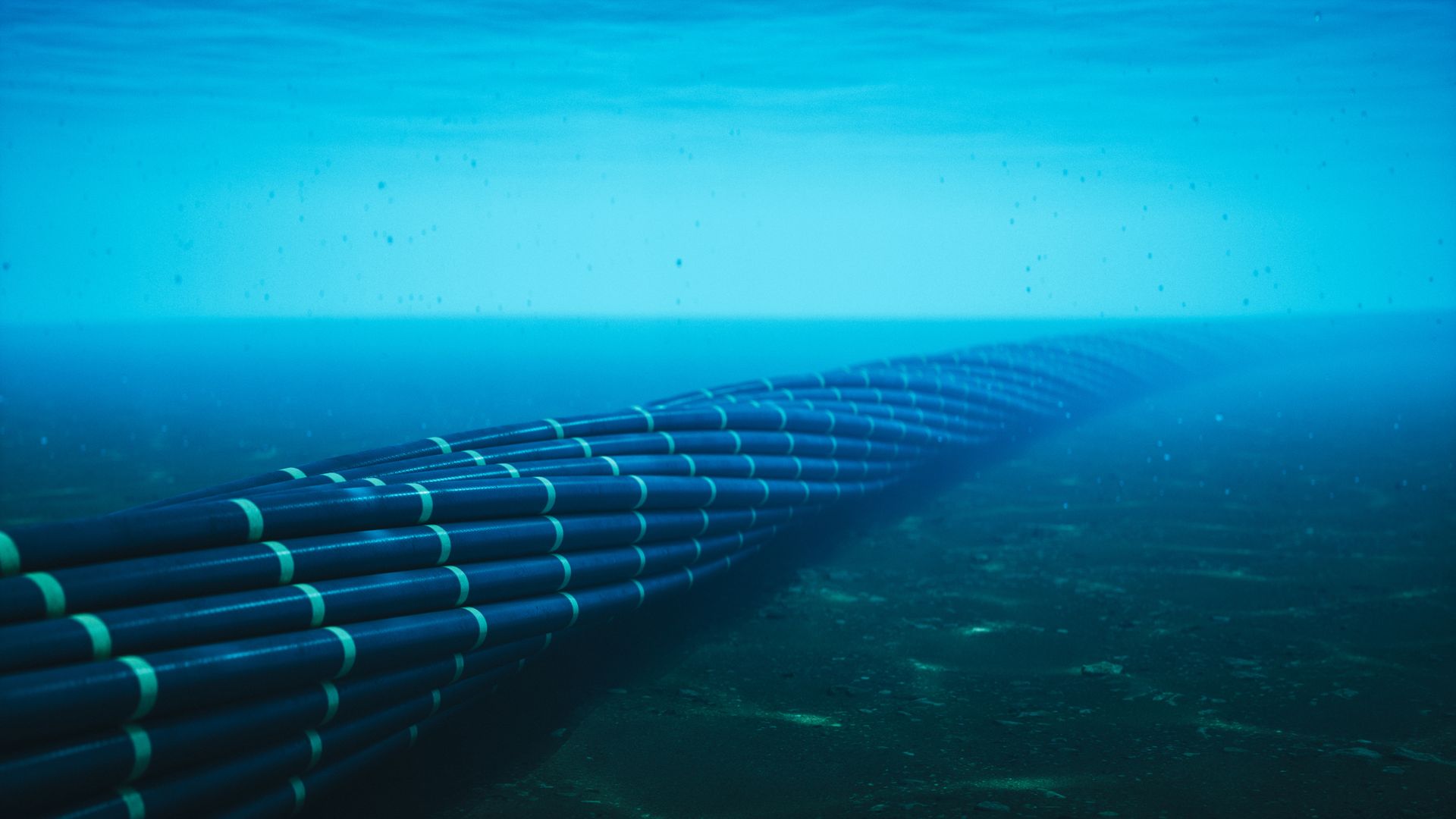
A Norwegian company building fiber networks and data centers across Europe is looking for a majority partner to help fund and build a transatlantic undersea cable that would connect Canada with Europe directly, bypassing the United States. The project follows worsening relations between Washington and Ottawa, with the Canadian government looking to reduce direct reliance on its immediate neighbor, Bloomberg reports.
Project Leif Erikson, if it goes ahead, would stretch more than 2,800 miles, starting at the southern tip of Norway and ending up at Happy Valley-Goose Bay in Canada's eastern province of Newfoundland and Labrador. From there, it would continue underground over Canadian territory, passing through Quebec before reaching Montreal.
According to Bulk's co-founder, Peder Nærbø, the link would be part of a "sovereign cable system" for Canada. The project was touted to investors at a global investors summit, arranged by the Canadian government, in September, where the project claimed to provide "direct, secure, high-capacity data transmission for AI, telecom and hyperscale markets."
Canadian Industry Minister Melanie Joy, meanwhile, met with Nærbø earlier this year, and although the department declined to comment on Leif Erikson itself, it told Bloomberg that security and resilience for Canada's infrastructure are "key priorities" for PM Mark Carney's government. Only a few undersea cables currently connect Canada without passing through the United States first, and none by a company owned by Canada. The biggest, called Topez, is owned by Google owner Alphabet and connects Canada with Japan.
As for Bulk, it has, up until now, laid more than 6,200 miles of cabling locally and at sea.
Source link