Spreading salt on an icy road melts the slick hazard and gives tires traction.
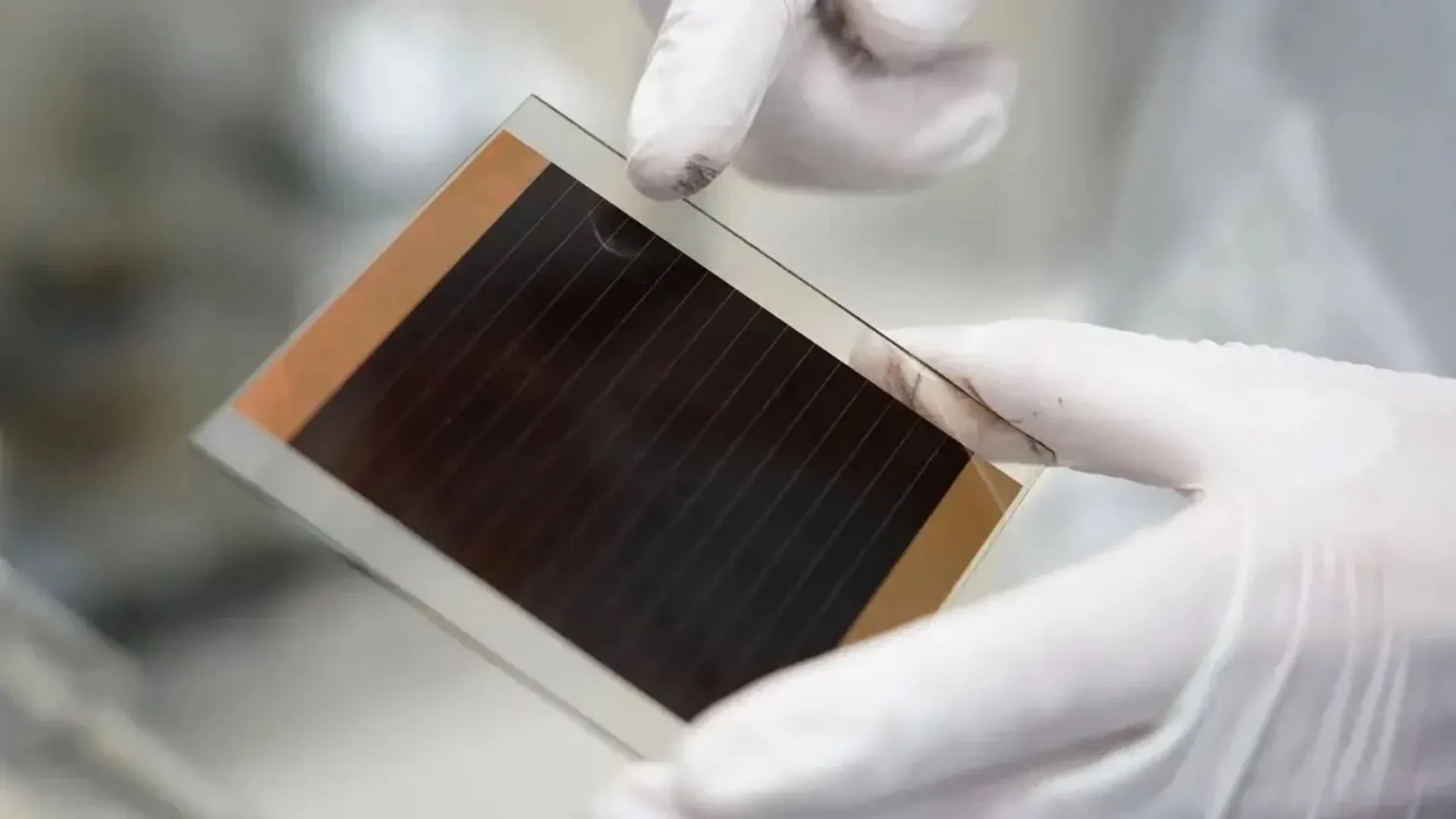
Now, scientists at the U.S. Department of Energy’s Argonne National Laboratory are using that exact same basic principle to fix a problem with perovskite crystals. The lab-grown crystals are used in solar panels, screens, and camera sensors.
In normal settings, as these crystals form, microscopic defects develop that trap electric charges, draining energy and shortening the device’s lifespan.
Now, a new volatile low-melting mechanism using salt additives controls perovskite crystal formation at the atomic scale.
The resulting perovskite crystalline layers feature fewer defects and much more stable performance. This advance powers optoelectronic devices that convert light into electricity.
“Defects have been the bottleneck for perovskites for almost a decade,” said study author Yanqi Luo, a beamline scientist in Argonne’s X‑ray Science division. “If we can remove the major defects, we can finally start building devices that last longer and perform more reliably.”
Perovskites are synthetic crystals built from repeating atomic patterns that absorb light and move electric charges. However, a major structural flaw has blocked the commercial use for nearly a decade. As perovskite films settle onto a surface, tiny atomic defects form like potholes, trapping electric charges, draining energy, and shortening the device’s lifespan.
In this new work, the team described a volatile, low-melting process known as a eutectic method to address the problem. Scientists added two specific salt additives, zinc bromide and methylammonium chloride, to guide the crystal formation.
Just as road salt lowers the freezing temperature of water, these additives lower the melting point of the perovskite ingredients.
Source link