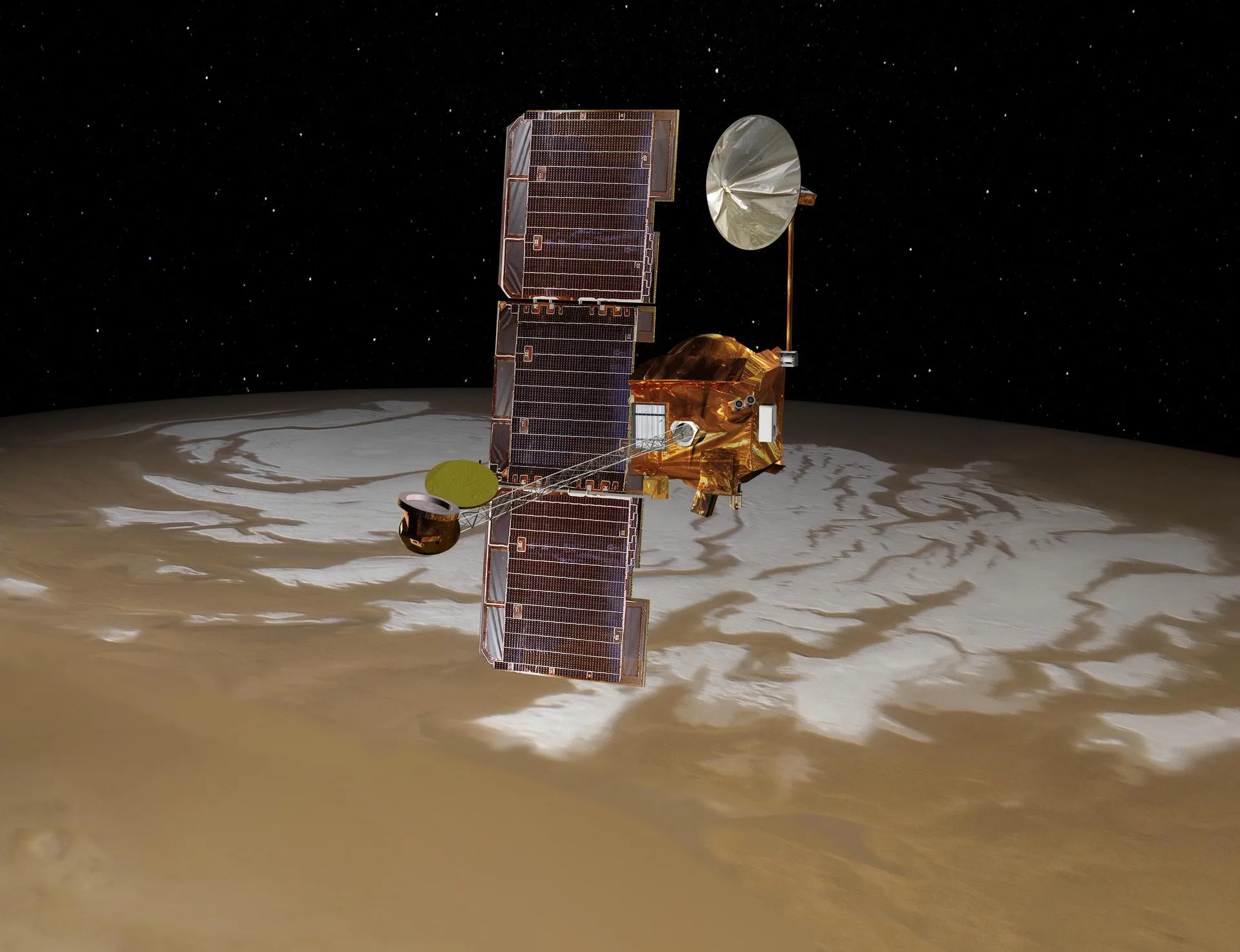
NASA’s Mars Odyssey spacecraft has been operating for so long, it can rent a car without any fees. The spacecraft arrived at the Red Planet on October 24, 2001. It, along with its 20-year-old sibling, the Mars Reconnaissance Orbiter (MRO), have operated longer than anyone watching their launches could have dreamed possible.
Having such a long record of observations from above the Martian surface has rewritten the story of water on the planet, past and present alike. Keeping the wizened orbiters going for so long has been possible only thanks to great engineering and constant problem solving—and a little luck. But scientists wonder whether, despite their storied legacies, Odyssey and MRO will be the last of their kind, at least for the Red Planet.
“Both Odyssey and MRO are some of the most productive spacecraft that have ever existed,” says Briony Horgan, a planetary scientist at Purdue University who isn’t affiliated with either mission, calling them “critical” to NASA’s overall Mars research program. Odyssey’s observations of the planet’s ice, for example, and MRO’s ability to see surface features change over time have each given scientists unprecedented insight into Mars as a vibrant planet rather than a lump of rock. Odyssey and MRO also connect humans to every NASA rover, which can’t communicate with Earth directly. It’s an impressive legacy for a pair of orbiters that were only meant to last just a few years.
Space is a notoriously harsh environment that takes luck and resilience to survive for decades.
Source link