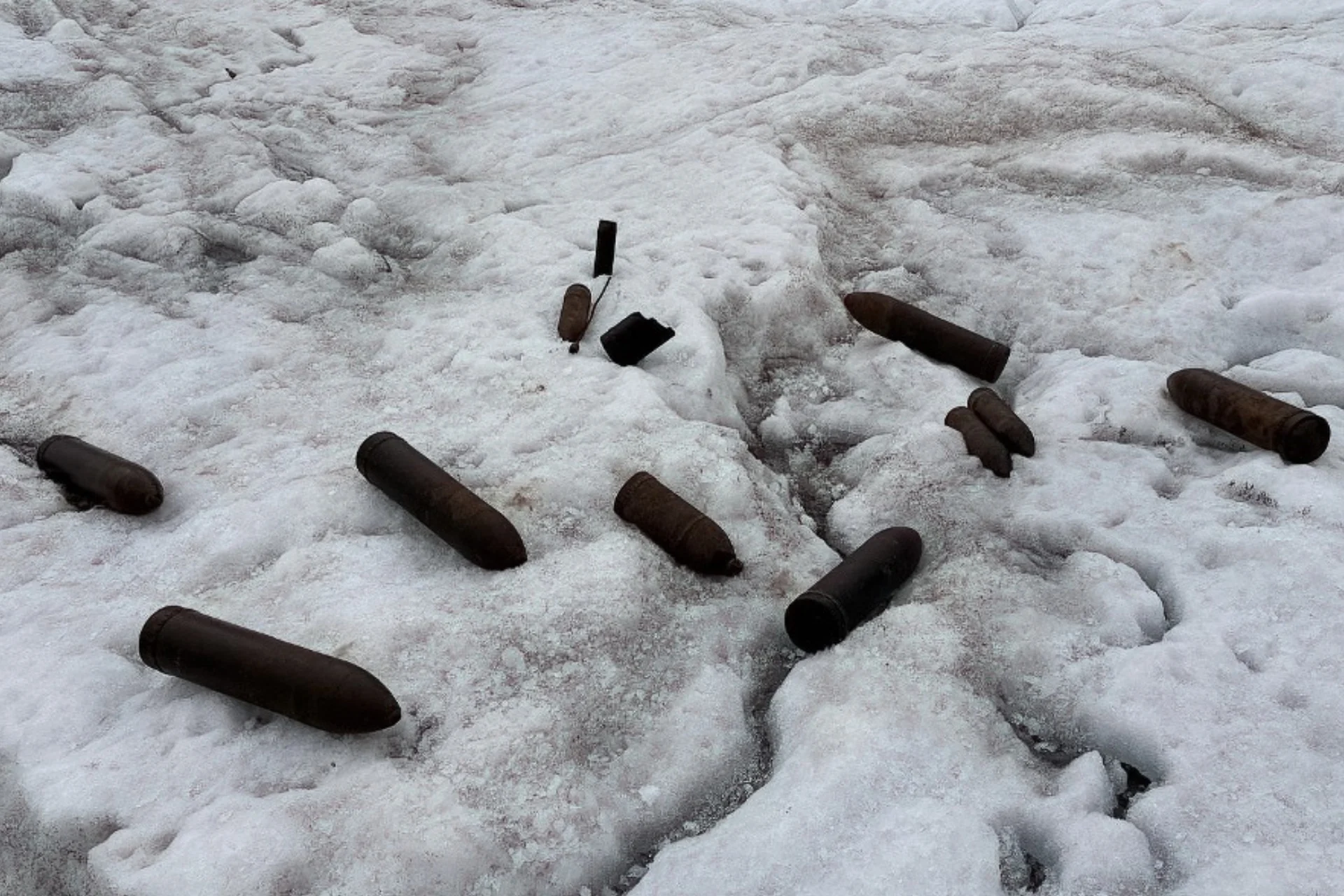
Glaciers in the Dolomites are rapidly retreating as the climate warms, and their disappearance is exposing historical artifacts long buried beneath the ice—including scores of unexploded bombs dating back to World War I.
Over the summer, the Italian Army’s Julia Alpine Brigade removed and defused more than 250 explosives that resurfaced at high-altitude and glacial locations across the Trentino Alto Adige region, reports Italy’s leading news agency, the Agenzia Nazionale Stampa Associata (ANSA). In a statement released on September 10, the army shared several photos of personnel navigating treacherous terrain as well as some of the century-old bombs they had recovered.
The ANSA report, translated from Italian into English, states that the weapons included 18 Italian 75-millimeter artillery shells and 37 French-made Thevetot mortar shells, which the Royal Italian Army also used at the time. According to The Guardian, the weapons were left in the mountains after the White War, a conflict fought between the Austro-Hungarian army and Italian troops from 1915 to 1918.
An estimated 150,000 to 180,000 soldiers died, but only about one-third perished in combat. The rest succumbed to the harsh alpine conditions, dying as the result of avalanches, landslides, frostbite, or hypothermia.
In the late 1950s, the Dolomites hosted 33 glaciers, covering a total surface area of 3 square miles (8 square kilometers). Today, only 12 remain. From the 1980s to 2023, glacial area in this alpine region declined a staggering 56%, and it could disappear within the next few decades.
Source link