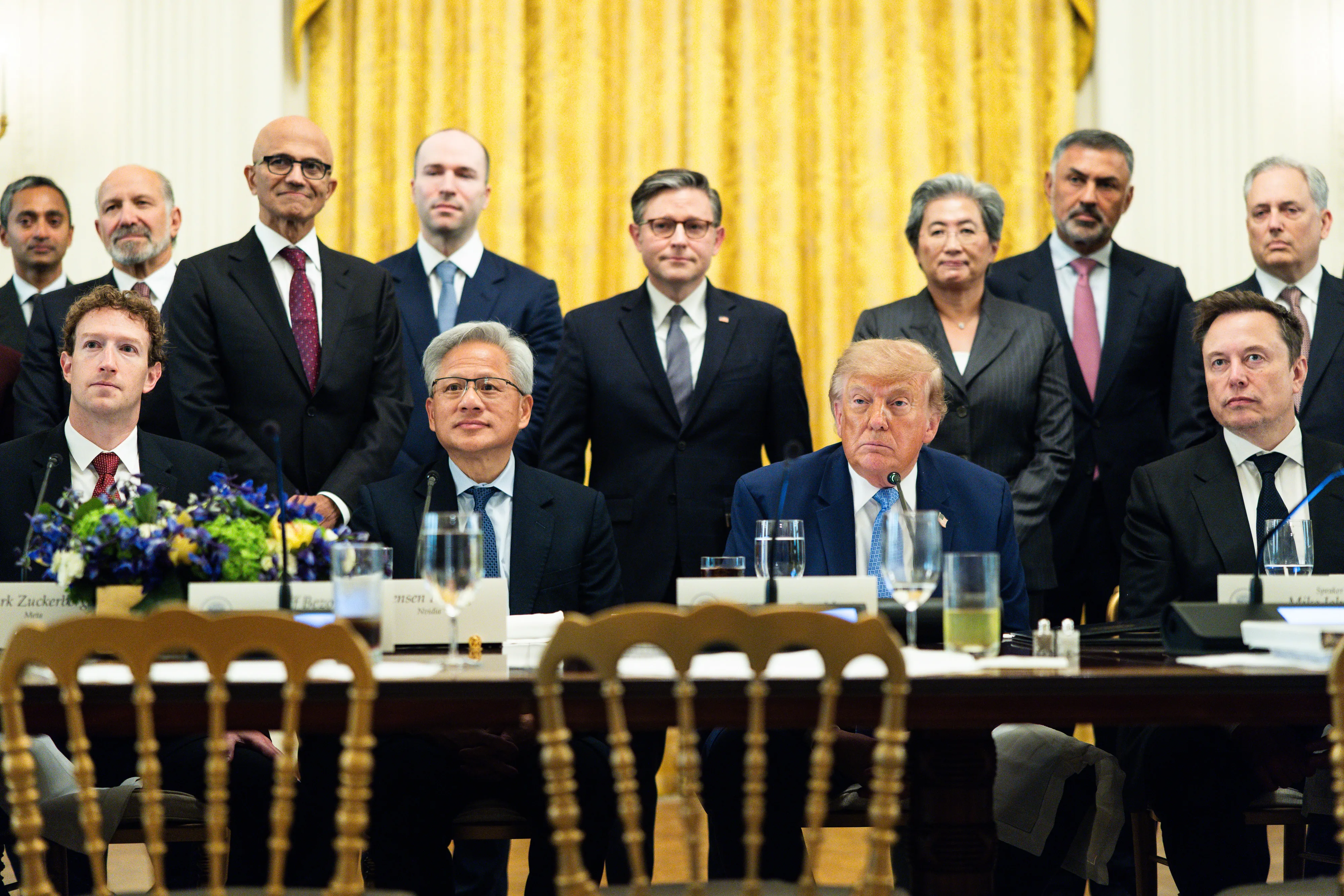
Some tech executives say they want more regulation and safety guardrails, but critics are skeptical.
The next time you pick up a carton of milk, consider this: It has likely passed through more safety inspections than the AI system writing your emails, screening your job application or negotiating with your bank. That, according to Microsoft President Brad Smith, is the problem.
In an interview with ITV last week, Smith said that AI is less regulated than milk and washing machines. He proposed that governments adopt established production safety practices and that AI companies build “kill switches,” a kind of emergency brake that would allow operators to shut down a system that begins behaving in an unsafe or unintended way.
Smith’s comments come amid growing public concern that voluntary industry commitments to safety — a form of toothless self-regulation — are not enough to manage systems that can influence decisions, handle sensitive data and, in the wrong hands, enable cyberattacks. Recent cases of so-called “rogue AI agents” escaping their environments, such as the summer’s infamous Hugging Face hack and attempted breaches of Australian and US government websites, have drawn scrutiny to AI’s alleged “existential risk” and sparked calls for a pause.
On Saturday, Microsoft CEO Satya Nadella echoed Smith’s sentiments in a lengthy X post, saying that the biggest companies lack a “mechanistic understanding” of the tools they deploy. Nadella also argued for slower development, incident reporting and independent review.
“We must build contained systems whose behavior we can observe, limits we can test and actions we can always contain,” Nadella wrote.
Source link