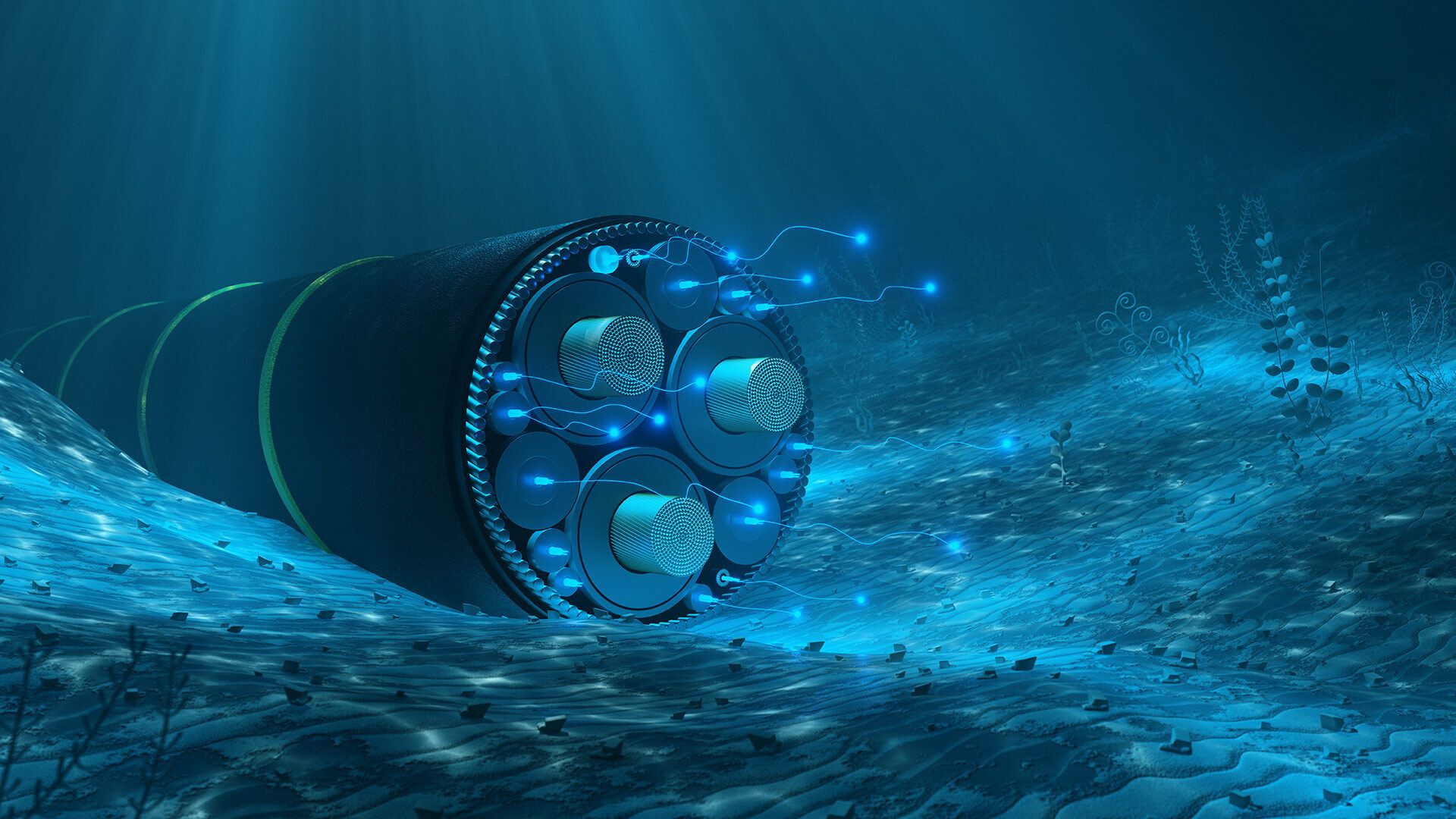
Meta has announced plans to build and install a new subsea cable that will connect France and the United States at a breakneck 1 Pbps (1 petabit per second or 1,000 terabits per second). It will become the most advanced subsea cable at its length and blow Meta's own 0.5 Pbps Anjana cable system out of the water. Figuratively, of course.
Anjana runs from Spain to the US for a total distance of 4,425 miles at a relatively leisurely 480 Tbps thanks to its 24 fiber pairs. But Petal ratchets things up a notch, using 48 fiber pairs and a two-core fiber-based solution (with 24 pairs each) to achieve 1 Pbps across transatlantic distances.
Meta claims that the new cable will have enough network capacity to allow 75% of the planet's population to stream music at the same time — so long as they stick to 160 kbps MP3s or lower, that is. No lossless streaming for you.
Either way, you'll have to wait a while for your theoretical music fix. Meta says that Petal is expected to enter service in 2029. It'll be built in partnership with NEC and Sumitomo Electric Industries, with support for the French landing from Orange.
Today we’re announcing Petal: the world’s first petabit-class transoceanic subsea cable and the first to deploy multi-core fiber at scale.Spanning 7,000 km (4,000+ mi) between France and the United States, Petal will deliver 1 Petabit per second (1 Pbps / 1,000 Tbps), doubling… pic.twitter.com/fLSWGkHDzSSeptember 21, 2026
Subsea cables might not be at the top of many internet users' minds, but they're vital to the way our connected world functions today — and they've often been the subject of sabotage plots as a result.
Source link