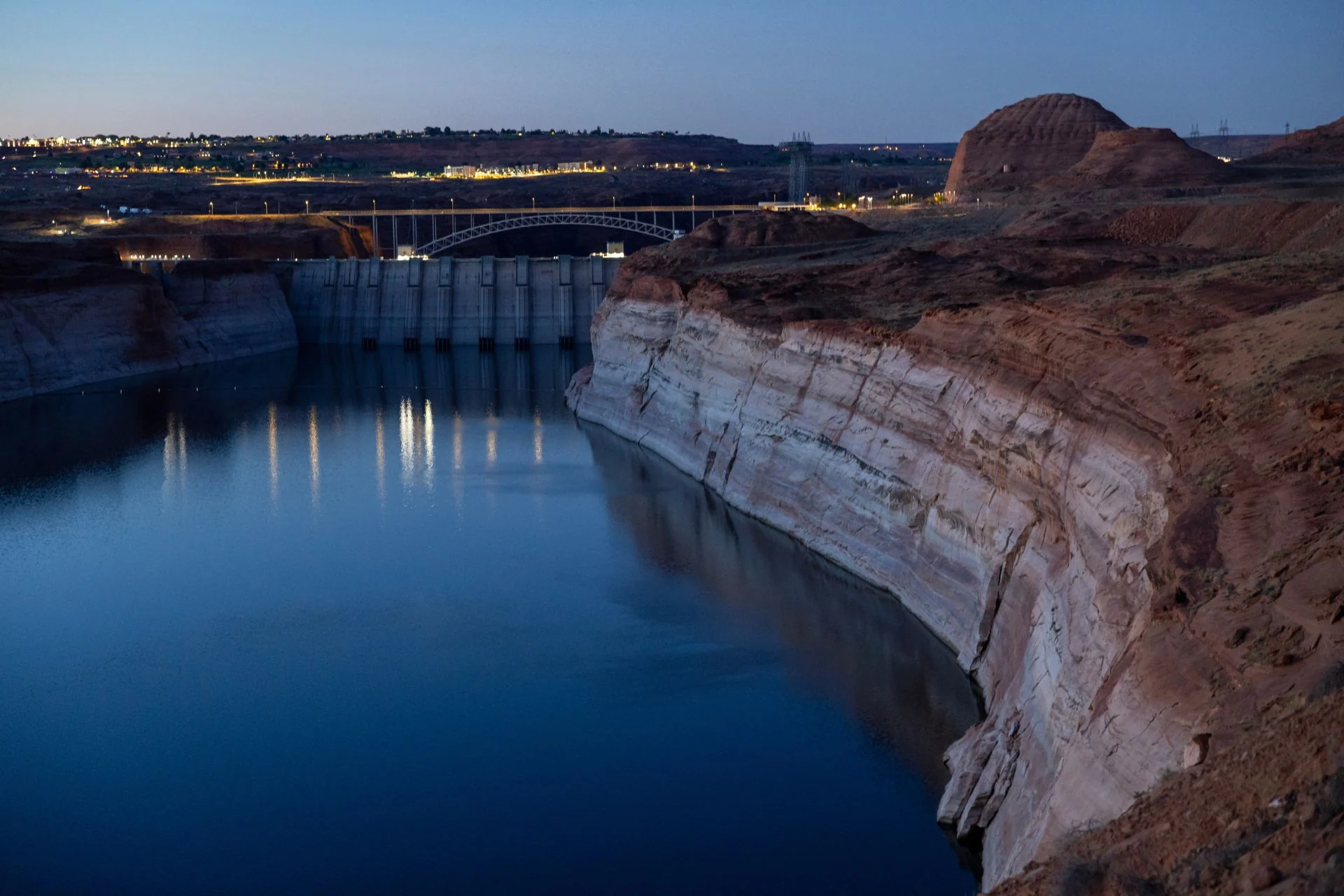
When the Glen Canyon Dam and Lake Powell were completed in the early 1960s, proponents of the project called the reservoir the “jewel of Colorado.” While they lauded the benefits Lake Powell would bring to Colorado River Basin states—mainly drought protection, cheap hydropower, and recreation—critics mourned the loss of Glen Canyon itself, now submerged beneath the lake.
Today, parts of this lost desert landscape are resurfacing. Amid a worsening Colorado River Crisis, both Lake Powell and Lake Mead reached record-low levels this year, exposing more of Glen Canyon’s features. Gregory Bridge, a natural rock arch, towers above Lake Powell’s surface. The entire chamber of a rock amphitheater called Cathedral in the Desert is also above water.
The reappearance of these natural wonders and mounting concerns over the future of the Colorado River have reinvigorated the push to drain Lake Powell, Yale Environment 360 reports. Groups like the Glen Canyon Institute believe this would create a more reliable water supply and reinvigorate a once thriving riverine ecosystem.
“Before the dam, Glen Canyon was a wonderland of gorges, spires, cliffs, and grottoes; the biological heart of the Colorado River, with more than 79 species of plants, 189 species of birds, and 34 species of mammals; and a cultural treasure, with more than 3,000 ancient ruins,” says the institute’s website. “After the dam, Glen Canyon became known as ‘the place no one knew’ and America’s ‘lost national park.'”
The institute is advocating for a “Fill Mead First” strategy that would drain Lake Powell and consolidate its water into Lake Mead, turning two half-empty, failing reservoirs into a single, full, functioning one and restoring Glen Canyon.
Source link