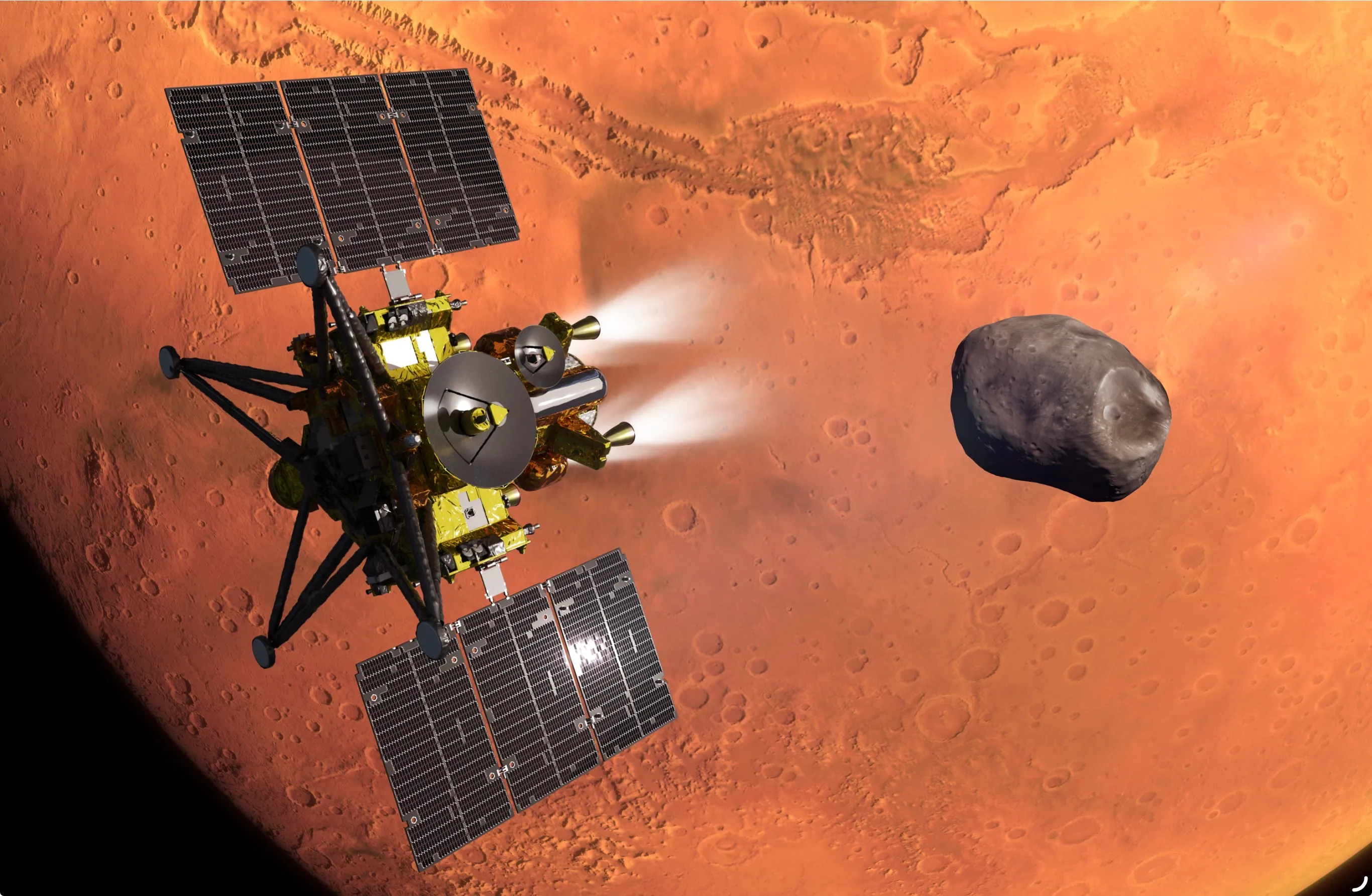
NASA contributed to this first-of-its-kind mission that may help us understand how our solar system formed.
An ambitious Mars mission is scheduled to launch Monday afternoon from the Tanegashima Space Center in Japan. Led by the Japan Aerospace Exploration Agency, with contributions from NASA, the Martian Moons eXploration mission could be the first to make it all the way to Mars and back.
Not only will the mission send a spacecraft to study the Martian moons, Deimos and Phobos, JAXA and NASA aim to carry home samples from the surface of Phobos. JAXA set up a livestream so you can watch the historic launch, set for 3:41 p.m. ET.
“The samples from MMX will bring forth paradigm-shifting science on the Mars system for generations to come, especially as NASA prepares to send the first humans to Mars,” Nicky Fox, associate administrator for NASA’s Science Mission Directorate, said in an announcement.
By studying these Martian moons, scientists may learn more about how our own world came to be and why the solar system looks like it does today.
Many scientists believe that Earth’s moon was created long ago after one or more fast-moving objects from space collided with our planet, causing pieces to break off. This debris was captured by our planet’s orbit. Gravity collected it together over time and turned it into the rounded moon we know today.
But it’s still a theory. Similar theories surround the origins of Deimos and Phobos. Scientists think Mars’ asteroid-sized moons might have formed through collision, like we think our moon formed, or the Martian moons might be asteroids that were captured in Mars’ gravity.
Source link