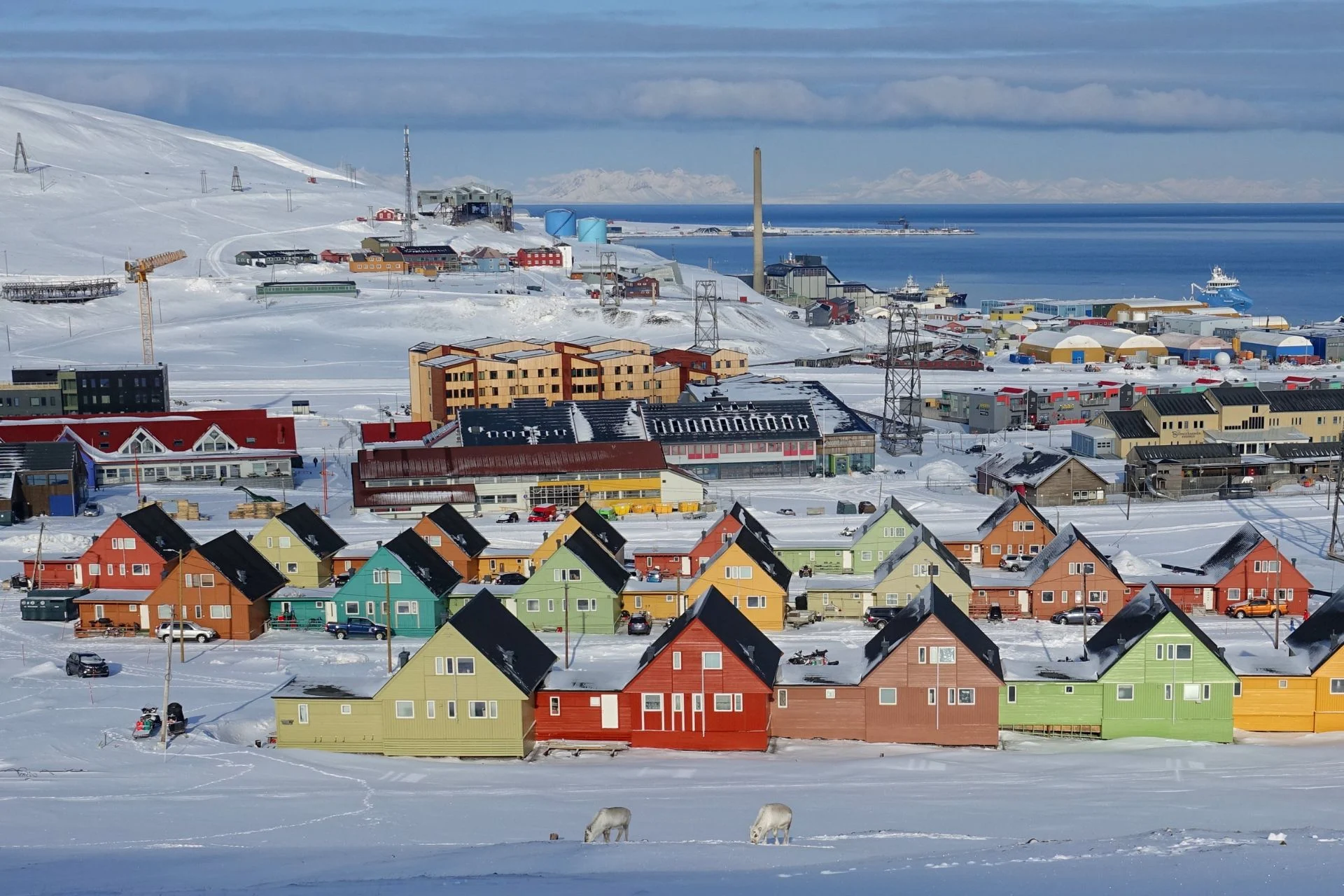
As fossil fuel pollution cranks up global temperatures, no place on Earth is warming faster than the Norwegian archipelago of Svalbard. There, temperatures are rising five to seven times faster than the global average rate, and for residents of Longyearbyen, that could mean their water supply is in danger.
Longyearbyen, with its population of roughly 2,400, is the capital and largest settled area of Svalbard. It’s also one of the world’s northernmost settlements, located just 800 miles (1,300 kilometers) from the North Pole. Today, Longyearbyen’s economy is largely driven by tourism, but in the 1900s it was a coal mining town. Thanks to climate change, the local geology that allowed this industry to thrive now threatens a dammed lake called Isdammen, the town’s only source of drinking water.
In September 2025, an analysis of treated drinking water from Isdammen found dangerously high levels of manganese, a heavy metal that can be neurotoxic in high doses or as a result of prolonged exposure. For the past year, local authorities have advised Longyearbyen residents not to drink the tap water. Instead, they can refill containers at the supermarket, where Svalbard Brewery now supplies a tank of free, purified drinking water.
Manganese levels have declined since September 2025 and are no longer considered a health concern, but they are still above the safe limit—as are sulfate and nickel levels. Because of this, the local government still recommends avoiding tap water.
Researchers investigating the source of the contamination believe it stems from rapid permafrost melt, which could be exposing bedrock and allowing metals to leach into Isdammen.
Source link