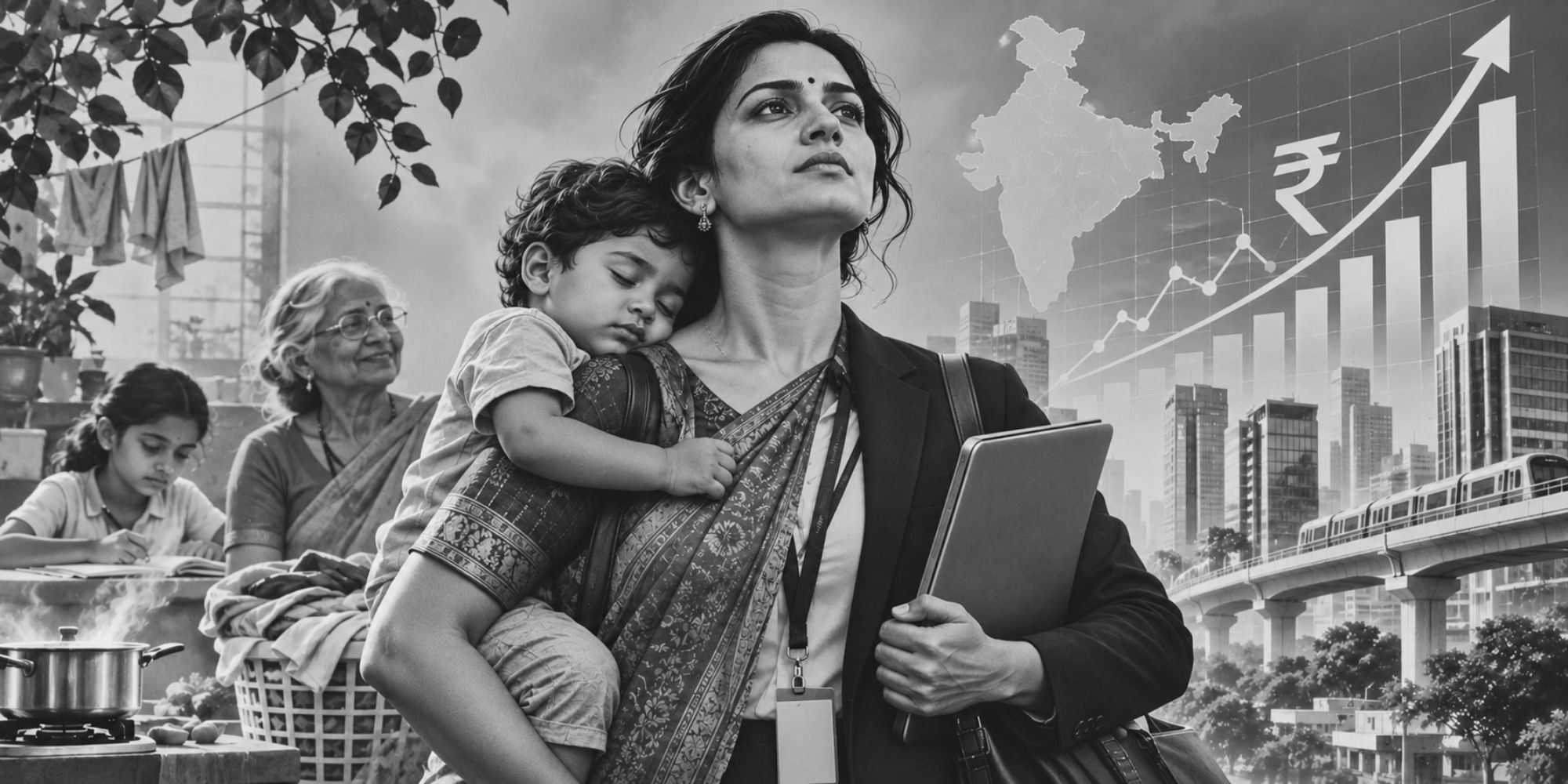
In February 2026, India moved its GDP base year to 2022-23. The National Accounts of India brought in new data sources and reassessed the size of the informal economy. The exercise carried a lesson that policy debates often forget: economic measurement is not fixed. When the statistical system decides an activity deserves to be captured better, the numbers change.
The same quarter, the economy grew 7.8%, keeping India the fastest-growing major economy even through the first full quarter of steep US tariffs and disruption in the Strait of Hormuz. The headlines celebrated. But one kind of work counted for nothing in all that arithmetic: the unpaid domestic and care work that makes every other job possible.
GDP has a defined production boundary, and for good reason. A creche worker paid to look after a child is counted as economic activity. A mother or grandmother doing the same job for free is not. The value has not disappeared; only the payment has.
What sits outside that boundary is large. India's Time Use Survey 2024 shows women aged 15 to 59 spend about 201 minutes a day more than men on unpaid household work. A deeper analysis of the unit-level data puts women's unpaid domestic and care work at 343 minutes a day, against 43 for men. Some 93% of women do this work, compared with 44% of men.
5 lakh crore, roughly 15–17% of GDP at weighted average wages.
Source link